
As a paediatric nutritionist who has spent over 15 years working with families across Bristol and the wider NHS, I can tell you that breakfast battles with fussy eaters are one of the most common concerns parents bring to my clinic. You are absolutely not alone if your mornings involve rejected toast, untouched cereal, or a child who insists they simply are not hungry. The good news is that with a few practical strategies and some creative recipes, you can transform breakfast from a daily struggle into an opportunity for nourishment and connection.
Key Takeaways
- Around 1 in 4 UK children regularly skip breakfast, which can affect concentration, energy and mood throughout the school day
- Fussy eating at breakfast is developmentally normal between ages 2 and 6, and most children grow out of it with patient, pressure-free approaches
- A balanced breakfast should include at least 2 of the 4 food groups: starchy carbohydrates, protein, dairy and fruit or vegetables
- Offering small portions of familiar foods alongside one new option increases acceptance rates by up to 30%
- Make-ahead breakfasts such as overnight oats and egg muffins save time on busy school mornings while providing essential nutrients
- Children may need to be offered a new food 10 to 15 times before they accept it, so persistence without pressure is key
In This Article
- Why Breakfast Matters for Fussy Eaters
- Understanding Why Children Refuse Breakfast
- Quick and Easy Breakfast Ideas That Fussy Eaters Love
- Hidden Nutrition: Sneaking Goodness Into Breakfast
- Make-Ahead Breakfasts for Busy School Mornings
- Breakfast Ideas by Age Group
- Strategies to Encourage Fussy Eaters at Breakfast
- When to Seek Professional Help
Why Breakfast Matters for Fussy Eaters
I often hear parents say, “Does it really matter if they skip breakfast?” The short answer is yes, it does. Research published by the NHS Healthier Families programme consistently shows that children who eat a balanced breakfast perform better at school, have improved concentration and are less likely to snack on high-sugar foods later in the day.
For fussy eaters specifically, breakfast presents a unique challenge and opportunity. After a night of fasting (typically 10 to 12 hours for most children), blood sugar levels are naturally low. This means your child’s body genuinely needs fuel, but their appetite signals may not yet be fully engaged, particularly if they have eaten a late or heavy evening meal.
In my clinical experience, children who consistently skip breakfast tend to consume more calories from processed snacks by mid-morning, creating a cycle that actually worsens fussy eating at mealtimes. A child who fills up on biscuits at break time is far less likely to eat a balanced lunch, and the pattern continues throughout the day.
It is also worth noting that breakfast contributes significantly to a child’s overall nutrient intake. According to research from the British Nutrition Foundation, breakfast typically provides around 20 to 25% of a child’s daily energy, along with essential nutrients including calcium, iron, B vitamins and fibre. For a fussy eater who may already have a limited diet, missing these nutrients can have a cumulative effect on their growth and development. Understanding how many calories your child needs by age can help you gauge whether breakfast is providing adequate fuel.

Understanding Why Children Refuse Breakfast
Before diving into recipes and ideas, I think it is essential to understand why your child might be refusing breakfast in the first place. In my practice, I have identified several common reasons, and addressing the root cause often makes the biggest difference.
They genuinely are not hungry. Some children have a naturally smaller appetite in the morning. This can be influenced by their circadian rhythm, the timing of their evening meal, or even how well they slept the night before. There is a well-established link between sleep quality and appetite regulation in children, and addressing bedtime routines can sometimes improve morning appetite.
Sensory sensitivities. Many fussy eaters have heightened sensory responses to food textures, temperatures or smells. Soggy cereal, lumpy porridge or the skin on fruit can trigger a genuine aversion that goes beyond simple preference. I always remind parents that this is not naughty behaviour; it is a sensory response that deserves understanding.
Anxiety about the school day. For some children, particularly those starting a new school year or experiencing social difficulties, breakfast refusal can be linked to morning anxiety. The tight knot in their stomach makes eating feel impossible.
Too much pressure. This one might be hard to hear, but sometimes our well-intentioned encouragement (“Just try one bite”, “You need to eat something”) can actually increase a child’s resistance. The Division of Responsibility model, developed by feeding expert Ellyn Satter, suggests that parents should decide what, when and where food is offered, while the child decides whether and how much to eat.
Medical factors. Occasionally, breakfast refusal can be linked to conditions such as constipation, reflux, or food allergies. If your child consistently refuses food alongside other symptoms such as tummy pain, poor weight gain or changes in bowel habits, it is worth speaking to your GP.
Quick and Easy Breakfast Ideas That Fussy Eaters Love
Now for the part you have been waiting for. These are recipes and ideas that I recommend regularly in my clinic, and they have been tested and approved by some of the fussiest eaters in Bristol. The key principle is offering foods that are familiar in shape and texture whilst gradually introducing new flavours and nutrients.
Toast-Based Breakfasts
Toast is often a safe food for fussy eaters, and there is nothing wrong with using it as a starting point. The trick is to vary the toppings over time.
- Peanut butter and banana slices on wholemeal toast (check for nut allergies first)
- Cream cheese and cucumber cut into fingers or fun shapes with cookie cutters
- Mashed avocado with a squeeze of lemon on seeded bread
- Scrambled egg on toast with a sprinkle of grated cheese
- Hummus and grated carrot on a toasted English muffin
Using cookie cutters to create stars, hearts or animal shapes from toast is a simple technique that works surprisingly well with younger children. It changes the visual experience without altering the taste or texture that they are already comfortable with.
Smoothies and Drinks
For children who truly struggle with solid food first thing in the morning, a smoothie can be an excellent alternative. I recommend these as a bridge rather than a permanent replacement for a sit-down breakfast.
- Berry blast: frozen mixed berries, banana, natural yoghurt and a splash of milk
- Green machine: spinach (they will not taste it, I promise), mango, banana and coconut milk
- Chocolate treat: banana, cocoa powder, oats, milk and a tablespoon of nut butter
A word of caution: be mindful of the sugar content in smoothies, even when using only fruit. The NHS guidelines on five-a-day portions count a smoothie as a maximum of one portion, regardless of how much fruit goes in. Ensuring your child is also drinking enough water throughout the day is equally important.
Yoghurt Combinations
Plain natural yoghurt is a nutritional powerhouse, providing calcium, protein and probiotics. Many fussy eaters accept yoghurt readily, and it is easy to build a more complete breakfast around it.
- Layer yoghurt with granola and fresh fruit in a clear glass (children love seeing the layers)
- Mix in a teaspoon of jam or honey (for children over one) to sweeten naturally
- Top with seeds such as chia, flax or sunflower for added omega-3 fatty acids
Hidden Nutrition: Sneaking Goodness Into Breakfast
I know the topic of hiding vegetables in food is somewhat controversial in paediatric nutrition circles. Some experts argue it does not teach children to accept new foods, and I understand that perspective. However, in my experience, there is a middle ground. You can boost the nutritional content of foods your child already enjoys whilst also continuing to offer new foods openly. The two approaches are not mutually exclusive.
If you are also working on getting your child to accept vegetables more openly, I have written extensively about practical strategies to help children eat vegetables.
Pancakes with a Twist
Pancakes are almost universally accepted by children, and they are incredibly easy to fortify.
Basic nutritious pancake recipe:
- 1 ripe banana, mashed
- 2 eggs
- 3 tablespoons of oats (blended to a flour)
- Optional: 1 tablespoon of grated courgette or sweet potato
Mix everything together and cook small pancakes in a non-stick pan with a tiny amount of butter or oil. These contain no added sugar, provide protein from the eggs, complex carbohydrates from the oats, and potassium from the banana. The grated vegetable melts into the batter and becomes completely undetectable.
Muffins Packed with Goodness
Homemade muffins are another brilliant vehicle for hidden nutrition. A batch made on a Sunday will last all week stored in an airtight container, or you can freeze them individually.
Carrot and apple breakfast muffins:
- 200g wholemeal self-raising flour
- 1 teaspoon cinnamon
- 1 large carrot, finely grated
- 1 apple, grated
- 80ml vegetable oil
- 80ml milk
- 2 eggs
- 2 tablespoons honey or maple syrup
Mix dry ingredients, combine wet ingredients separately, then fold together. Bake at 180°C for 18 to 20 minutes. These muffins provide fibre, vitamin A from the carrot, and natural sweetness from the apple. Involving your child in the baking process can also increase their willingness to try the finished product.
Make-Ahead Breakfasts for Busy School Mornings
I am well aware that most parents do not have 30 minutes to prepare breakfast on a school morning. Time pressure is one of the biggest factors that turns breakfast into a battleground. Preparing food in advance removes this stress and gives your child a calm, pressure-free start to the day.
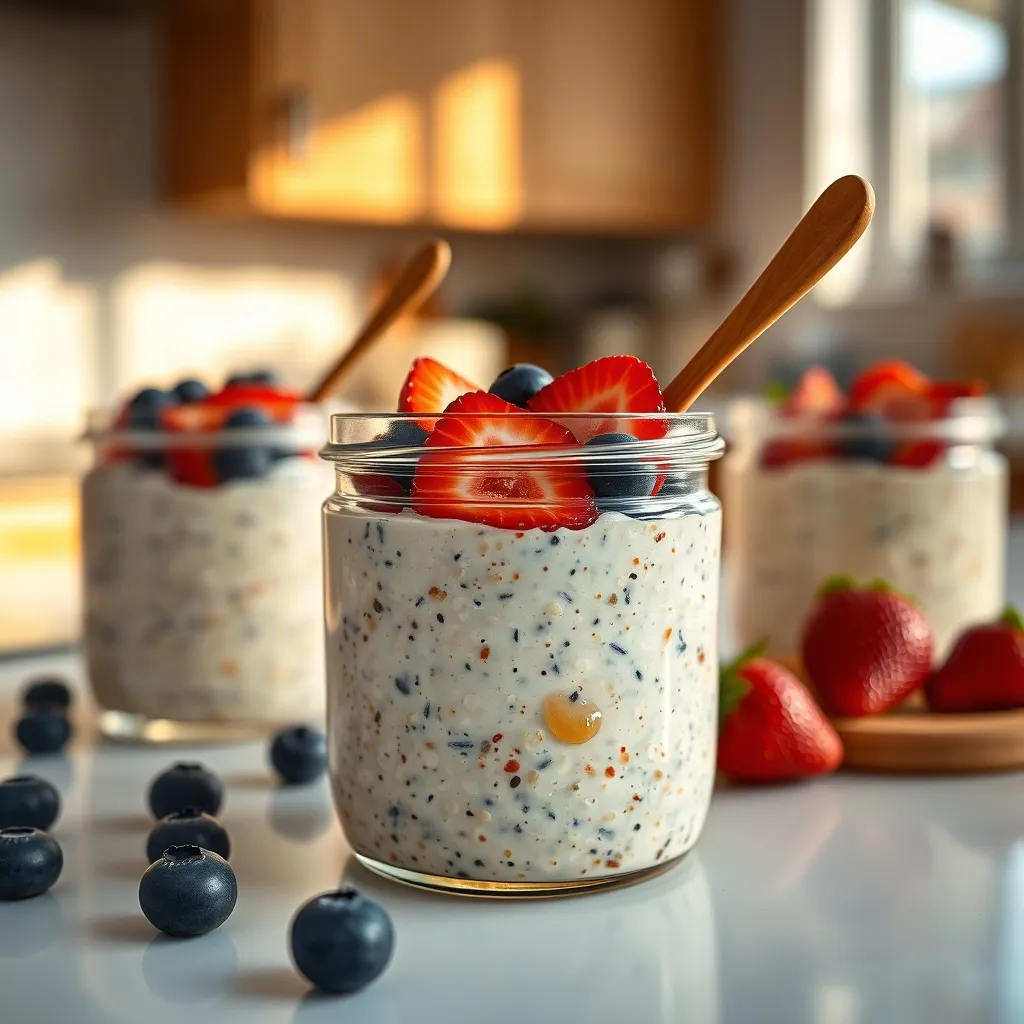
Overnight Oats
Overnight oats are one of my favourite recommendations. They take about 3 minutes to prepare the night before and are ready to eat straight from the fridge.
Basic formula:
- 40g rolled oats
- 100ml milk (dairy or plant-based)
- 2 tablespoons natural yoghurt
- 1 teaspoon chia seeds (optional)
- Fruit of your child’s choice
Combine everything in a jar or container, stir, and refrigerate overnight. In the morning, your child can eat it cold (many children prefer this to hot porridge) or you can warm it in the microwave for 60 seconds. Let them choose their own toppings: berries, sliced banana, a drizzle of honey, or a spoonful of jam.
Egg Muffin Cups
These savoury muffins are essentially mini frittatas and can be made in batches of 12. They keep in the fridge for up to 3 days or freeze beautifully for up to a month.
Whisk 6 eggs with a splash of milk, then divide between a greased muffin tin. Add any combination of finely chopped vegetables (peppers, sweetcorn, peas, spinach) and a sprinkle of grated cheese. Bake at 180°C for 15 minutes. These provide an excellent source of protein and iron, two nutrients that many fussy eaters lack.
| Breakfast Option | Prep Time | Key Nutrients | Fussy Eater Rating | Make-Ahead? |
|---|---|---|---|---|
| Overnight oats with berries | 3 mins (night before) | Fibre, calcium, B vitamins | ★★★★☆ | Yes, up to 2 days |
| Banana oat pancakes | 10 mins | Potassium, protein, complex carbs | ★★★★★ | Yes, freeze for 1 month |
| Egg muffin cups | 5 mins + 15 baking | Protein, iron, vitamin D | ★★★☆☆ | Yes, freeze for 1 month |
| Peanut butter banana toast | 3 mins | Protein, healthy fats, fibre | ★★★★★ | No |
| Berry yoghurt parfait | 5 mins | Calcium, probiotics, vitamin C | ★★★★☆ | Partially, layer night before |
| Cheese and spinach quesadilla | 7 mins | Calcium, iron, protein | ★★★☆☆ | Yes, reheat in morning |
| Fruit smoothie with oats | 5 mins | Vitamins, fibre, calcium | ★★★★★ | Prep bags, blend in morning |
| Carrot apple muffins | 10 mins + 20 baking | Vitamin A, fibre, iron | ★★★★☆ | Yes, freeze for 1 month |
Breakfast Ideas by Age Group
Fussy eating looks different at different ages, and what works for a toddler will not necessarily work for a ten-year-old. Here is how I tailor my breakfast recommendations depending on the child’s developmental stage.
Toddlers (1 to 3 Years)
Fussy eating peaks during the toddler years, and this is completely normal. Toddlers are developing autonomy and learning to assert their preferences, and food is one area where they have some control. For a more comprehensive guide to feeding this age group, see my article on toddler nutrition for 1 to 3 year olds.
- Finger foods are essential. Toddlers want to feed themselves. Offer strips of toast, chunks of banana, cubes of cheese, and halved grapes (always cut lengthways for safety).
- Keep portions tiny. A toddler-sized portion of porridge is about 3 tablespoons. Putting too much food on the plate can be overwhelming.
- Offer milk alongside, not instead of, food. Many toddlers fill up on milk and then refuse solids. Offer breakfast first, then milk.
Primary School Age (4 to 10 Years)
By this age, children have more established preferences, and peer influence begins to play a role. They may start requesting specific branded cereals they have seen advertised or that their friends eat. Be aware that many children’s cereals marketed as healthy contain surprisingly high levels of sugar. The impact of ultra-processed foods on children’s health is significant, and breakfast cereals are one of the biggest culprits.
- Involve them in choosing. Give two or three options the night before and let them pick. This gives them a sense of control without overwhelming them.
- Use the “bridge” technique. If they love chocolate cereal, try gradually mixing it with a wholegrain alternative, increasing the ratio over several weeks.
- Make it social. If possible, sit down and eat breakfast together. Children are more likely to eat when they see adults eating the same food.
Pre-Teens and Teenagers (11+)
Older children often skip breakfast deliberately, sometimes due to body image concerns. This is a sensitive area that requires careful handling. If you suspect your child is restricting food intake, my article on body image and self-esteem in children may be helpful.
- Grab-and-go options work best. A banana, a homemade muffin, or a small pot of overnight oats they can eat on the way to school.
- Respect their growing independence. Teach them to prepare their own breakfast. This is a life skill and gives them ownership over their choices.
- Focus on energy and performance. Teenagers often respond better to messaging about how food affects their energy and sporting performance rather than health or weight.

Strategies to Encourage Fussy Eaters at Breakfast
Beyond specific recipes, there are broader strategies that I have seen work consistently across hundreds of families in my practice. These principles apply not just to breakfast but to all mealtimes.
The One-Bite Rule (With Flexibility)
Rather than insisting your child finishes everything, try the one-bite approach. Explain that they do not have to eat it all, but you would like them to try one small taste. If they do not like it, that is absolutely fine. This removes the pressure while gently encouraging exploration. Over time, repeated exposure builds familiarity.
Serve New Foods Alongside Safe Foods
Never present a plate containing only unfamiliar foods. Always include at least one food you know your child will eat. For example, if you are introducing scrambled eggs for the first time, serve them alongside their favourite toast. This creates a safety net that reduces anxiety.
Change the Environment, Not Just the Food
Sometimes the issue is not the food itself but the context around it. Consider these adjustments:
- Allow your child to eat breakfast at the coffee table rather than the dining table
- Use colourful plates and bowls that make the food look appealing
- Play gentle background music to create a relaxed atmosphere
- Remove time pressure by waking up 10 minutes earlier
Avoid Using Food as a Reward or Punishment
Statements like “If you eat your toast, you can have a biscuit” teach children that the toast is something to endure rather than enjoy, while the biscuit is the real prize. This reinforces the idea that healthy food is unpleasant. Instead, try to keep mealtimes emotionally neutral. When discussing food and weight with children, it is important to choose your words carefully to avoid causing harm.
Model the Behaviour You Want to See
Children are extraordinary mimics. If they see you rushing out the door with only a coffee, they learn that breakfast is not important. Conversely, if they see you sitting down to enjoy a bowl of porridge or some fruit and yoghurt, they are far more likely to do the same. Research from the UK Government’s Eatwell Guide emphasises that family eating patterns have a stronger influence on children’s food choices than any individual meal.
Keep a Food Diary
I often ask parents to keep a simple food diary for one to two weeks. Record what your child eats, when they eat it, and any relevant circumstances (were they tired, anxious, in a rush?). Patterns often emerge that are not obvious in the daily chaos. You may discover that your child eats better on weekends when there is less time pressure, or that they prefer cold breakfasts to hot ones.
When to Seek Professional Help
While fussy eating is normal and usually resolves with time, there are situations where professional support is warranted. In my practice, I recommend seeking help if your child shows any of the following signs:
- They eat fewer than 20 different foods in total
- They are losing weight or failing to gain weight appropriately (see signs of underweight in children)
- They gag, retch or vomit when presented with certain textures
- Mealtimes consistently cause significant distress for the child or the family
- They have dropped entire food groups from their diet
- Their fussy eating is getting worse rather than better over time
Your first port of call should be your GP, who can check for any underlying medical conditions and refer you to a paediatric dietitian if needed. The British Dietetic Association provides helpful resources on fussy eating that you can access for free. Some children, particularly those with additional needs such as ADHD, may benefit from a more tailored approach to nutrition.
It is also worth considering whether there is a wider picture affecting your child’s eating. Factors such as poverty and food insecurity can significantly impact a family’s ability to provide varied and nutritious meals, and there are support programmes available through local councils and charities.
Remember, the goal is not a perfect breakfast every morning. It is about creating positive associations with food, gradually expanding your child’s repertoire, and ensuring they get enough nutrition to thrive physically and mentally. Some mornings will be better than others, and that is completely normal. What matters is the overall pattern over weeks and months, not any single meal.
In my years of practice, I have seen even the most determined fussy eaters eventually broaden their diets when parents combine patience, creativity, and a pressure-free approach. Keep offering, keep modelling, and trust that your child will get there in their own time.
Key Points
- Start with familiar safe foods at breakfast and introduce one new option alongside them each week
- Prepare overnight oats or egg muffin cups in advance to remove morning time pressure
- Use the one-bite rule without pressure, allowing your child to decide whether and how much to eat
- Keep a food diary for 1 to 2 weeks to identify patterns in your child’s eating behaviour
- Seek professional help if your child eats fewer than 20 foods or is losing weight
Frequently Asked Questions
What is a healthy breakfast for a picky eater?
A healthy breakfast for a picky eater should include at least two food groups: a carbohydrate for energy (such as toast or oats), combined with a protein or dairy source (such as eggs, yoghurt or cheese). Start with foods your child already accepts and gradually introduce new elements. Banana oat pancakes, peanut butter on toast, and yoghurt with fruit are consistently well-received options in my practice. The key is to keep portions small and avoid pressuring your child to eat everything on their plate.
How can I get my child to eat breakfast before school?
If your child refuses breakfast at home, consider adjusting the timing and format. Some children need to be awake for 30 to 45 minutes before their appetite kicks in, so waking them slightly earlier can help. Offering grab-and-go options such as a homemade muffin, a banana, or a pot of overnight oats they can eat in the car or on the walk to school is another practical solution. Reducing morning rush and creating a calm breakfast environment also makes a significant difference.
Are smoothies a good breakfast option for fussy children?
Smoothies can be an excellent breakfast option, particularly for children who struggle with solid food in the morning. They allow you to include fruit, yoghurt, oats and even hidden vegetables like spinach. However, I recommend using smoothies as a bridge rather than a permanent replacement for solid breakfasts, as chewing is important for oral motor development and satiety. Be mindful that smoothies can be high in natural sugars, so limit fruit to two portions and always include a protein source like yoghurt or nut butter.
What breakfast foods are good for children with ADHD?
Children with ADHD often benefit from breakfasts that are high in protein and complex carbohydrates, which help maintain steady blood sugar and support concentration. Good options include scrambled eggs on wholemeal toast, porridge with nuts and seeds, or a smoothie with protein-rich yoghurt and oats. Avoid high-sugar cereals and fruit juices, which can cause energy spikes and crashes. Some research suggests that omega-3 fatty acids (found in chia seeds, flaxseeds and walnuts) may also support attention and focus.
How many times should I offer a new food before giving up?
Research consistently shows that children may need to be exposed to a new food between 10 and 15 times before they accept it. Each exposure counts, even if your child only looks at, touches or smells the food without tasting it. I advise parents to offer new foods without pressure or commentary, alongside familiar safe foods. If after 15 to 20 genuine exposures your child still refuses, it may be worth discussing the issue with a paediatric dietitian to rule out sensory processing difficulties or other underlying factors.
Is it okay to let my child eat the same breakfast every day?
If your child has found a breakfast they enjoy and it provides reasonable nutrition, there is nothing wrong with repetition in the short term. Many adults eat the same breakfast daily too. The concern arises only if the chosen breakfast is nutritionally poor (for example, only white toast with butter) or if your child’s overall diet across the day is very limited. I recommend gently introducing small variations over time, such as changing the fruit topping on their yoghurt or trying a different type of bread, to slowly expand their comfort zone without disrupting their routine.