
Key Takeaways
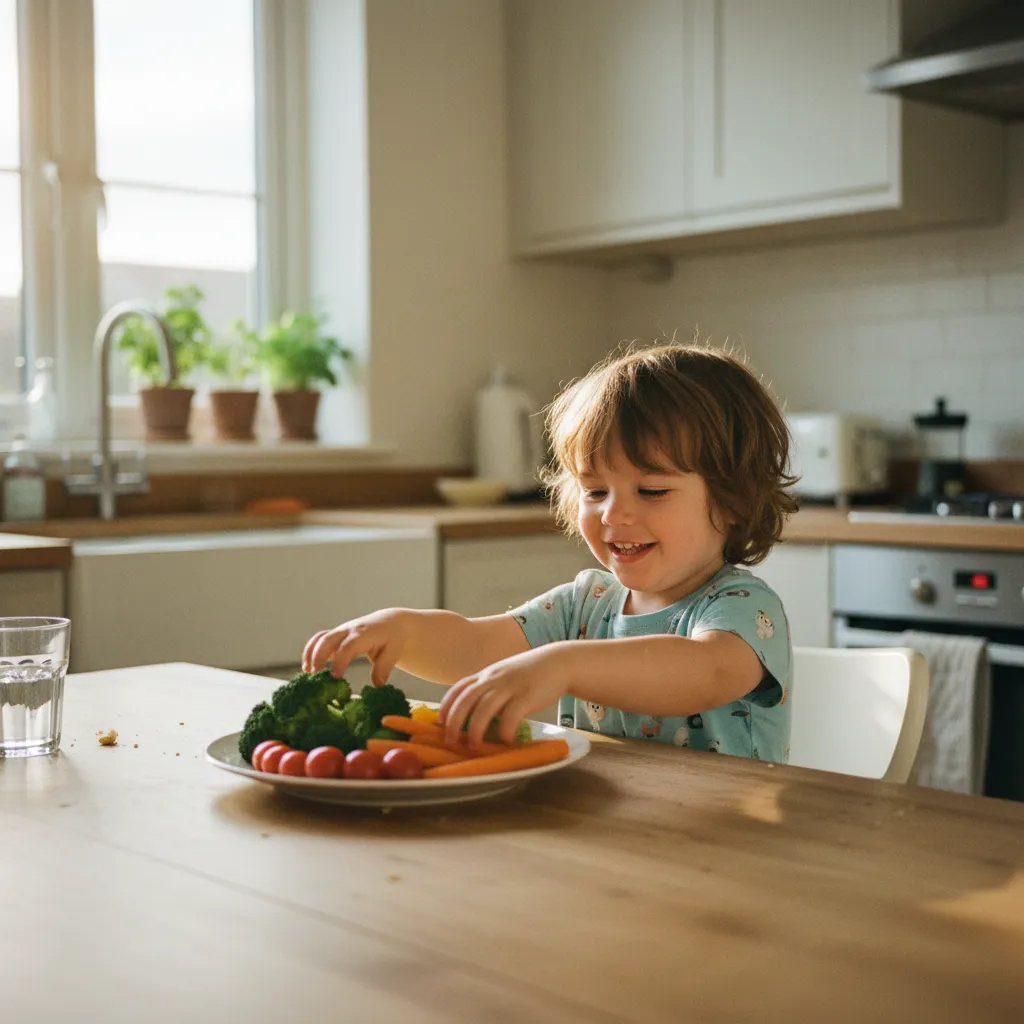
- Research shows children may need 10 to 15 exposures to a new vegetable before they accept it
- Only 18% of children aged 5 to 15 in England eat the recommended five portions of fruit and vegetables per day
- Serving vegetables before the main meal when children are hungriest can increase acceptance by up to 50%
- Children who help grow or prepare vegetables are twice as likely to eat them willingly
- Pressuring or bribing children to eat vegetables is linked to greater food refusal in the long term
- Starting varied vegetable exposure during weaning (around 6 months) builds lasting preferences into later childhood
In This Article
- Why Children Refuse Vegetables (and Why It Is Normal)
- How Many Vegetables Does Your Child Actually Need?
- Proven Strategies to Get Your Child to Eat Vegetables
- Hiding Vegetables vs. Offering Them Openly
- Age-by-Age Guide to Introducing Vegetables
- Vegetables Children Are Most Likely to Accept
- Meal Ideas That Make Vegetables Appealing
- What to Do When Nothing Seems to Work
If you are reading this, I suspect mealtimes at your house have become something of a battleground. Perhaps the broccoli is pushed to the side of the plate, the peas are met with a firm “no,” or the mere sight of anything green triggers a full-scale protest. I want you to know: you are not failing as a parent. Getting a child to eat vegetables is one of the most common concerns I hear in my clinic, and after 15 years of working with families across the NHS and in private practice, I can tell you that there are evidence-based approaches that genuinely work.
In this guide, I am going to walk you through why children refuse vegetables, how much they actually need, and the practical strategies that I recommend to families every single week. Some of these approaches may surprise you. Others may reassure you that what you are already doing is on the right track. Either way, my goal is to help you move from frustration to confidence, one vegetable at a time.
Why Children Refuse Vegetables (and Why It Is Normal)
Before we talk about solutions, it helps to understand what is actually happening when your child pushes away that plate of carrots. Vegetable refusal is one of the most developmentally normal behaviours in childhood, and there are solid evolutionary reasons behind it.
Young children are naturally wired to be cautious about new foods, particularly those with bitter flavours. This instinct, known as food neophobia, typically peaks between the ages of two and six. From an evolutionary standpoint, this made perfect sense: a toddler who refused to eat unfamiliar plants was less likely to consume something poisonous. In our modern kitchens, however, this same instinct means that perfectly nutritious vegetables get rejected.
Vegetables also tend to have more complex, bitter flavour profiles compared to fruits and starchy foods. Children have significantly more taste buds than adults, which means bitter compounds in vegetables like Brussels sprouts, broccoli, and spinach taste far more intense to them. This is not fussiness; it is biology.
Other factors that contribute to vegetable refusal include:
- Texture sensitivity: many children struggle with mushy or fibrous textures before their oral motor skills fully develop
- Previous negative experiences: being forced to eat a vegetable, gagging, or feeling unwell after eating can create lasting aversions
- Lack of familiarity: children naturally prefer foods they have seen and tasted repeatedly
- Mealtime pressure: the more we push, the more children resist, as eating becomes associated with stress rather than enjoyment
Understanding these reasons is not about making excuses. It is about approaching the problem with empathy rather than frustration, which is the foundation of every successful strategy I am about to share.
How Many Vegetables Does Your Child Actually Need?
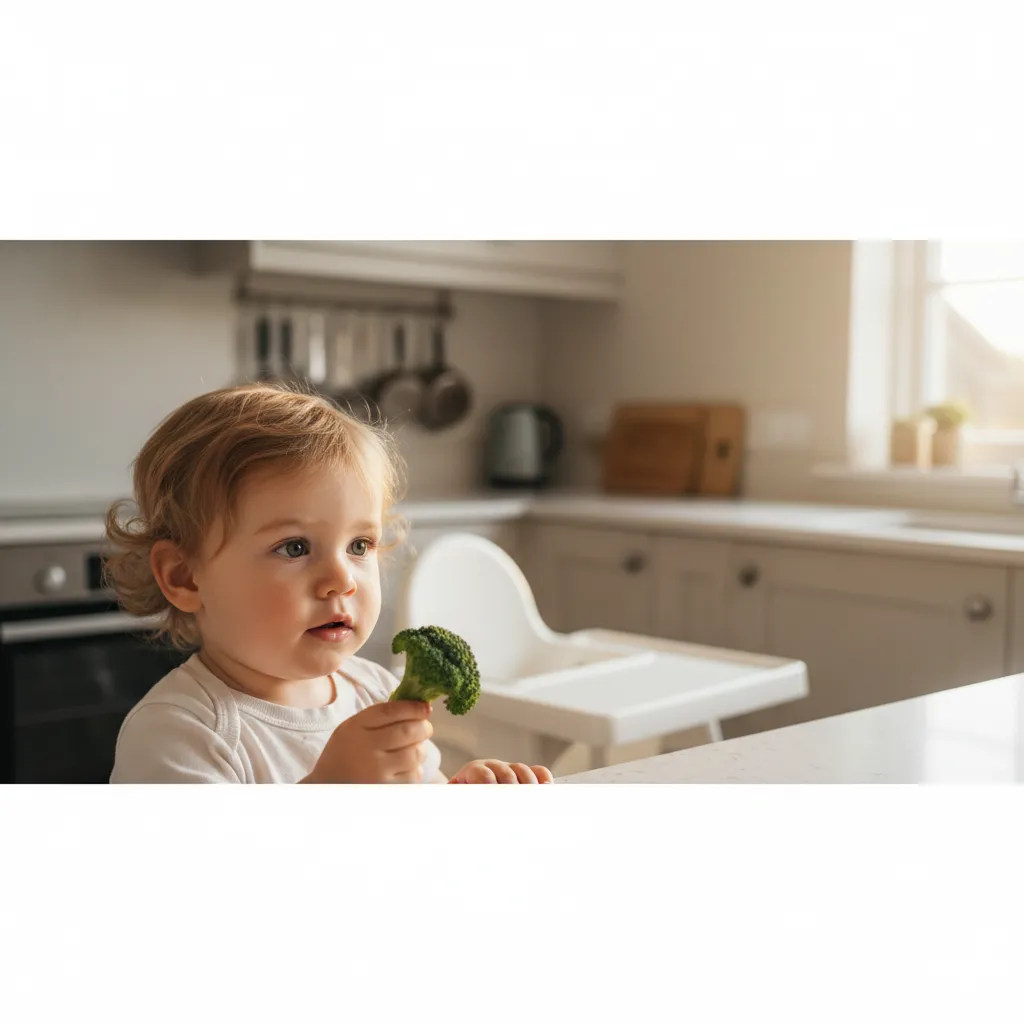
The NHS recommends five portions of fruit and vegetables per day for children aged five and over. For younger children, portions are naturally smaller, and three to four combined servings of fruit and vegetables is a reasonable starting point. A child-sized portion is roughly what fits in the palm of their hand.
Data from the Health Survey for England shows that only around 18% of children aged 5 to 15 meet this target. The average intake is closer to three portions per day, with vegetables making up a smaller share than fruit. So if your child is eating some vegetables but not hitting five a day, they are in the majority.
That said, vegetables are critically important. They provide fibre, vitamins A and C, folate, potassium, and a wide range of protective plant compounds. Adequate vegetable intake supports healthy digestion (a topic I cover in detail in my article on constipation in children and the role of fibre), immune function, and long-term weight management. Research consistently links higher vegetable consumption in childhood with reduced risk of obesity and chronic disease in adulthood.
| Age Group | Suggested Daily Vegetable Portions | Portion Size Guide | Example |
|---|---|---|---|
| 1 to 3 years | 2 to 3 | 1 to 2 tablespoons | 2 tbsp cooked carrots |
| 4 to 6 years | 3 to 4 | 2 to 3 tablespoons | 3 tbsp peas |
| 7 to 10 years | 4 to 5 | 3 to 4 tablespoons | Half a pepper, sliced |
| 11 years and over | 5 | Adult-sized handful (80g) | 3 heaped tbsp sweetcorn |
One thing I always tell parents in clinic: any vegetable is better than no vegetable. If your child reliably eats sweetcorn and nothing else, that is a foundation to build on, not a failure.
Proven Strategies to Get Your Child to Eat Vegetables
Over the years, I have worked with hundreds of families to improve their children’s vegetable intake. Here are the strategies with the strongest evidence behind them, and the ones I have seen work most consistently in real family kitchens.
1. Offer Repeated Exposure Without Pressure
This is the single most important strategy. Research published in the American Journal of Clinical Nutrition found that children may need 10 to 15 tastings of a new vegetable before they accept it. Most parents give up after three or four attempts. The key is to keep offering without making it a big deal. Place the vegetable on their plate alongside familiar foods, and do not comment if they leave it. Over time, familiarity grows and resistance decreases.
2. Serve Vegetables First
One of my favourite tricks is to offer vegetables as a starter. Put out a small plate of raw vegetable sticks, cherry tomatoes, or steamed broccoli florets while you are finishing the rest of the meal. When children are genuinely hungry, they are far more likely to eat what is in front of them. Studies have shown this simple timing change can increase vegetable consumption by 50%.
3. Involve Children in Growing, Shopping, and Cooking
Children who participate in preparing food develop a sense of ownership and curiosity about what they are eating. Even a three-year-old can wash lettuce, tear herbs, or arrange vegetables on a plate. Research from the University of Alberta found that children who helped prepare meals were twice as likely to eat vegetables compared to those who did not.
If you have any outdoor space at all, growing something simple like cherry tomatoes, runner beans, or radishes can transform a child’s willingness to try vegetables. There is something almost magical about eating food you have grown yourself.
4. Model the Behaviour You Want to See
Children learn about eating by watching the people around them. If you visibly enjoy your vegetables at mealtimes, your child is more likely to follow suit. Conversely, if other family members avoid vegetables or make negative comments about them, children quickly pick up on those cues. I always encourage the whole family to eat together when possible, with everyone eating the same meal.
5. Offer Choice and Autonomy
Young children crave a sense of control, and mealtimes are often one of the few areas where they can exercise it. Rather than dictating what they must eat, try offering limited choices: “Would you like carrots or peas with dinner tonight?” This approach respects their developing independence while still ensuring vegetables are on the table.
6. Use Bridges from Accepted Foods
If your child likes one particular food, use it as a bridge to similar options. A child who enjoys sweetcorn might accept yellow peppers. A child who likes chips might try sweet potato wedges. A child who tolerates tomato sauce may gradually accept diced tomatoes. Small, logical steps tend to be more successful than dramatic leaps from chicken nuggets to kale salad.

Hiding Vegetables vs. Offering Them Openly
This is one of the most debated topics among parents, and I get asked about it constantly. Should you blend spinach into a smoothie and say nothing? Or should you always present vegetables visibly?
My answer is: both approaches have a place, but they serve different purposes.
Adding vegetables to sauces, soups, smoothies, and baked goods is a perfectly valid way to boost your child’s nutrient intake in the short term. If grating courgette into a Bolognese or blending butternut squash into a pasta sauce means your child is consuming more vitamins and fibre, that is a genuine win. I discuss the importance of balanced nutrition for younger children in my guide to toddler nutrition for 1 to 3 year olds.
However, hiding vegetables alone will not teach your child to eat them willingly. If your child never sees, touches, smells, or tastes a recognisable vegetable, they cannot develop familiarity or acceptance. The long-term goal is for your child to happily eat vegetables they can see and identify.
My recommended approach is a combination:
- Boost nutrition now by adding vegetables to mixed dishes where they blend in naturally
- Build acceptance over time by also offering recognisable, visible vegetables alongside meals
- Be honest when asked: if your child asks what is in the sauce, tell them. Trust is essential to a healthy feeding relationship
- Gradually reduce how finely you blend or chop the vegetables so your child adjusts to more visible textures
One approach I particularly like is what I call the “familiar plus new” plate. Serve a meal you know your child enjoys, include one vegetable they already tolerate, and add a small portion of something new. No pressure, no drama, just consistent exposure.
Age-by-Age Guide to Introducing Vegetables
The way you approach vegetables should shift as your child grows. What works for a one-year-old will not work for a seven-year-old, and understanding these developmental stages helps you set realistic expectations.
6 to 12 Months: The Weaning Window
This is a golden opportunity. Babies who are exposed to a wide variety of vegetable flavours during weaning are more likely to accept them as toddlers and beyond. Research from University College London found that offering vegetables before fruit during weaning increased vegetable acceptance. I cover this critical period in depth in my article on healthy weaning and introducing solid foods.
During this stage, offer single-vegetable purées or soft vegetable fingers (for baby-led weaning). Rotate through as many different vegetables as possible: broccoli, cauliflower, courgette, sweet potato, parsnip, butternut squash, spinach, peas, and more. Do not be discouraged by funny faces; they are processing a new experience, not necessarily rejecting it.
1 to 3 Years: Navigating Food Neophobia
This is when vegetable refusal typically begins in earnest. Toddlers are asserting their independence, and food is one of the areas they can control. Stay calm and keep offering. Serve small portions alongside foods they enjoy. Let them explore vegetables with their hands. Accept that some days they will eat well and others they will not.
Avoid using dessert as a reward for eating vegetables, as this teaches children that vegetables are the unpleasant thing they must endure to reach the good stuff. Instead, treat all foods neutrally.
4 to 7 Years: Building on Curiosity
School-age children are increasingly influenced by peers, which can work for or against you. Encourage involvement in cooking, try growing vegetables together, and use age-appropriate conversations about what different foods do for their bodies. Avoid labelling foods as “good” or “bad” and instead talk about how vegetables give them energy, help them run faster, or keep them from getting poorly.
8 to 12 Years: Developing Independence
Older children can take a more active role in meal planning and preparation. Teach them simple recipes that include vegetables. Let them choose vegetables at the supermarket. Discuss nutrition in a straightforward way without moralising about food choices. Children of this age respond well to feeling trusted and capable.
Vegetables Children Are Most Likely to Accept
Not all vegetables are created equal in the eyes of a child. Some are naturally milder, sweeter, or have more appealing textures. If you are struggling to get your child to eat any vegetables at all, start with the ones that have the highest acceptance rates and build from there.
| Vegetable | Why Children Tend to Accept It | Serving Suggestions |
|---|---|---|
| Sweetcorn | Naturally sweet, fun texture | On the cob, in fritters, mixed into rice |
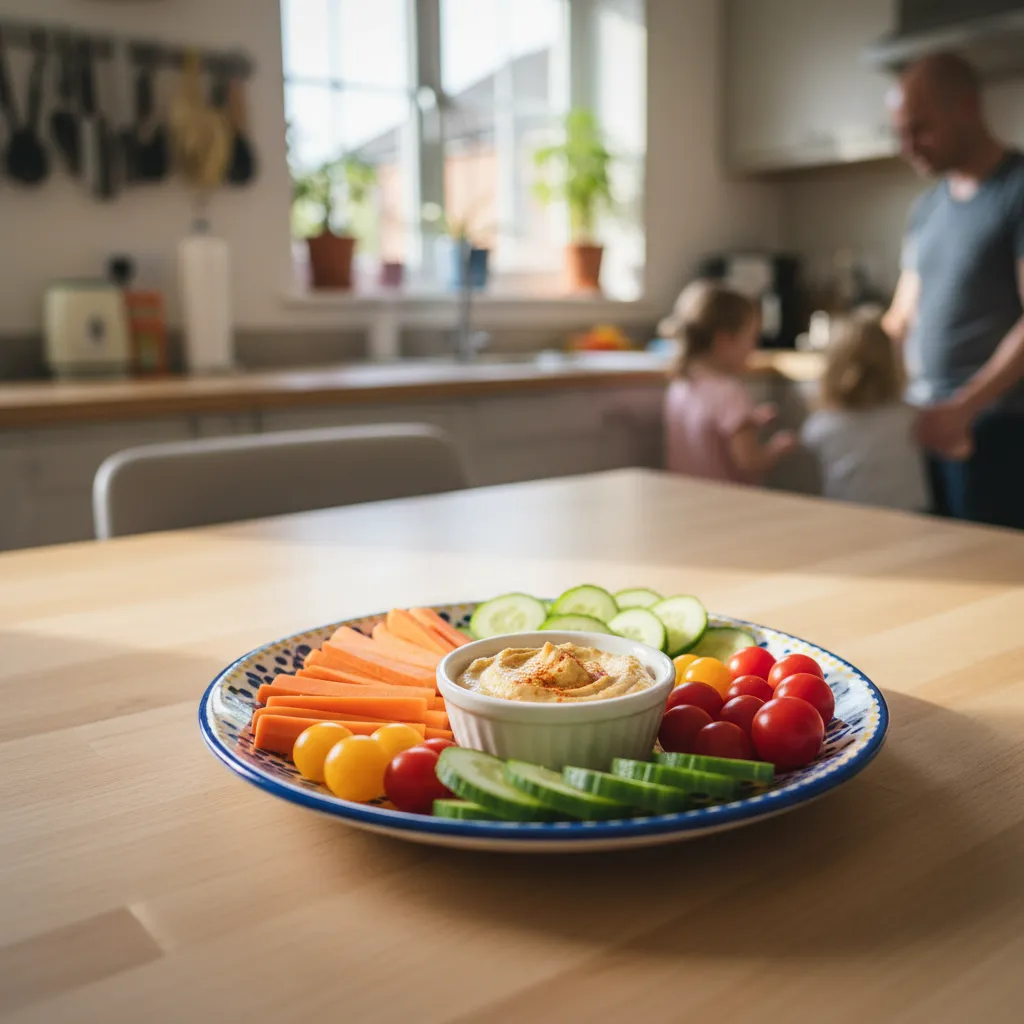
| Carrots | Sweet flavour, appealing colour | Raw sticks with hummus, roasted, in soup |
| Peas | Mild, small, easy to eat | Straight from pod, in pasta, mushy peas |
| Cucumber | Mild, crunchy, high water content | Sticks, in wraps, as “boats” with filling |
| Cherry tomatoes | Sweet, bite-sized | Halved as snack, in pasta sauce, on pizza |
| Sweet potato | Naturally sweet, soft texture | Wedges, mashed, in curry |
| Red pepper | Sweet, crunchy when raw | Strips with dip, roasted, in stir-fry |
| Broccoli | “Little trees” appeal, mild when steamed | Steamed with butter, in cheese sauce, raw with dip |
I always tell parents to think of these as gateway vegetables. Once your child is comfortable with three or four options, you can gradually introduce new ones using the bridging technique I described earlier. The goal is not perfection; it is progress.
It is also worth noting that how you prepare a vegetable can make an enormous difference. A child who hates boiled broccoli might love it roasted with a little olive oil, or raw with a favourite dip. Preparation method matters just as much as the vegetable itself.
Meal Ideas That Make Vegetables Appealing
Sometimes, the best way to get your child to eat vegetables is simply to present them in a way that feels fun, familiar, or delicious. Here are some of the meal and snack ideas that I recommend most often to families in my practice.
Meals with Built-in Vegetables
- Vegetable-loaded pasta sauce: blend onions, carrots, courgette, peppers, and tinned tomatoes into a smooth sauce. Gradually leave it chunkier as your child adjusts
- Homemade pizza: let children choose their own vegetable toppings from a selection. Sweetcorn, peppers, mushrooms, and cherry tomatoes work well
- Stir-fry with noodles: thinly sliced colourful vegetables cook quickly and absorb flavour from a mild sauce
- Vegetable fritters or patties: grated courgette, sweetcorn, or carrot mixed with egg and a little flour, then pan-fried. These are portable, dippable, and extremely popular with younger children
- Soup: blended vegetable soups are an excellent way to introduce complex flavours. Butternut squash, tomato and red pepper, or carrot and coriander are reliably well-received
Vegetable Snack Ideas
- Raw vegetable sticks with hummus, cream cheese, or guacamole
- Frozen peas straight from the bag (many children love these as a cold snack)
- Roasted chickpeas with diced roasted vegetables
- Vegetable muffins made with grated carrot or courgette
- Cucumber “boats” filled with tuna or cottage cheese
For more ideas on nutritious between-meal options, have a look at my collection of 30 healthy snack ideas for children. Many of these incorporate vegetables in creative ways.
I also want to mention the impact of ultra-processed foods on children’s health. When children consume large amounts of ultra-processed snacks and meals, their palates become accustomed to intense flavours and high sugar levels, making natural vegetable flavours seem bland by comparison. Reducing ultra-processed food intake can, over time, help recalibrate your child’s taste preferences.
What to Do When Nothing Seems to Work
I understand how exhausting and disheartening it can feel when you have tried everything and your child still will not touch a vegetable. Here is what I want you to hear: persistent vegetable refusal does not mean you are doing something wrong. Some children take longer than others, and some have underlying factors that make eating more challenging.
When to Seek Professional Help
Most vegetable refusal is within the normal range and will improve with time and consistent, pressure-free exposure. However, you should consider speaking to your GP or a paediatric dietitian if:
- Your child eats fewer than 20 foods in total and the range is shrinking rather than growing
- They gag, retch, or vomit when presented with certain textures
- They have significant anxiety or distress around mealtimes
- Their growth is being affected (your health visitor or GP can check this using growth charts; I explain how these work in my guide to child weight charts and centiles in the UK)
- They have a diagnosed condition such as autism spectrum disorder or sensory processing difficulties that affects eating
The NICE guidelines on faltering growth can also help you understand when a child’s eating patterns warrant further investigation.
Avoiding Common Mistakes
In my experience, there are several well-meaning approaches that often backfire:
- “You must eat three more bites”: forcing a specific quantity increases resistance and can lead to emotional eating patterns later in life
- “No pudding until you eat your peas”: using dessert as a reward elevates its status and devalues vegetables
- “That is disgusting” or “I hate broccoli too”: negative talk about vegetables from adults reinforces the child’s refusal
- Making a separate meal: while occasionally necessary, routinely cooking an alternative teaches children that refusing food results in getting something they prefer
- Giving up after a few attempts: remember, 10 to 15 exposures is the evidence-based benchmark, and some children need even more
The Role of the Wider Environment
A child’s eating habits do not exist in isolation. Factors like adequate sleep, regular physical activity, and consistent meal routines all influence appetite and food acceptance. Children who are overtired or have been snacking heavily throughout the day are less likely to try new foods at mealtimes. Research shows that sleep significantly affects children’s appetite regulation, so ensuring adequate rest can indirectly support better vegetable intake.
Similarly, children who are physically active tend to have healthier appetites and greater willingness to eat a variety of foods. If your child is not particularly active, my guide on fun ways to keep children active has plenty of ideas that do not feel like structured exercise.
Maintaining a Healthy Weight
Vegetable intake plays an important role in maintaining a healthy weight throughout childhood. Vegetables are naturally low in calories and high in fibre, which helps children feel full and satisfied without overconsumption. If you have concerns about your child’s weight, it is worth understanding the risk factors for childhood obesity and how diet, activity, and other lifestyle factors interact.
You can also use the BMI calculator for children to check whether your child is in a healthy weight range, though I always recommend discussing the results with a health professional who can take your child’s individual circumstances into account.
Keep the Long View
I want to leave you with something I tell nearly every parent who sits across from me in clinic: your child’s relationship with vegetables is a marathon, not a sprint. The eating habits they develop during childhood are shaped over years, not weeks. Every positive exposure counts, even if it does not look like progress in the moment. A child who watches you eat and enjoy a salad is learning something. A child who touches a piece of broccoli but does not eat it is one step closer to trying it.
Celebrate the small victories. Stay patient. And above all, keep mealtimes as relaxed and enjoyable as you possibly can. A calm, happy atmosphere at the table does more for your child’s long-term eating habits than any single strategy or superfood ever could.
Key Points
- Offer new vegetables 10 to 15 times without pressure before assuming your child does not like them
- Serve a small plate of vegetable sticks before the main meal when your child is most hungry
- Involve your child in growing, shopping for, and preparing vegetables to build curiosity and ownership
- Use a combined approach: blend vegetables into sauces for short-term nutrition while continuing to offer visible vegetables for long-term acceptance
- Seek advice from your GP or a paediatric dietitian if your child eats fewer than 20 foods or shows signs of distress at mealtimes
Frequently Asked Questions
How many times should I offer a vegetable before my child will eat it?
Research suggests that children may need between 10 and 15 exposures to a new vegetable before they willingly accept it. An “exposure” does not necessarily mean eating it. Looking at it on the plate, touching it, smelling it, or licking it all count as steps towards acceptance. The key is to keep offering without pressure, and not to give up after just a few attempts. Some children with sensory sensitivities may need even more exposures, so patience is essential.
Is it okay to hide vegetables in my child’s food?
Adding vegetables to sauces, soups, and baked goods is a perfectly good way to boost your child’s nutrient intake. However, it should not be your only strategy. Hiding vegetables alone will not teach your child to recognise, accept, and enjoy them. I recommend a combined approach: blend vegetables into mixed dishes for nutritional benefit while also offering visible, identifiable vegetables alongside meals to build familiarity over time.
Should I use rewards or dessert to encourage my child to eat vegetables?
I strongly advise against using dessert or treats as a reward for eating vegetables. This approach, while tempting, sends the message that vegetables are the unpleasant task and dessert is the prize. Over time, it can increase the perceived value of sweet foods while making vegetables seem even less appealing. Instead, serve all parts of the meal together and allow your child to eat in the order they choose, without conditions attached.
My child only eats one or two vegetables. Is that enough?
While the NHS recommends five portions of fruit and vegetables per day, any vegetable intake is better than none. If your child reliably eats one or two vegetables, that gives you a solid foundation to build on. Use those accepted vegetables as “bridges” to introduce similar options. For example, if they eat carrots, try sweet potato or butternut squash. Gradually expanding their repertoire over weeks and months is more effective than trying to overhaul their diet overnight.
When should I worry about my child’s vegetable refusal?
Most vegetable refusal falls within the normal range of childhood eating behaviour and improves with consistent, patient exposure. However, you should speak to your GP or a paediatric dietitian if your child eats fewer than 20 foods overall, if their food range is shrinking, if they gag or vomit with certain textures, or if their growth appears to be affected. Children with autism spectrum disorder or sensory processing difficulties may benefit from specialist support with a speech and language therapist or occupational therapist experienced in feeding.
Does the way I cook vegetables make a difference?
Absolutely. Preparation method can completely change whether a child accepts or refuses a vegetable. Many children dislike boiled or steamed vegetables but happily eat the same vegetables when roasted, served raw, or prepared with a dip. Roasting brings out natural sweetness in vegetables like carrots, peppers, and sweet potatoes. Offering vegetables raw with hummus or cream cheese gives children a satisfying crunch. Experiment with different cooking methods before concluding that your child does not like a particular vegetable.