Key Takeaways
- UK food labels display energy in both kilojoules (kJ) and kilocalories (kcal), with kcal being the figure most families use daily
- The traffic light system (red, amber, green) on front-of-pack labels gives you an instant snapshot of whether a product is high, medium, or low in calories, fat, sugar, and salt
- An average child aged 7 to 10 needs approximately 1,740 to 2,032 kcal per day, while adults require around 2,000 to 2,500 kcal
- Always check the “per 100g” column rather than “per serving” when comparing products, as serving sizes vary between brands
- The Reference Intake (RI) percentage on labels is based on an average adult consuming 2,000 kcal per day and does not apply directly to children
- Under UK food labelling regulations, all pre-packed foods must display a nutrition declaration including energy values
In This Article
- What Are Calories and Why Do They Matter?
- Understanding UK Food Label Layout
- Front-of-Pack Traffic Light Labels
- Per 100g Versus Per Serving: Which Should You Use?
- Reference Intakes and Percentage RI
- Calorie Needs for Children by Age
- Common Mistakes Parents Make Reading Labels
- Practical Tips for Supermarket Shopping
- Beyond Calories: The Bigger Picture
As a paediatric nutritionist working across the NHS and private practice in Bristol, I spend a surprising amount of my time talking about food labels. Not because they’re glamorous, but because understanding how to read calories on food labels UK style is one of the most practical skills any parent can develop. When you can decode a label confidently, you gain genuine control over what your family eats, and that knowledge compounds over weeks, months, and years into better health outcomes for everyone at the table.
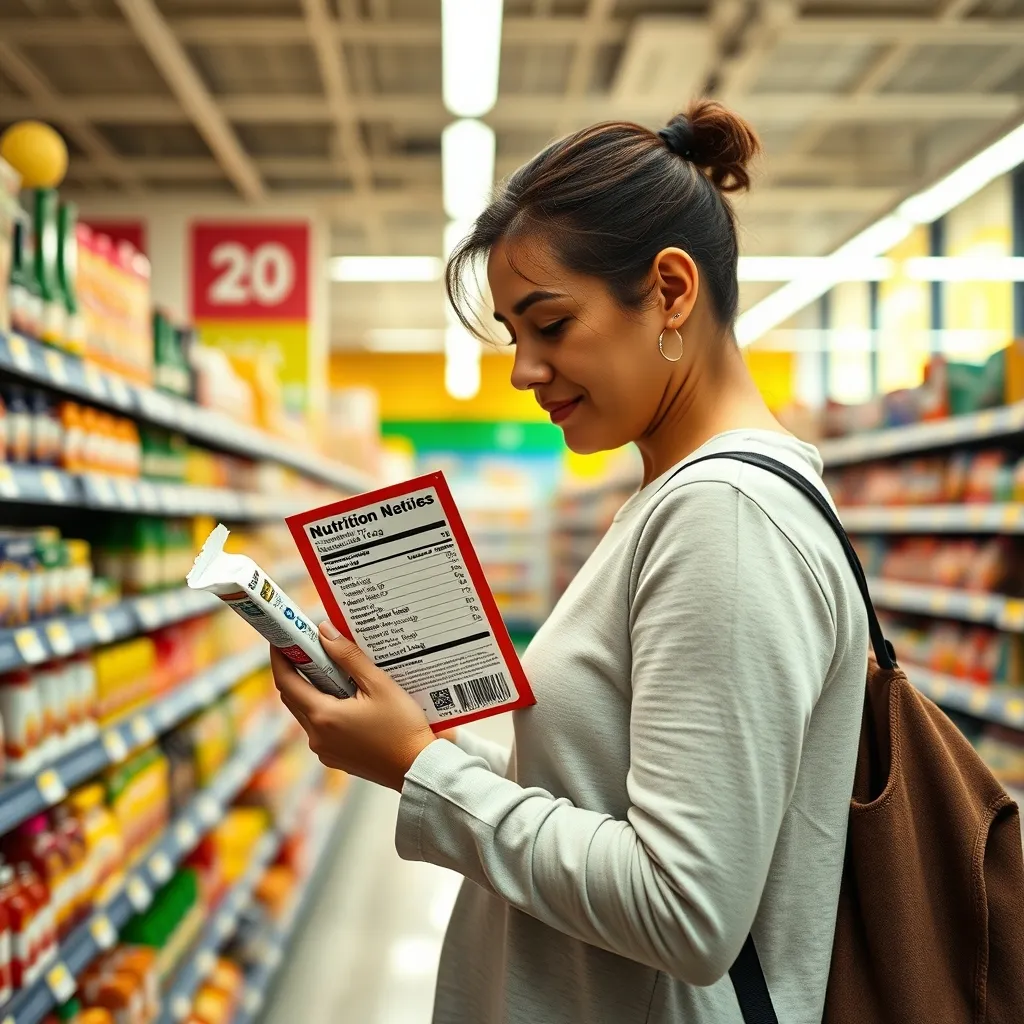
In this guide, I’ll walk you through every element of UK food labelling, from the back-of-pack nutrition table to the front-of-pack traffic light system. Whether you’re comparing breakfast cereals, checking a snack bar for your child’s lunchbox, or simply trying to make sense of all those numbers, I’ll give you the tools to read labels like a professional.
What Are Calories and Why Do They Matter?
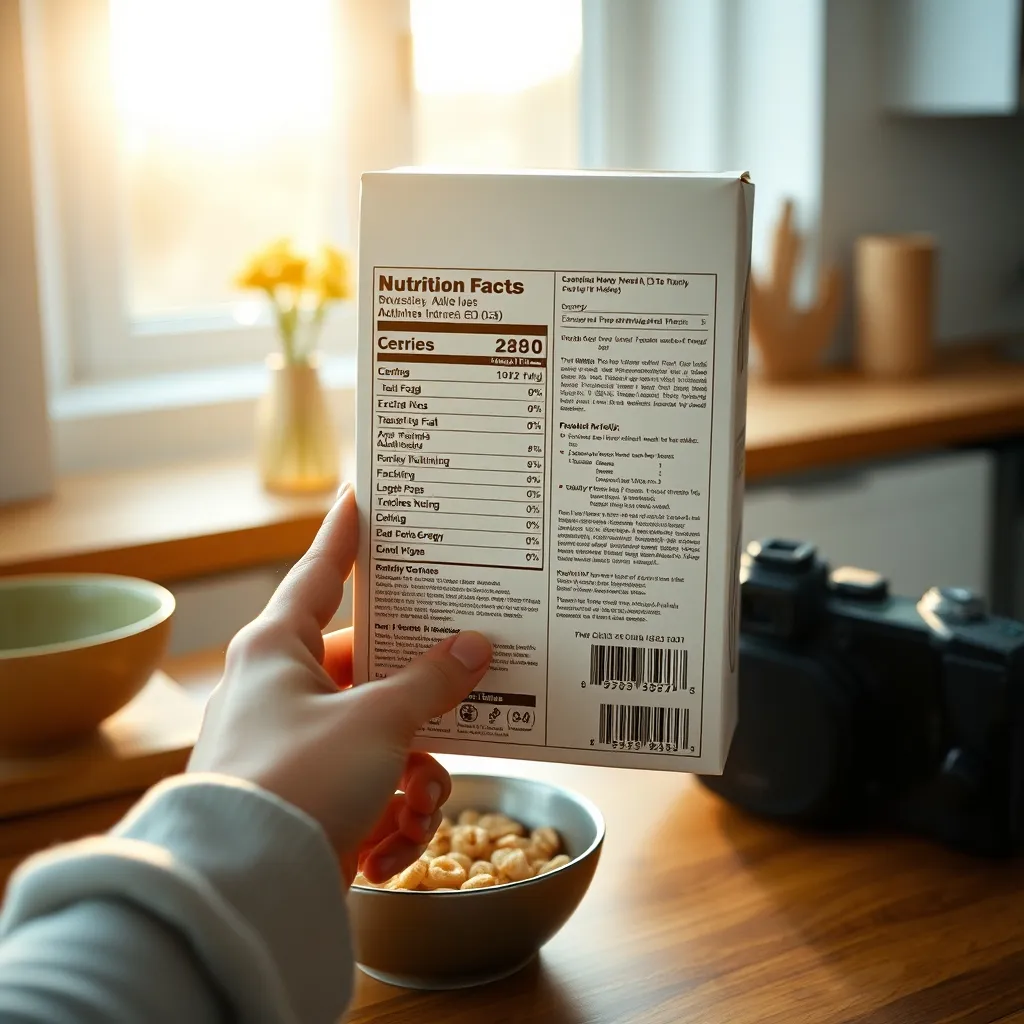
Before we dive into labels, let’s clarify what we actually mean by “calories.” In scientific terms, the energy in food is measured in kilocalories (kcal) or kilojoules (kJ). When most people say “calories,” they’re referring to kilocalories. One kilocalorie equals approximately 4.184 kilojoules. Both values appear on every UK food label, which can be confusing at first glance, but once you know to focus on the kcal figure, the numbers become much simpler.
Calories are essentially the fuel our bodies need to function. Every activity, from breathing and sleeping to running around the playground, requires energy. The challenge is getting the right amount: too few calories and children can’t grow and develop properly; too many over a sustained period, and excess energy is stored as fat. According to NHS guidance on reading food labels, understanding energy values is the foundation of making healthier choices for your family.
I often explain it to parents this way: calories tell you how much energy a food gives you, but they don’t tell you how nutritious that food is. A chocolate bar and a bowl of porridge with fruit might contain similar calories, but the porridge delivers fibre, vitamins, and sustained energy, while the chocolate bar provides a brief sugar spike. That’s why calories are just one piece of the puzzle, albeit an important one.
Understanding UK Food Label Layout
UK food labels follow a standardised format that, once you understand it, becomes remarkably easy to read. The back-of-pack nutrition table is the most detailed source of information. By law, all pre-packed foods sold in the UK must include this table, and it always lists the same core nutrients in the same order.
Here’s what you’ll typically find on the back of a pack:
- Energy (in kJ and kcal)
- Fat (with saturates listed separately)
- Carbohydrate (with sugars listed separately)
- Fibre
- Protein
- Salt
These values are always given per 100g or 100ml, and many manufacturers also include a “per serving” column. Some labels additionally show vitamins and minerals, though this isn’t mandatory unless a health claim is made on the packaging. The British Nutrition Foundation’s food labelling guide provides an excellent overview of what each section means and how it’s regulated.
I always tell parents to start by locating the energy row in the table. The kcal figure is the one you want. Ignore the kJ value unless you’re working with a healthcare professional who specifically uses kilojoules. Then scan down through fat, saturates, sugars, and salt, as these are the nutrients most of us need to watch carefully.
Front-of-Pack Traffic Light Labels
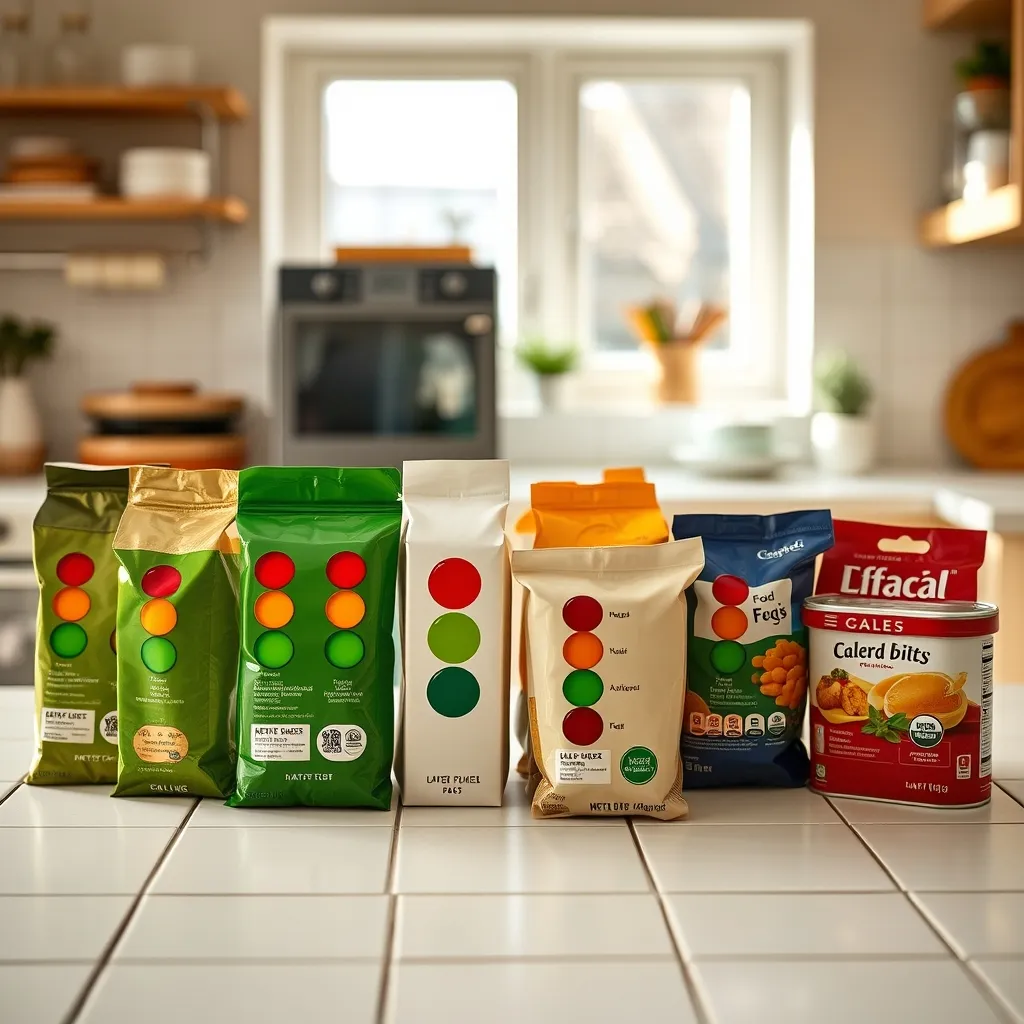
One of the most helpful innovations in UK food labelling is the front-of-pack traffic light system. Developed in partnership with the Food Standards Agency, this voluntary scheme uses colour coding to show at a glance whether a product is high (red), medium (amber), or low (green) in four key areas: fat, saturated fat, sugars, and salt. Many labels also include the calorie content prominently alongside these colour-coded indicators.
The traffic light system is based on the per 100g values. Here’s how the thresholds work for food products:
| Nutrient (per 100g) | Green (Low) | Amber (Medium) | Red (High) |
|---|---|---|---|
| Fat | 3g or less | 3.1g to 17.5g | More than 17.5g |
| Saturated fat | 1.5g or less | 1.6g to 5g | More than 5g |
| Sugars | 5g or less | 5.1g to 22.5g | More than 22.5g |
| Salt | 0.3g or less | 0.31g to 1.5g | More than 1.5g |
My practical rule of thumb for parents: aim for mostly greens and ambers. An occasional red is perfectly fine, but if a product has three or four reds, it’s worth pausing and considering whether there’s a better alternative on the shelf. This system makes it particularly easy to compare similar products quickly. For example, you might find that two brands of pasta sauce look identical but one has significantly less sugar, something you’d spot in seconds with the traffic light colours.
It’s worth noting that this scheme is voluntary, so not every product carries it. Supermarket own-brand products almost always do, while some international brands may not. When there’s no front-of-pack label, you’ll need to turn to the back-of-pack nutrition table instead.
Per 100g Versus Per Serving: Which Should You Use?
This is one of the questions I get asked most frequently, and it’s genuinely important. The answer is: use per 100g for comparing products and per serving for understanding what you’re actually eating.
Let me give you a real-world example. Say you’re choosing between two brands of granola. Brand A lists 450 kcal per 100g with a suggested serving of 40g (180 kcal). Brand B lists 420 kcal per 100g with a suggested serving of 60g (252 kcal). If you only looked at the per serving column, Brand A appears lighter. But if you compared like for like using the per 100g column, you’d see that Brand B is actually lower in calories gram for gram.
The problem with serving sizes is that manufacturers define them themselves, and they vary enormously. One cereal brand might consider a serving to be 30g (barely covering the bottom of a bowl), while another uses 50g. There’s no universal standard, which is why the per 100g column is your most reliable comparison tool.
That said, the per serving column is useful once you’ve chosen a product. It helps you understand how many calories your child will actually consume from a realistic portion. If you’re preparing a lunch box, for instance, knowing the per serving values of each component helps you build a balanced meal without guesswork. For more detailed guidance on appropriate amounts for different ages, have a look at my article on portion sizes for children by age.
Reference Intakes and Percentage RI
You’ll often see a percentage figure on labels, usually written as %RI (Reference Intake). This tells you what proportion of an adult’s daily recommended intake that serving provides. For energy, the Reference Intake is set at 2,000 kcal per day, which is based on an average adult woman. For men, the figure is typically around 2,500 kcal.
Here’s the crucial point that many parents miss: Reference Intakes are designed for adults, not children. A biscuit that provides 10% of an adult’s daily calories provides a much larger percentage of a five-year-old’s daily needs. This is a critical distinction when you’re shopping for your family. I cover children’s specific calorie requirements in the next section.
The %RI is still useful as a quick sense check. If a single snack provides 25% or more of the adult RI for sugar, fat, or salt, it’s worth questioning whether it’s really a snack or more of a meal’s worth of that nutrient. I find this percentage particularly helpful for items like cereal bars, yoghurt pots, and ready meals, where the marketing often suggests they’re lighter than they really are.
It’s also worth knowing that Reference Intakes replaced the old term Guideline Daily Amounts (GDAs). If you see older packaging mentioning GDAs, the concept is essentially the same, but the RI system is now the standard across the UK and EU. The Food Standards Agency’s Check the Label guidance explains these values in further detail.
Calorie Needs for Children by Age
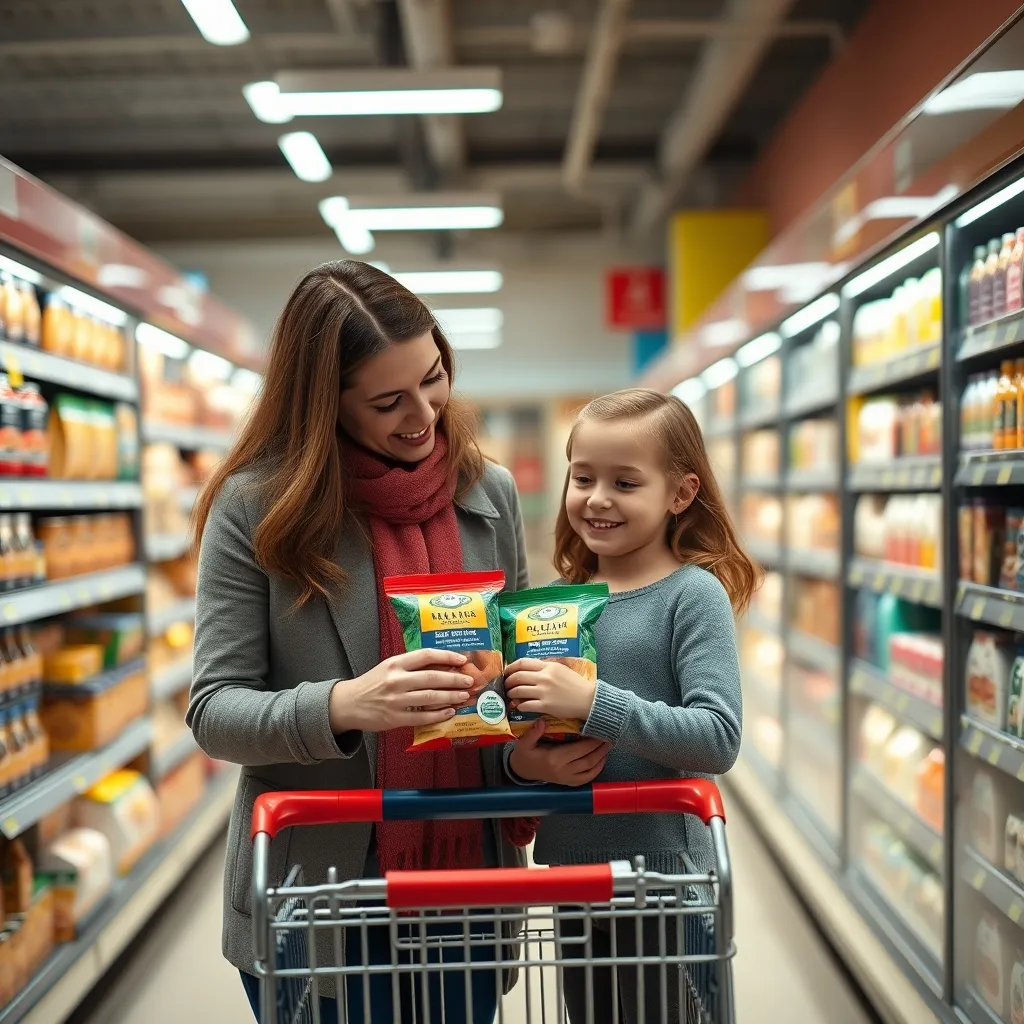
Understanding how many calories your child needs each day is essential context for reading food labels effectively. Without this benchmark, the numbers on a packet are just abstract figures. Here are the approximate daily calorie requirements for children in the UK, based on government dietary reference values:
| Age Group | Boys (kcal/day) | Girls (kcal/day) |
|---|---|---|
| 1 to 3 years | 1,230 | 1,165 |
| 4 to 6 years | 1,715 | 1,545 |
| 7 to 10 years | 2,032 | 1,740 |
| 11 to 14 years | 2,500 | 2,032 |
| 15 to 18 years | 2,820 | 2,390 |
These figures are averages and will vary depending on your child’s activity level, build, and stage of growth. Very active children may need more, while less active children may need fewer calories. The key takeaway is that a four-year-old’s needs are dramatically different from a teenager’s, and both are different from the adult figure used on labels.
When I work with families in clinic, I encourage them to use these figures as a rough guide rather than counting every calorie religiously. The goal isn’t to create anxiety around food; it’s to help you recognise when a single snack or meal is providing a disproportionate chunk of your child’s daily energy. If a cereal bar delivers 200 kcal and your four-year-old daughter needs around 1,545 kcal per day, that one small item accounts for roughly 13% of her total intake. That context changes how you think about snacks.
For families working towards a balanced weekly meal plan, knowing these benchmarks makes planning considerably easier. You can also find helpful advice in my guide on healthy eating for children in the UK.
Common Mistakes Parents Make Reading Labels
After years of running nutrition workshops for parents, I’ve noticed the same misunderstandings come up again and again. Here are the most common pitfalls and how to avoid them:
1. Confusing kJ with kcal. The kilojoule figure is always much larger than the kilocalorie figure, and I’ve seen parents panic because they think a yoghurt contains 500 “calories” when the figure they’re reading is actually 500 kJ (which is only about 120 kcal). Always look for the kcal line.
2. Trusting “per serving” blindly. As I explained earlier, serving sizes are set by the manufacturer. A small pot of hummus might list a 30g serving, but most people eat double that when dipping with breadsticks. Always mentally adjust for how much your family actually eats.
3. Assuming “low fat” means low calorie. Many reduced-fat products compensate by adding extra sugar to maintain flavour. A “low-fat” yoghurt can sometimes contain more calories than the full-fat version once the added sugars are factored in. Compare the full nutrition panels side by side.
4. Ignoring drinks. Fruit juices, smoothies, flavoured milks, and squashes all carry calories, yet parents frequently overlook them. A 250ml glass of orange juice contains approximately 110 kcal and 24g of sugar. The NHS recommends limiting juice to a 150ml portion per day for children, diluted with water.
5. Overlooking salt content. While this article focuses on calories, salt is another nutrient parents frequently underestimate. Children aged 4 to 6 should have no more than 3g of salt per day, and many processed foods contribute a significant portion of this limit in a single serving.
For a more comprehensive look at navigating food packaging, my parent’s guide to understanding food labels covers each of these issues in greater depth.
Practical Tips for Supermarket Shopping
Reading labels is a skill, and like any skill, it gets faster with practice. Here are the strategies I recommend to families I work with:
Start with the traffic lights. Before you even pick up a product, glance at the front-of-pack colours. If it’s mostly green, you’re in good territory. If there are reds, turn the pack over and investigate further.
Compare two, then decide. You don’t need to analyse every product on the shelf. Pick up two similar items, compare their per 100g values, and choose the one that best fits your family’s needs. Over time, you’ll build a mental shortlist of reliable choices.
Watch for health claims. Phrases like “natural,” “wholesome,” and “made with real fruit” are marketing language, not nutritional guarantees. A cereal bar “made with real fruit” might still contain 15g of sugar per bar. The nutrition table doesn’t lie; the front of the package sometimes does.
Plan before you shop. If you’ve already planned your meals for the week, you’ll spend less time deliberating in the aisles and be less susceptible to impulse buys. I’ve written extensively about this in my article on organising healthy family meals.
Involve your children. For older children and teenagers, supermarket trips can be a genuine learning opportunity. Challenge them to find the cereal with the lowest sugar per 100g or to compare the calorie content of different sandwich fillings for their lunch box sandwiches. Making it interactive builds lifelong habits.
Use technology wisely. Several apps available in the UK allow you to scan barcodes and instantly see nutritional breakdowns. While these shouldn’t replace the ability to read a label yourself, they can speed things up on busy shopping days, particularly when you’re juggling children at the same time.
If you’re also trying to manage the household budget, my guide to budget-friendly healthy meals for families offers practical strategies for balancing nutrition with cost.
Beyond Calories: The Bigger Picture
I want to end with something I feel strongly about as both a nutritionist and a mother. Calories matter, but they are not the whole story. A diet that hits the right calorie target but is filled with ultra-processed foods, low in fibre, and lacking in vitamins is not a healthy diet. Equally, obsessing over every calorie on every label can create an unhealthy relationship with food, particularly for children and teenagers.
The purpose of learning to read labels is to make informed, balanced choices, not to achieve perfection. Some days your child will eat a biscuit that’s entirely red on the traffic light scale, and that’s absolutely fine. What matters is the overall pattern of eating across the week.
I encourage families to think about food quality alongside quantity. A homemade packed lunch with a variety of colours, textures, and food groups will almost always outperform a calorie-matched selection of processed snacks. If you need inspiration, my articles on lunch box ideas for teenagers and vegan lunch box ideas offer plenty of practical recipes.
For children who may be above a healthy weight, understanding labels is one component of a wider approach. My guide on how to help your child lose weight safely outlines the holistic strategy I use in practice, one that never relies on calorie restriction alone.
The British Heart Foundation’s guide to food labelling is another excellent resource if you’d like to explore the relationship between diet, labels, and long-term heart health.
Ultimately, reading food labels is about empowerment. Every time you flip a packet over and check the nutrition table, you’re making an active choice rather than a passive one. And that, in my experience, is where real, lasting change begins for families.
Key Points
- Always compare products using the per 100g column, not the per serving column, as serving sizes vary between brands
- Focus on the kcal figure for energy; ignore the kJ value unless advised otherwise by a healthcare professional
- Use the traffic light colours on front-of-pack labels for quick decisions: aim for mostly greens and ambers
- Remember that %RI values are based on adult needs (2,000 kcal); adjust mentally for your child’s age-specific requirements
- Don’t be misled by “low fat” or “natural” marketing claims; always verify by checking the full nutrition table on the back
Frequently Asked Questions
How do I read calories on food labels?
Look for the energy row in the nutrition table on the back of the pack. You’ll see two figures: kJ (kilojoules) and kcal (kilocalories). The kcal figure is what most people mean by “calories.” Check both the per 100g value (for comparing products) and the per serving value (to understand how much energy you’ll get from a typical portion). On front-of-pack labels, calories are often displayed prominently alongside the traffic light colour coding.
Does the UK use kJ or kcal?
The UK uses both kJ and kcal on food labels, as required by regulation. Kilojoules (kJ) are the internationally recognised scientific unit, while kilocalories (kcal) are the unit most commonly used and understood by consumers. In everyday conversation, when people say “calories,” they mean kcal. One kcal equals approximately 4.184 kJ, which is why the kJ number always appears much larger.
What is the 4-4-9 rule for calories?
The 4-4-9 rule refers to the approximate calorie content per gram of the three macronutrients: carbohydrates provide 4 kcal per gram, protein provides 4 kcal per gram, and fat provides 9 kcal per gram. This explains why high-fat foods tend to be more calorie-dense. For example, 10g of butter (mostly fat) contains about 74 kcal, while 10g of sugar (pure carbohydrate) contains about 40 kcal. Understanding this rule helps you see why reducing fat content often lowers the overall calorie count of a food.
Are traffic light labels mandatory on UK food products?
No, the traffic light system is voluntary in the UK. However, most major supermarkets and many large food manufacturers have adopted it because consumers find it helpful. The back-of-pack nutrition table, by contrast, is mandatory on all pre-packed food products. If a product doesn’t carry front-of-pack traffic light labels, you can still get all the information you need from the back-of-pack nutrition declaration.
How can I use food labels to choose healthier options for my children?
Start by comparing similar products using the per 100g column to find lower-calorie, lower-sugar options. Use the traffic light system for quick decisions, aiming for mostly green and amber indicators. Remember that %RI percentages are based on adult intake of 2,000 kcal, so a “10% RI” snack represents a larger proportion of a young child’s daily needs. Pay particular attention to sugar and salt values, as these are the nutrients children in the UK tend to consume in excess. Finally, look beyond calories to check fibre and protein content, as these help children feel fuller for longer.
What should I look out for besides calories on a food label?
Beyond calories, focus on saturated fat, sugars, and salt, as these are the three nutrients most closely linked to health concerns when consumed in excess. Check the fibre content too; higher-fibre foods support digestive health and help manage appetite. For children, also scan the ingredients list for added sugars, which can appear under many different names, including glucose syrup, dextrose, maltose, and honey. The closer sugar appears to the top of the ingredients list, the more of it the product contains.