Key Takeaways
- The UK traffic light system uses red, amber and green colours to show at a glance whether fat, saturates, sugar and salt levels are high, medium or low
- Reference intakes on food labels are based on adult needs of 2,000 calories per day, so parents must adjust portions for children’s smaller requirements
- Products labelled as “no added sugar” can still contain naturally occurring sugars from fruit, milk or concentrated juice
- Children aged 4-6 should consume no more than 19g of free sugars per day, equivalent to roughly 5 sugar cubes
- Checking the per 100g column rather than per serving is the most reliable way to compare products fairly
- UK law requires allergens to be highlighted in bold or italics within the ingredients list on pre-packed foods
In This Article
Why Food Labels Matter for Families
As a paediatric nutritionist working with families across Bristol and the wider South West, I spend a surprising amount of my clinic time talking about food labels. It might sound mundane, but I genuinely believe that learning to read food packaging is one of the most empowering skills a parent can develop. When you understand what those numbers, percentages and colour codes actually mean, you take back control of your family’s nutrition.
The reality is that many products marketed directly at children contain far more sugar, salt and saturated fat than parents realise. A cereal box with cartoon characters and the word “wholegrain” splashed across the front can still be loaded with free sugars. A yoghurt pouch labelled “no artificial colours” might contain the equivalent of three sugar cubes in a single serving. These are not hypothetical examples; they are items I see in food diaries every single week.
According to NHS guidance on reading food labels, understanding nutrition information helps families make healthier choices and reduce their intake of saturated fat, sugar and salt. This is particularly important given that childhood obesity rates in England remain stubbornly high, with around one in three children leaving primary school above a healthy weight.
The good news is that once you know what to look for, checking labels becomes second nature. I am going to walk you through everything you need to know, from the traffic light system to ingredient lists, and share the practical shortcuts I teach the families in my practice.
Understanding the Traffic Light System
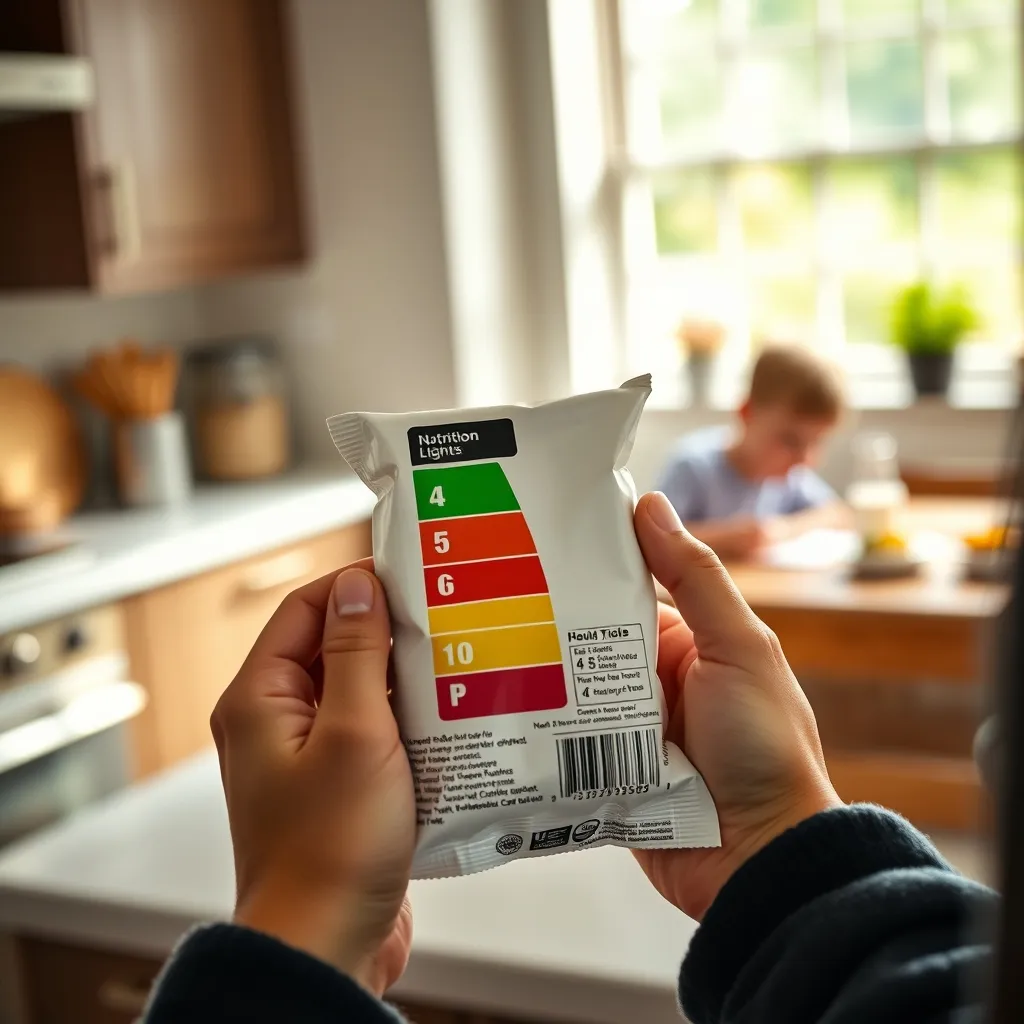
The front-of-pack traffic light label is, in my professional opinion, one of the most useful tools available to UK parents. Introduced voluntarily by major retailers and manufacturers, it gives you an instant visual snapshot of whether a product is high, medium or low in four key nutrients: fat, saturates (saturated fat), sugars and salt.
Here is how the colour coding works:
Green means low. If all four indicators are green, the product is generally a healthier choice. You can eat these foods more often and in larger portions without concern.
Amber means medium. Most foods will have some amber indicators, and that is perfectly fine. Amber foods are neither particularly healthy nor unhealthy; they form the bulk of a balanced diet.
Red means high. A red indicator does not mean you must never buy the product, but it does mean you should be mindful. If a product has multiple red indicators, I would suggest looking for an alternative or reducing how often your child eats it.
| Nutrient (per 100g) | Green (Low) | Amber (Medium) | Red (High) |
|---|---|---|---|
| Total Fat | 3g or less | 3.1g to 17.5g | More than 17.5g |
| Saturates | 1.5g or less | 1.6g to 5g | More than 5g |
| Sugars | 5g or less | 5.1g to 22.5g | More than 22.5g |
| Salt | 0.3g or less | 0.31g to 1.5g | More than 1.5g |
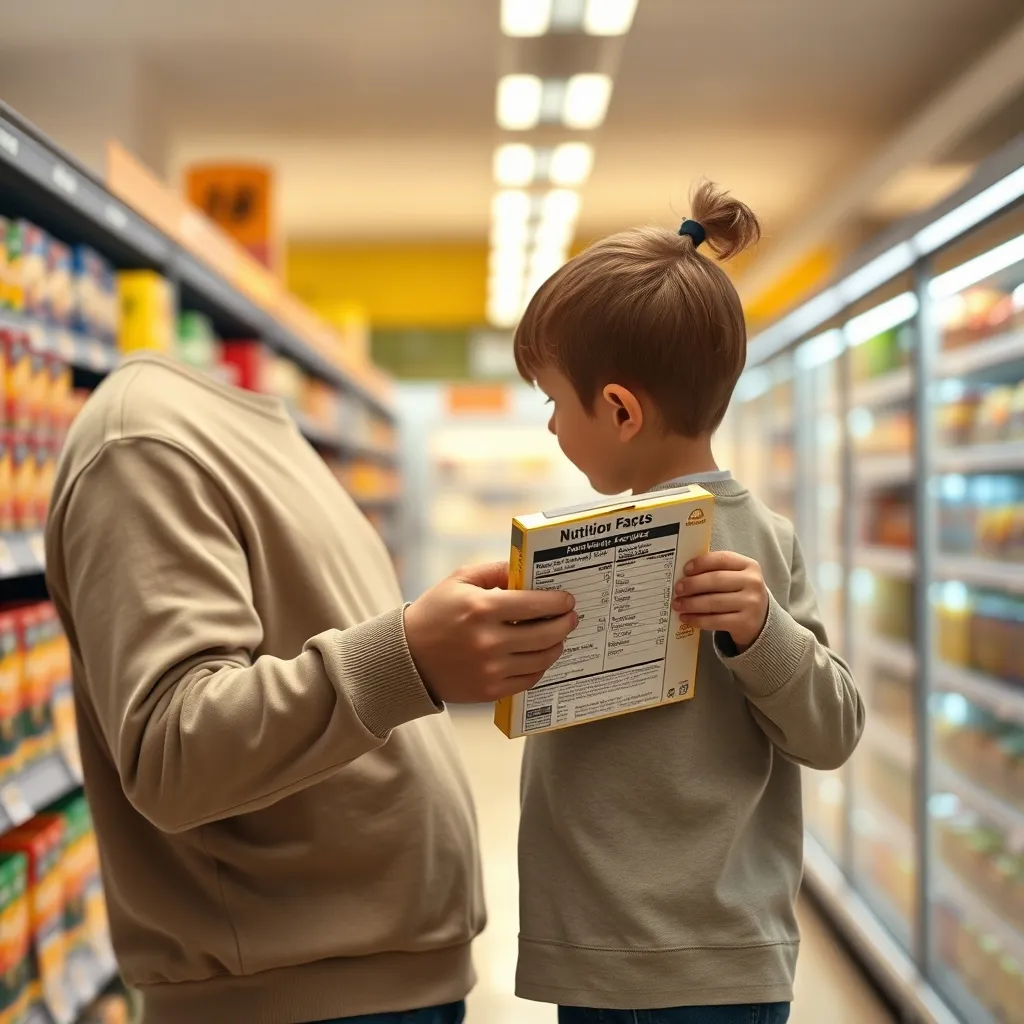
I find the traffic light system particularly helpful for quick comparisons. Standing in the cereal aisle with a restless toddler, you do not have time to scrutinise every number on the back of the box. But you can instantly see whether that cereal has a red indicator for sugar and choose the one next to it with amber instead. Over time, these small swaps make a genuine difference to your child’s overall diet.
One important caveat: not all manufacturers use the traffic light system, as it remains voluntary. Some brands use their own labelling schemes or only display the back-of-pack nutrition table. When there is no traffic light label, you will need to check the nutrition panel yourself, which I will explain next.
Reading the Nutrition Information Panel
Every pre-packed food product sold in the UK must display a nutrition information panel, usually on the back or side of the packaging. This is your most detailed and reliable source of information about what is actually in the food.
The panel will always show values per 100g (or per 100ml for drinks). Many products also show values per serving, but here is my key piece of advice: always compare using the per 100g column. Manufacturers can define their own serving sizes, and these are sometimes unrealistically small to make the numbers look better. A serving of breakfast cereal might be listed as 30g, but in my experience most children pour themselves 40-50g.
The panel typically includes:
- Energy in kilojoules (kJ) and kilocalories (kcal)
- Fat and of which saturates
- Carbohydrate and of which sugars
- Fibre
- Protein
- Salt
You will also see Reference Intake (RI) percentages. These tell you what proportion of an adult’s daily intake one serving provides. The crucial word here is “adult”. Reference intakes are based on a moderately active woman consuming 2,000 calories per day. Children need significantly fewer calories: a child aged 4-6 needs approximately 1,300-1,600 calories daily, while a child aged 7-10 needs around 1,600-2,000 calories. This means those percentages will underestimate the impact on your child’s diet.
For a practical understanding of appropriate serving sizes for different ages, you might find our guide to portion sizes for children by age helpful alongside your label reading.
Decoding the Ingredients List
The ingredients list is where the real detective work happens. By law, ingredients must be listed in descending order of weight. This means the first ingredient is present in the largest quantity, and the last ingredient is present in the smallest amount. If sugar (in any of its forms) appears within the first three ingredients, I would consider that a high-sugar product regardless of what the front of the packet claims.
What surprises many parents in my clinic is just how many different names sugar can hide behind. I have counted over 50 different terms that essentially mean added sugar. Some of the most common ones you will encounter include:
- Glucose, fructose, sucrose, dextrose, maltose
- Corn syrup, high-fructose corn syrup
- Honey, agave nectar, maple syrup
- Concentrated fruit juice, fruit puree
- Maltodextrin, rice syrup, invert sugar
- Molasses, treacle, caramel
Understanding how much sugar your child should actually have is essential context for reading these labels. Our article on how much sugar a child should have per day breaks this down by age group with practical examples.
Another ingredient to watch for is salt, which may appear as sodium on older packaging. To convert sodium to salt, multiply by 2.5. Children aged 1-3 should have no more than 2g of salt per day, children aged 4-6 no more than 3g, and children aged 7-10 no more than 5g. These are maximum limits, not targets.
I also encourage parents to look at the overall length of the ingredients list. While a long list does not automatically mean a product is unhealthy, whole foods and minimally processed items tend to have shorter, more recognisable ingredient lists. If you cannot pronounce or identify most of the ingredients, it is worth considering whether there is a simpler alternative available.
Hidden Sugars and Marketing Claims
This is the area where I see the most confusion among the families I work with. Food manufacturers are exceptionally skilled at using language that implies healthiness without technically lying. Let me walk you through the most common claims and what they actually mean.
“No added sugar” means no sugar or sweetener has been added as an ingredient. However, the product can still be very high in naturally occurring sugars. A fruit juice labelled “no added sugar” can contain as much sugar per glass as a fizzy drink, because the sugar in the fruit itself counts towards your child’s daily intake.
“Reduced sugar” or “reduced fat” means the product contains at least 30% less sugar or fat than the standard version. But 30% less than a very high amount can still be a lot. Always check the actual numbers rather than relying on the claim alone.
“Light” or “lite” must mean the product is at least 30% lower in at least one typical value, such as calories or fat. However, reduced-fat products often compensate with extra sugar to maintain flavour, and vice versa.
“Natural” has no legal definition in the UK when used as a general marketing term. A product described as natural can still contain high levels of sugar, salt and fat. The UK Government’s food labelling guidance sets rules for specific nutrition claims but the word “natural” alone carries no regulated meaning.
“Source of fibre” means the product contains at least 3g of fibre per 100g. “High in fibre” means at least 6g per 100g. These claims are regulated and reliable, but do check that the product is not also high in sugar or salt.
“Wholegrain” simply means that some wholegrain is present. It does not tell you how much. A product could be labelled “made with wholegrain” while containing mostly refined flour with a small proportion of wholegrain added.
The products I find most misleading are those marketed specifically at children: fruit snacks that are essentially sweets, yoghurt tubes with more sugar than a chocolate biscuit, and cereal bars positioned as healthy lunchbox options. If you are looking for genuinely healthy options for your child’s lunchbox, our guide to healthy packed lunch ideas offers practical alternatives.
Allergens and Special Dietary Needs
For families managing food allergies or intolerances, reading labels is not just about healthy choices; it is a safety-critical skill. UK food labelling law requires that the 14 major allergens are clearly highlighted in the ingredients list when present in pre-packed foods. These are typically shown in bold, italics or uppercase text.
The 14 allergens that must be declared are: celery, cereals containing gluten (wheat, rye, barley, oats), crustaceans, eggs, fish, lupin, milk, molluscs, mustard, nuts, peanuts, sesame, soybeans and sulphur dioxide.
“May contain” warnings (such as “may contain traces of nuts”) are voluntary and not regulated in the same way. They indicate a risk of cross-contamination during manufacturing. If your child has a severe allergy, I recommend discussing with your GP or allergist how to interpret these precautionary warnings, as the threshold of risk varies between manufacturers.
For children with coeliac disease or gluten sensitivity, look for the Crossed Grain symbol which indicates a product has been independently tested and certified as gluten-free (containing less than 20 parts per million of gluten).
If your child has dietary requirements related to a health condition such as eczema, you may also want to read our article about diet and eczema in children for specific guidance on which ingredients to watch for.
Practical Tips for Supermarket Shopping
I know that reading every single label on every product would make a weekly shop take hours. That is neither practical nor necessary. Here is the approach I recommend to the families in my practice:
Focus your attention on the products that vary most. Basic items like plain rice, frozen vegetables, fresh meat and tinned fish do not need extensive label checking. It is the processed and semi-processed items, such as sauces, cereals, snack bars, ready meals and yoghurts, where reading labels makes the biggest difference.
Do the research once. When you find products that meet your standards, you do not need to re-check them every week. I suggest spending one slightly longer shop reading labels carefully, then adding your chosen products to a regular list or online favourites. You only need to re-check if the packaging design changes, which sometimes indicates a recipe change.
Compare like with like. Use the per 100g column to compare two similar products. The traffic light colours already account for this, but when comparing nutrition panels directly, the per-100g figures give you a fair comparison regardless of different serving sizes.

Watch out for multipacks marketed at children. These often have different nutritional profiles from their adult equivalents. A child-sized version might have a smaller portion but a higher sugar concentration per 100g. Always check rather than assuming “smaller” means “healthier”.
Use apps to speed things up. Several free apps allow you to scan barcodes and instantly see nutritional breakdowns and traffic light ratings. These can be particularly helpful when you are trying new products or shopping in a hurry.
For families on a tight budget, I understand that price often takes priority over lengthy label comparisons. Our guide to budget-friendly healthy meals for families shows that eating well does not need to cost more, and many affordable staples like porridge oats, tinned beans and frozen vegetables are excellent choices without needing any label scrutiny at all.
If you want to understand how label reading fits into broader healthy eating principles, the Eatwell Guide explained for children and families provides the overarching framework that the NHS recommends.
Teaching Children to Read Labels
One of the most valuable things you can do is involve your children in the label-reading process. This is not about creating anxiety around food or making children feel guilty about their choices. Rather, it is about building food literacy as a life skill they will carry into adulthood.
For younger children (aged 5-7), keep it simple with the traffic light system. You might say: “Can you find the colours on this packet? How many greens can you spot?” Make it a game rather than a lecture. Children this age can understand that green means this food is good for our bodies, and red means we should not have too much.
For children aged 8-11, you can introduce the concept of sugar cubes as a visual tool. Each 4g of sugar roughly equals one sugar cube. Ask your child to work out how many sugar cubes are in their favourite drink or snack. This is mathematics with a real-world purpose, and in my experience children find it genuinely engaging, sometimes even shocking.
For teenagers, the conversation can become more sophisticated. Discuss marketing tactics, the difference between claims and evidence, and how to evaluate whether “health foods” live up to their promises. According to the British Nutrition Foundation’s guidance on food labelling, developing these critical thinking skills around food marketing is essential for young people navigating an increasingly complex food environment.
The goal is to raise children who can make informed, confident decisions about food without becoming obsessive or fearful. I always emphasise to the families I work with that no single food is “bad”; it is the overall pattern of eating that matters. Labels are a tool for awareness, not a reason for anxiety.
For parents concerned about their child’s relationship with food, our article on eating disorders in children and teenagers discusses how to spot early warning signs and maintain a healthy approach to nutrition education.
If you are looking for healthy snack inspiration informed by smart label reading, our healthy after-school snack ideas provides options that score well across all traffic light categories.
Key Points
- Use the per 100g column to compare products fairly, as serving sizes vary between manufacturers
- Check the first three ingredients on the list; if sugar appears here, the product is likely high in sugar regardless of marketing claims
- Remember that Reference Intake percentages are based on adult needs of 2,000 calories; your child needs considerably less
- Focus label-reading efforts on processed foods like cereals, sauces, yoghurts and snack bars where sugar and salt content varies enormously between brands
- Teach children to use the traffic light system as a simple, age-appropriate tool for understanding food choices
Frequently Asked Questions
What does “no added sugar” actually mean on children’s food products?
“No added sugar” means that no sugars or sweetening agents have been added during manufacturing. However, the product can still contain high levels of naturally occurring sugars from ingredients like fruit, fruit juice concentrate or milk. A fruit pouch labelled “no added sugar” can contain 10-15g of sugar per serving from the fruit itself. These natural sugars still count towards your child’s daily sugar intake and still affect dental health, so always check the total sugar content on the nutrition panel rather than relying on the front-of-pack claim alone.
How do I know if a food is too high in sugar for my child?
Using the per 100g figure, any product containing more than 22.5g of sugar per 100g is classified as high in sugar and would show a red traffic light indicator. Products with 5g or less per 100g are considered low in sugar. For context, children aged 4-6 should have no more than 19g of free sugars per day (roughly 5 sugar cubes), while children aged 7-10 should have no more than 24g (6 sugar cubes). When checking labels, remember that the “of which sugars” line includes both naturally occurring and added sugars.
Are traffic light labels mandatory on food products in the UK?
No, front-of-pack traffic light labelling remains voluntary in the UK. Most major supermarkets and many large manufacturers use the system, but it is not a legal requirement. When a product does not carry traffic light labels, you will need to check the back-of-pack nutrition information panel, which is mandatory on all pre-packed foods. Use the per 100g column and compare the figures against the thresholds: more than 17.5g fat, 5g saturates, 22.5g sugars or 1.5g salt per 100g indicates a high level of that nutrient.
Why are Reference Intake percentages misleading for children?
Reference Intake (RI) percentages displayed on food labels are calculated based on the nutritional needs of an average adult, specifically a moderately active woman requiring 2,000 calories per day. Children require significantly fewer calories: approximately 1,200 for a 2-3 year old, 1,400-1,600 for a 4-6 year old, and 1,600-2,000 for a 7-10 year old. This means a snack showing 10% of adult RI could represent 15-20% of a young child’s actual daily needs. Always consider your child’s age-appropriate requirements when interpreting these percentages.
How can I tell if a product marketed as “healthy” is genuinely nutritious?
Look beyond the marketing claims on the front and check the actual nutrition panel and ingredients list. Genuinely nutritious products typically have short ingredients lists with recognisable whole foods, multiple green traffic lights, and sugar does not appear within the first three ingredients. Be particularly cautious with products described as “natural”, “wholesome” or “goodness” as these terms have no legal nutritional definition. Compare the product against a plain alternative; for example, compare a flavoured yoghurt to plain yoghurt to see exactly how much extra sugar the flavouring adds.
What should I look for on labels if my child has a food allergy?
UK law requires all 14 major allergens to be clearly highlighted in the ingredients list of pre-packed foods, typically in bold, italics or capital letters. Always read the full ingredients list even if the product seems safe, as allergens can appear in unexpected items. Note that “may contain” warnings about cross-contamination are voluntary and unregulated, so discuss with your child’s allergist how to interpret these. Check labels every time you buy, even for familiar products, as manufacturers sometimes change recipes. For non-pre-packed foods such as bakery items or deli counter products, staff must be able to provide allergen information on request.