

Key Takeaways
- Children who eat regular family meals are 35% less likely to develop disordered eating patterns later in life
- It can take 10 to 15 exposures to a new food before a child will accept it, so patience is essential
- Pressuring children to eat increases food refusal by up to 40% according to research
- Structured mealtimes with 3 meals and 2 to 3 snacks at regular times help children regulate their appetite naturally
- Children as young as 18 months can begin learning positive mealtime behaviours through role modelling
- Screens at the table reduce a child’s awareness of hunger and fullness cues by up to 50%
In This Article
- Why Positive Mealtime Habits Matter
- Understanding Your Child’s Relationship with Food
- Creating a Calm Mealtime Environment
- The Division of Responsibility Approach
- Practical Strategies for Positive Mealtimes
- Age-Appropriate Mealtime Expectations
- Common Mealtime Challenges and Solutions
- Building Long-Term Healthy Eating Patterns
Why Positive Mealtime Habits Matter
In my fifteen years working with families across Bristol and the wider NHS, I have seen first-hand how positive mealtime habits children develop in their early years shape their entire relationship with food. Mealtimes are far more than just an opportunity to refuel; they are where children learn about social connection, self-regulation, and the joy of eating well.
Research published in the Journal of Pediatric Psychology demonstrates that structured, positive mealtimes significantly reduce food fussiness and improve dietary variety in children aged two to eight. When we create an atmosphere of calm enjoyment rather than pressure and conflict, children naturally become more adventurous eaters.
The stakes are genuinely high. Children who experience stressful mealtimes are more likely to develop anxiety around food, restrictive eating patterns, and even weight difficulties as they grow. Conversely, those who enjoy relaxed family meals tend to consume more fruits, vegetables, and whole grains, whilst maintaining a healthier weight throughout childhood and into adolescence.
What I find most encouraging is that it is never too late to reset your family’s mealtime culture. Whether your child is a toddler just starting solids or a school-age child who has become increasingly selective, the principles I share in this guide can help you build a foundation of positive mealtime habits that will serve your family for years to come.
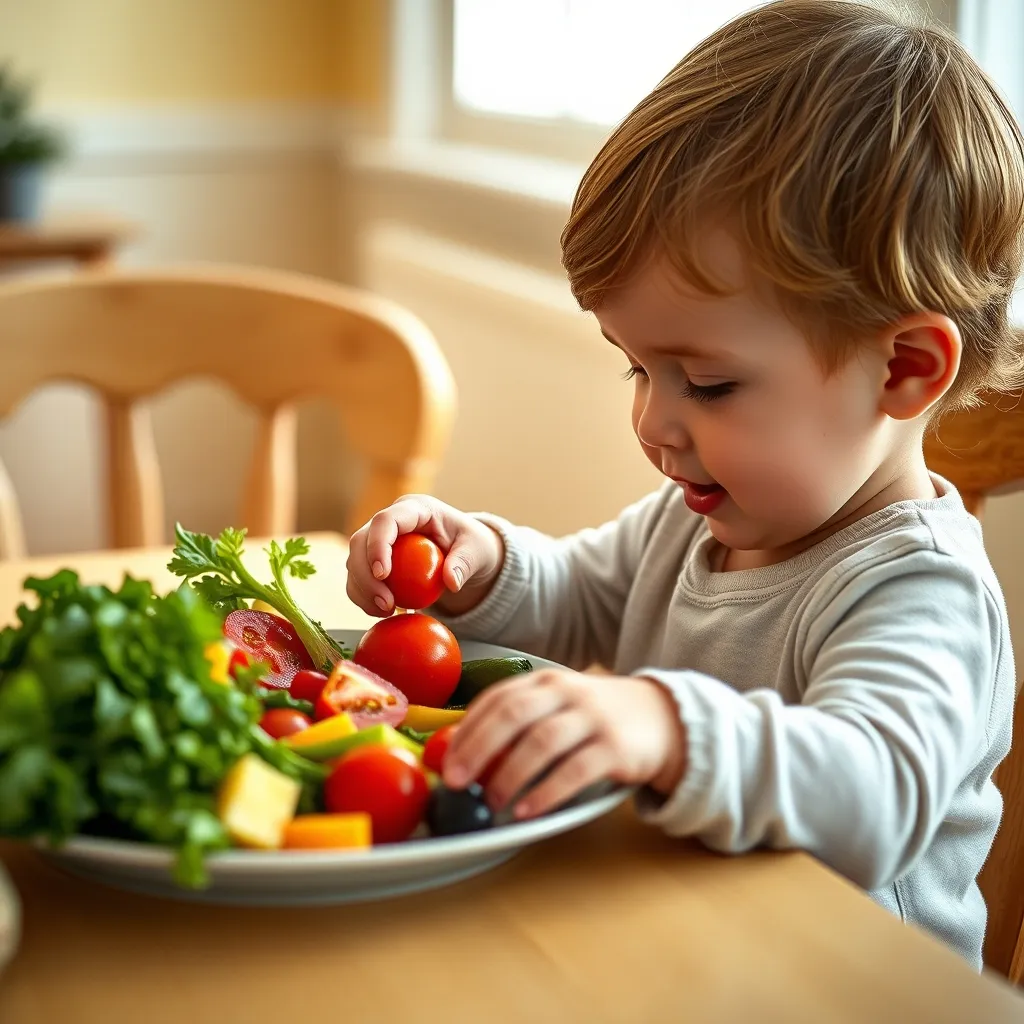
Understanding Your Child’s Relationship with Food
Before we can create positive change, we need to understand how children naturally relate to food. Unlike adults, who often eat for emotional or social reasons, young children are born with an innate ability to regulate their intake based on hunger and fullness signals. Our job as parents is to protect this natural ability rather than override it.
Children’s appetites fluctuate enormously from day to day. A child might eat ravenously on Monday and barely touch their plate on Tuesday. This is completely normal and reflects genuine physiological variation in energy needs. Growth spurts, activity levels, and even the weather can affect how much a child wants to eat.
I often explain to parents that children have two fundamental food-related needs: physical nourishment and emotional safety around eating. When both are met, children develop what we call “food competence”, the ability to eat a varied diet, enjoy mealtimes, and respond appropriately to their body’s signals.
Several factors can disrupt this natural competence:
- Pressure to eat (even well-meaning encouragement like “just three more bites”)
- Using food as a reward or punishment
- Restricting access to certain foods, which often increases desire for them
- Expressing anxiety or frustration about what a child eats
- Allowing grazing throughout the day, which suppresses appetite at meals
Understanding these principles is the first step toward creating mealtimes that nurture both body and mind. If your child is currently struggling with food, you may find it helpful to read my guide on healthy breakfast ideas for fussy eaters for practical starting points.
Creating a Calm Mealtime Environment
The physical and emotional environment in which your family eats has a profound impact on how children experience food. According to NHS Healthier Families guidance, creating a positive eating environment is one of the most effective ways to encourage healthy eating in children.
Here are the key elements I recommend to every family I work with:
Remove distractions
Screens at the table are one of the biggest barriers to positive mealtime habits children can develop. When a child watches television or uses a tablet during meals, they lose touch with their internal hunger and fullness cues. Research suggests that screen-free mealtimes help children eat more mindfully and enjoy a greater variety of foods. For more on managing screen use, see my article on screen time and children’s health.
Set a consistent schedule
Children thrive on routine. Offering meals and snacks at predictable times each day helps their bodies anticipate eating and arrive at the table genuinely hungry. I typically recommend three main meals and two to three planned snacks, spaced roughly two to three hours apart.
Make it social
Whenever possible, eat together as a family. Even if you cannot manage this every day, aim for at least four to five shared meals per week. Family meals provide natural opportunities for role modelling, conversation, and connection. Children who regularly eat with their family show better social skills, improved vocabulary, and healthier eating patterns.
Keep the atmosphere light
Mealtimes should never become a battleground. If tension is building, it is perfectly acceptable to end the meal calmly and try again at the next eating opportunity. The goal is to associate the table with warmth, conversation, and enjoyment rather than stress.

The Division of Responsibility Approach
One of the most transformative frameworks I use in my practice is Ellyn Satter’s Division of Responsibility in Feeding. This evidence-based approach clearly defines the roles of parent and child at mealtimes, reducing conflict and building trust.
The principle is straightforward:
- Parents decide what food is offered, when meals happen, and where eating takes place
- Children decide whether to eat and how much to consume from what is offered
This might feel counterintuitive, particularly if you are worried about your child’s nutrition. However, research consistently shows that when parents respect their child’s autonomy over how much they eat, children develop better self-regulation and more varied diets over time.
In practice, this means:
- Offering a balanced selection at each meal (always including at least one food you know your child will eat)
- Serving food family-style where possible, allowing children to serve themselves
- Not commenting on how much or how little your child eats
- Trusting that over the course of a week, your child will meet their nutritional needs
- Never forcing, bribing, or restricting food
I have seen families completely transform their mealtime experience within just two to three weeks of implementing this approach. The reduction in conflict alone makes an enormous difference to everyone’s wellbeing. If you are concerned about whether your child is getting enough nutrition, my guide on how many calories a child needs by age can provide reassurance.
| Parent’s Role | Child’s Role | Common Mistakes to Avoid |
|---|---|---|
| Choose nutritious foods to offer | Decide whether to eat | Forcing “just one more bite” |
| Set regular meal and snack times | Decide how much to eat | Allowing unlimited grazing |
| Create a pleasant eating environment | Learn to eat new foods at their own pace | Commenting negatively on food refusal |
| Model adventurous eating | Grow into eating the family’s food | Preparing separate “child-friendly” meals |
| Set appropriate mealtime boundaries | Develop body awareness and self-regulation | Using dessert as a reward for eating vegetables |
Practical Strategies for Positive Mealtimes
Let me share the specific strategies I recommend to families in my clinic. These are techniques that have been tested with hundreds of families and consistently produce positive results.
Serve meals family-style
Place food in serving dishes at the centre of the table and let children serve themselves. This gives them a sense of control and ownership over their plate, which research shows increases willingness to try new foods. Even toddlers can be guided to use small serving spoons.
Include a “safe” food at every meal
Always include at least one item you know your child will eat alongside new or less preferred foods. This ensures they can satisfy their hunger without pressure whilst still being exposed to variety. Bread, rice, or pasta often work well as reliable options.
Use neutral language about food
Avoid labelling foods as “good” or “bad”, “healthy” or “unhealthy”. Instead, talk about how foods help our bodies: “This orange has vitamin C which helps us fight off colds” or “Bread gives us energy for running and playing.” This builds food literacy without creating fear or moral associations with eating. For more on how to talk about food and bodies sensitively, read my article on body image and self-esteem in children.
Involve children in food preparation
Children who help prepare food are significantly more likely to eat it. Even very young children can wash vegetables, tear lettuce, or stir ingredients. This builds familiarity with foods in a low-pressure context and develops important life skills. My detailed guide on cooking with children covers age-appropriate kitchen activities.
Model the behaviour you want to see
Children learn far more from watching us than from listening to instructions. Eat a varied diet yourself, express enjoyment of your food, and demonstrate trying new things. Say things like “I have not tried this before, but it smells delicious” or “I really enjoy how crunchy this carrot is.”
Keep portions appropriate
Large portions can overwhelm young children. Start with small servings and allow seconds. A useful guide is that a child’s portion should be roughly the size of their palm for protein, their fist for carbohydrates, and a cupped handful for vegetables. This reduces waste and avoids the pressure children may feel when faced with a full plate.
Manage your own emotions
This is perhaps the hardest strategy of all. When your child refuses food you have lovingly prepared, it is natural to feel frustrated or worried. However, children are remarkably attuned to our emotional state. If we can remain calm and neutral in the face of food refusal, children feel safer to explore at their own pace.
Age-Appropriate Mealtime Expectations
One of the most common sources of mealtime stress I encounter is parents having expectations that do not match their child’s developmental stage. Understanding what is realistic at each age can significantly reduce frustration for everyone.
Ages 1 to 2 years
Toddlers are naturally curious about food but also entering the phase of neophobia (fear of new foods), which peaks around age two. At this stage, expect mess, inconsistency, and strong preferences. Meals typically last 10 to 15 minutes at most. Self-feeding with fingers and early spoon use is appropriate. For detailed nutritional guidance at this age, see my toddler nutrition guide.
Ages 3 to 5 years
Preschoolers can sit for 15 to 20 minutes, use cutlery with increasing skill, and participate in simple mealtime conversations. Food preferences may be strong, but this is the prime window for building positive associations. Involve them in choosing between options: “Would you like peas or sweetcorn with dinner tonight?”
Ages 6 to 8 years
School-age children can manage 20 to 30 minute meals, help set the table, and engage meaningfully in family discussions. They are beginning to understand nutrition concepts and can take more responsibility for their choices. This is an excellent time to introduce them to meal planning and food shopping.
Ages 9 to 12 years
Older children can prepare simple meals independently, understand the connection between food and wellbeing, and make increasingly autonomous food decisions. Continue family meals whilst respecting their growing independence. Be aware that peer influence becomes significant at this age and maintain open, non-judgemental conversations about food.

Common Mealtime Challenges and Solutions
Even with the best strategies in place, challenges will arise. Here are the situations I encounter most frequently in my practice, along with evidence-based solutions.
“My child will only eat five foods”
Selective eating is extremely common, particularly between ages two and five. The key is to continue offering variety without pressure. Place new foods alongside accepted ones. Allow your child to interact with food without eating it: touching, smelling, or even just having it on their plate counts as exposure. Remember, it takes an average of 10 to 15 neutral exposures before acceptance. My article on getting your child to eat vegetables offers specific techniques for expanding dietary variety.
“Mealtimes always end in tears”
If meals consistently become emotional, something in the dynamic needs to change. Often the answer is to reduce pressure dramatically. Stop commenting on eating entirely for two weeks. Serve food, eat your own meal, engage in pleasant conversation, and let your child eat or not eat without any acknowledgement. Many parents are astonished at how quickly the atmosphere improves.
“My child fills up on snacks and won’t eat meals”
This is a scheduling issue rather than a behavioural one. Ensure there is a gap of at least two hours between eating occasions. Offer only water between meals and snacks. Make snacks nutritious but moderate in size. A snack should take the edge off hunger, not replace a meal. Consider whether your child is drinking excessive milk or juice, which can suppress appetite significantly.
“Siblings have very different eating habits”
It is entirely normal for children in the same family to have different food preferences and appetites. Serve the same meal to everyone but allow each child to eat according to their own hunger. Avoid comparing siblings: “Your sister eats all her vegetables, why can’t you?” This creates resentment and rarely motivates change.
“My child eats well at nursery but not at home”
This is actually very common and, oddly, reassuring. It tells us your child can eat well in certain conditions. The difference is usually peer modelling (children eat better when they see others eating) and the absence of parental emotional investment. Try to recreate some nursery conditions at home: simple presentation, matter-of-fact serving, and no commentary on consumption.
Building Long-Term Healthy Eating Patterns
The ultimate goal of positive mealtime habits is not perfect eating today; it is raising children who carry a healthy, balanced relationship with food into adulthood. This requires us to think beyond individual meals and consider the broader patterns we are establishing.
According to the UK Government’s Eatwell Guide, a balanced diet for children over five includes a variety of fruits and vegetables, starchy carbohydrates, protein sources, dairy or alternatives, and small amounts of unsaturated oils. However, how we deliver this nutrition matters as much as what we serve.
Long-term healthy eating is built on several foundations:
- Internal motivation: Children who eat well because they enjoy it and feel good, rather than to please adults or earn rewards
- Body trust: The ability to recognise and respond to hunger and fullness signals
- Food competence: Comfort with a wide variety of foods, textures, and flavours
- Emotional neutrality: Seeing food as nourishment and pleasure rather than a source of stress or moral judgement
- Practical skills: Knowing how to prepare simple, nutritious meals independently
There is growing evidence that the emotional climate around food in childhood directly influences children’s mental health and their relationship with nutrition. By establishing positive mealtime habits now, you are protecting your child’s psychological wellbeing as well as their physical health.
I also encourage parents to be mindful of the broader food environment. The upcoming UK junk food advertising ban reflects growing recognition that children need protection from aggressive food marketing. At home, we can complement these efforts by ensuring our children develop the critical thinking skills to navigate food choices throughout their lives.
Remember that building positive mealtime habits is a marathon, not a sprint. There will be difficult days, weeks where your child seems to survive on bread and butter alone, and moments when you question whether anything is working. Trust the process. The research is clear: children raised in low-pressure, structured, enjoyable mealtime environments develop into competent, healthy eaters.
If you are concerned that your child’s eating difficulties may be linked to underlying issues such as sensory processing, developmental differences, or food allergies, do seek professional guidance. Your GP can refer you to a paediatric dietitian or feeding specialist who can provide individualised support.
Hydration is also an important part of the mealtime picture. Offering water with meals helps digestion and ensures your child stays well hydrated. My guide on how much water a child should drink each day provides age-specific recommendations.
Key Points
- Follow the Division of Responsibility: you decide what, when, and where; your child decides whether and how much
- Remove all screens from the table and aim for at least 4 to 5 shared family meals per week
- Always include one accepted “safe” food alongside new or less preferred options
- Allow 10 to 15 calm, pressure-free exposures before expecting a child to accept a new food
- Keep mealtimes to an age-appropriate duration: 10 to 15 minutes for toddlers, 20 to 30 minutes for school-age children
Frequently Asked Questions
How long does it take to establish positive mealtime habits with my child?
Most families notice a significant improvement in mealtime atmosphere within two to four weeks of consistently implementing the Division of Responsibility approach. However, expanding food variety typically takes longer, often three to six months of regular, pressure-free exposure. The key is consistency. Children need to trust that the new, relaxed approach is permanent before they feel safe enough to explore new foods.
I generally advise against preparing entirely separate meals, as this can reinforce selective eating and create unsustainable workloads for parents. Instead, serve the family meal but always include at least one component you know your child will eat, such as bread, rice, or pasta. This way, your child can fill up on something familiar whilst being exposed to the rest of the meal without pressure.Should I make separate meals for my fussy child?
Using dessert as a reward actually backfires. Research consistently shows that this practice elevates the desirability of sweet foods whilst devaluing the main course. Instead, if you serve dessert, offer a modest portion regardless of how much main course was eaten. This neutralises the power dynamic and helps children see all foods as part of a normal eating pattern rather than in moral categories.Is it okay to use dessert as a reward for eating main course food?
For young children (under three), five to ten minutes may genuinely be their limit. For older children, set a reasonable minimum expectation, perhaps ten to fifteen minutes, during which they remain seated. Use a visual timer if helpful. Once the agreed time has passed, allow them to leave calmly. Never force extended sitting as this creates negative associations. Over time, as mealtimes become more enjoyable, children naturally choose to stay longer.My child wants to leave the table after five minutes. How do I handle this?
This is a very common challenge. I suggest having a calm, private conversation explaining your approach and why it matters. Share specific phrases they can use instead of pressure, such as “You can leave that if you like” or “Would you like some more?” Acknowledge that their intentions come from love and concern. Sometimes sharing a simple article or leaflet about the evidence behind low-pressure feeding helps caregivers understand the reasoning without feeling criticised.How do I handle grandparents or other carers who use pressure or bribery at mealtimes?
Some food selectivity is developmentally normal, particularly between ages two and five. However, seek professional advice if your child eats fewer than fifteen to twenty different foods, is losing weight or falling off their growth curve, shows extreme distress around new foods, or has eliminated entire food groups. Your health visitor or GP can assess whether a referral to a paediatric dietitian or feeding specialist is appropriate.At what age should I be concerned about my child’s limited diet?