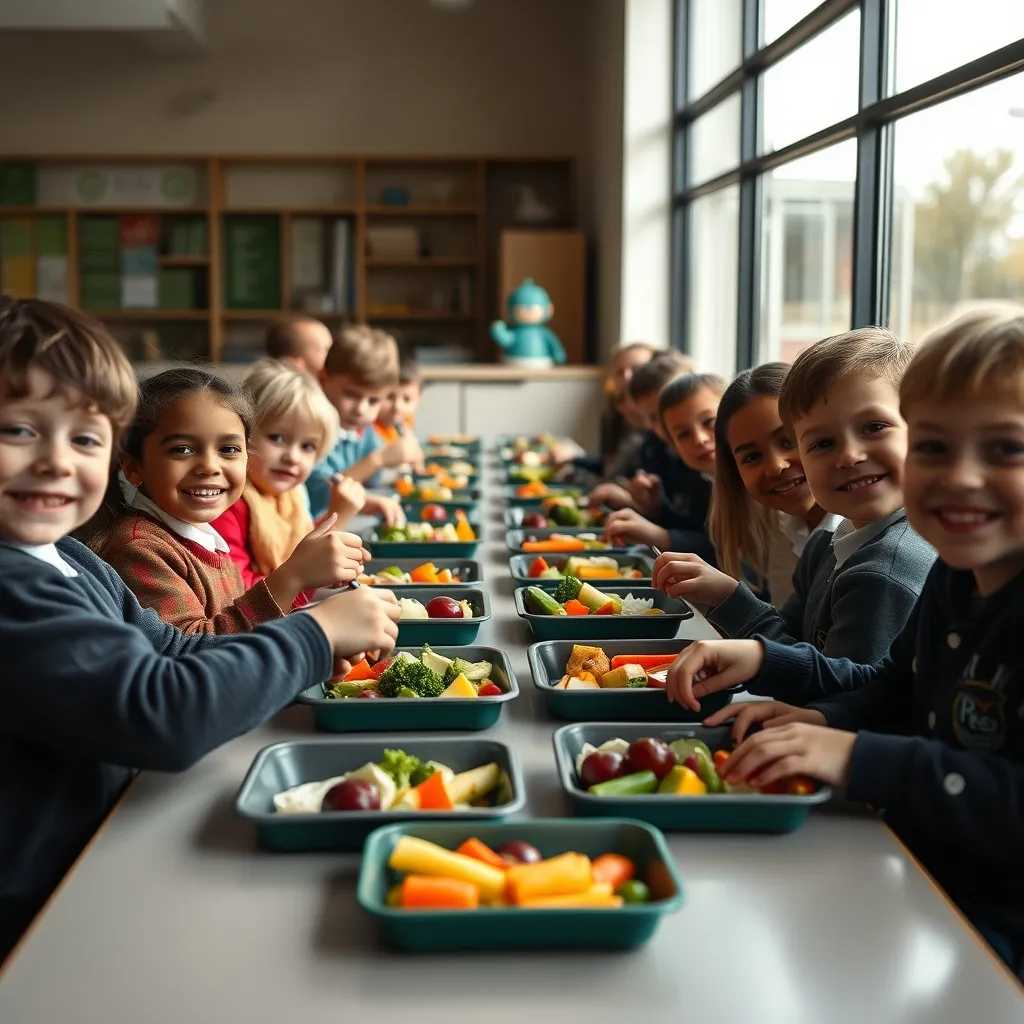
As a paediatric nutritionist who has spent over 15 years working with families across Bristol and the wider NHS, I have seen first-hand how a nutritious midday meal can transform a child’s energy, concentration and overall wellbeing. Free school meals (FSM) are one of the most important nutritional safety nets available to families in the UK, yet thousands of eligible households never claim them. In this guide, I will walk you through exactly who qualifies for free school meals UK eligibility criteria, how to apply, and why these meals matter so much for your child’s health.
Key Takeaways
- All children in Reception, Year 1 and Year 2 in England receive universal infant free school meals regardless of family income
- Around 2 million children in England currently receive free school meals, but an estimated 11% of eligible families do not claim
- Families receiving Universal Credit must have an annual net earned income below £7,400 (after tax, excluding benefits) to qualify
- Applying is free, confidential and can usually be done online through your local authority in under 10 minutes
- Schools receive additional Pupil Premium funding of up to £1,480 per pupil when families register for FSM, benefiting your child’s education even if they prefer packed lunches
- Eligibility criteria differ across England, Scotland, Wales and Northern Ireland, so always check the rules for your nation
In This Article
- What Are Free School Meals?
- Who Qualifies for Free School Meals in the UK?
- Universal Infant Free School Meals Explained
- Income Thresholds and Universal Credit
- Eligibility Across Scotland, Wales and Northern Ireland
- How to Apply for Free School Meals
- The Nutritional Value of Free School Meals
- Pupil Premium and Why Registration Matters
- Common Myths About Free School Meals
What Are Free School Meals?
Free school meals are government-funded midday meals provided to children at state-funded schools across the UK. The programme ensures that children from lower-income families receive at least one hot, nutritionally balanced meal each school day. As someone who regularly advises families on childhood nutrition, I consider FSM one of the most effective public health interventions we have for supporting children’s dietary intake during term time.
The scheme has existed in various forms since the Education Act of 1944, but eligibility criteria and provision have evolved significantly. Today, the system operates slightly differently in each of the four UK nations, though the core principle remains the same: no child should go hungry at school because of their family’s financial circumstances.
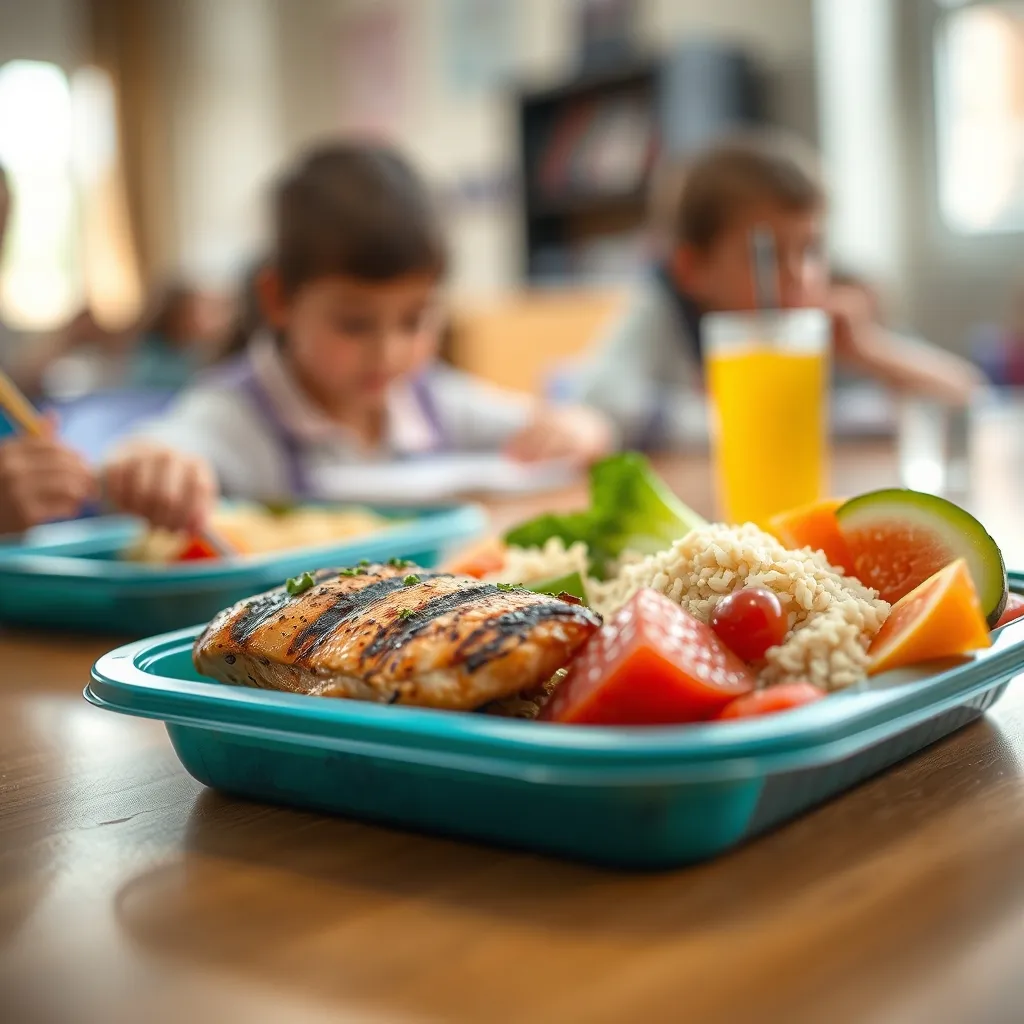
From a nutritional perspective, school meals in England must meet the School Food Standards set by the Department for Education, which specify minimum requirements for fruit, vegetables, protein, carbohydrates and dairy. This means that a free school meal is not simply a cost saving for families; it is a carefully planned meal that contributes meaningfully to your child’s daily nutritional needs. If you have ever wondered whether school meals are genuinely nutritious, I have covered this in detail in my article on whether school meals are healthy for UK children.
Who Qualifies for Free School Meals in the UK?
In England, free school meals UK eligibility is based on the benefits a family receives. Your child may be entitled to FSM if you receive any of the following qualifying benefits:
- Universal Credit with an annual net earned income of no more than £7,400 (after tax, not including any benefits)
- Income Support
- Income-based Jobseeker’s Allowance
- Income-related Employment and Support Allowance
- Support under Part VI of the Immigration and Asylum Act 1999
- The guarantee element of Pension Credit
- Child Tax Credit (provided you are not also entitled to Working Tax Credit and have an annual gross income of no more than £16,190)
- Working Tax Credit run-on (paid for four weeks after you stop qualifying for Working Tax Credit)
Children who receive any of these benefits in their own right, rather than through a parent or guardian, are also eligible. This is particularly relevant for some older teenagers who may be claiming benefits independently.
It is worth noting that eligibility is checked through the Eligibility Checking Service (ECS), a secure system that cross-references your details with Department for Work and Pensions and HMRC records. This means you do not usually need to provide extensive paperwork; in most cases, the system can verify your eligibility automatically.
Universal Infant Free School Meals Explained
Since September 2014, all children in Reception, Year 1 and Year 2 at state-funded schools in England have been entitled to a free school meal, regardless of their family’s income. This is known as Universal Infant Free School Meals (UIFSM), and it applies to every child in these year groups without any need for a means test.
The policy was introduced following research showing that providing free meals to all infant-age children improved academic attainment, reduced stigma around free meals, and encouraged healthier eating habits from an early age. A pilot study in Durham and Newham found that children who received universal free meals were up to two months ahead in their learning compared to those in non-pilot areas.
However, and this is something I emphasise strongly to every parent I work with, even if your infant-age child automatically receives a free meal through UIFSM, you should still register for benefits-based free school meals if you are eligible. The reason is simple: registration triggers valuable Pupil Premium funding for your child’s school, which I will explain in more detail below.
In my experience, many parents of Reception and Year 1 children assume they do not need to do anything because meals are already free. But by completing the registration, you unlock additional support worth over £1,400 per year for your child’s school. It takes just a few minutes and makes a genuine difference.
Income Thresholds and Universal Credit
One of the most common questions I hear from families is about the Universal Credit income threshold for free school meals. As of the 2025/26 academic year, the threshold remains at £7,400 annual net earned income. This figure refers to your take-home pay after tax and National Insurance, but before any Universal Credit payments or other benefits are added.
Let me clarify what counts and what does not, as this trips up many families:
| Counts towards the £7,400 threshold | Does NOT count towards the threshold |
|---|---|
| Employment income (after tax and NI) | Universal Credit payments |
| Self-employment income (net profit) | Child Benefit |
| Statutory Sick Pay | Disability Living Allowance |
| Statutory Maternity/Paternity Pay | Personal Independence Payment |
| Income from a pension | Carer’s Allowance |
| Income from rental properties | Housing Benefit |
If your earnings fluctuate, as is common for families doing shift work, zero-hours contracts or seasonal employment, you should still apply. The ECS checks your circumstances at the point of application, and once your child is registered, they are protected by transitional arrangements. This means that even if your income later rises above the threshold, your child will continue to receive free meals until the end of their current phase of education (primary or secondary) or until Universal Credit is fully rolled out, whichever comes first.
These transitional protections are an important safety net. I have worked with families who were reluctant to take on extra hours at work for fear of losing their child’s free meals. Understanding that this protection exists can relieve a great deal of anxiety. For families managing tight budgets, I also recommend reading my guide on healthy packed lunch ideas for children for the days when a home-prepared meal might be needed.

Eligibility Across Scotland, Wales and Northern Ireland
While the information above focuses primarily on England, it is essential to understand that each UK nation sets its own free school meals policy. The differences are significant, and in some cases, provision is considerably more generous.
Scotland
Scotland has been a leader in expanding free school meal provision. Since January 2022, all children in Primary 1 to Primary 5 receive universal free school meals, with plans to extend this to Primary 6 and Primary 7. For older pupils, eligibility is based on receipt of qualifying benefits including Universal Credit, Income Support, and income-based Jobseeker’s Allowance, similar to England but without the £7,400 income cap for Universal Credit claimants. As of August 2025, all Universal Credit recipients in Scotland qualify regardless of earned income.
Wales
Wales has rolled out its own universal primary free school meals (UPFSM) programme. Since September 2024, all primary school children in Wales are entitled to a free school meal. For secondary school pupils, eligibility mirrors the benefits-based criteria used in England, though the Welsh Government has set the Universal Credit threshold at £7,400 net earned income, matching England’s figure.
Northern Ireland
In Northern Ireland, free school meals are available to children whose parents receive qualifying benefits. The income threshold is not applied in the same way as in England; instead, eligibility extends to all families receiving Universal Credit regardless of earnings level. Northern Ireland also provides free meals to children whose parents receive Working Tax Credit with an annual income below £16,190.
| Nation | Universal free meals | UC income threshold | Key difference |
|---|---|---|---|
| England | Reception to Year 2 | £7,400 | Transitional protections apply |
| Scotland | P1 to P5 (expanding) | No cap | All UC recipients qualify |
| Wales | All primary | £7,400 | Universal primary provision since 2024 |
| Northern Ireland | None | No cap | All UC recipients qualify |
These differences highlight why it is so important to check the specific guidance for your nation rather than relying on UK-wide information. The GOV.UK free school meals page provides detailed guidance for England, while the devolved governments maintain their own application routes.
How to Apply for Free School Meals
Applying for free school meals is straightforward, and I always encourage families to do it as soon as they think they might be eligible. Here is a step-by-step process for England:
Step 1: Check your eligibility
Review the qualifying benefits listed above. If you receive any of them, you are likely eligible. Many local authorities also offer an online eligibility checker where you can enter your details and get an instant answer. You will typically need your National Insurance number and date of birth to use the checker.
Step 2: Apply through your local authority
In most cases, you apply directly through your local council’s website. Search for “free school meals” followed by your council name. The application form usually asks for your name, address, date of birth, National Insurance number, and your child’s details including their school. Most applications can be completed online in under 10 minutes.
Step 3: Automatic verification
Once you submit your application, the council uses the Eligibility Checking Service to verify your details against DWP and HMRC records. In many cases, this happens automatically and you will receive confirmation within a few working days. If the system cannot verify your eligibility automatically, you may be asked to provide supporting documents such as benefit letters or payslips.
Step 4: Your child starts receiving meals
Once approved, your child’s school is notified and they can begin receiving free meals. There is no physical voucher or token; meals are provided discreetly and other children cannot tell who is receiving a free meal. Schools handle this sensitively, and in my experience, most children are completely unaware of any difference.
If your child has specific dietary requirements due to food allergies or cultural preferences, speak directly with the school’s catering team. Schools are legally required to accommodate medical dietary needs, and most are very willing to work with families on other preferences too.

The Nutritional Value of Free School Meals
As a nutritionist, I feel particularly strongly about this section. Free school meals are not just about preventing hunger; they are about providing children with the nutrients they need to grow, learn and thrive. The School Food Standards in England require that school meals include:
- One or more portions of fruit and vegetables every day
- A starchy food such as bread, pasta, rice or potatoes with every meal
- A portion of meat or poultry on three or more days per week
- Fish on one or more days per week, with oily fish appearing at least once every three weeks
- A portion of dairy food every day
There are also strict restrictions on fried foods, confectionery, crisps and sugary drinks. No more than two portions of food that has been deep-fried, batter-coated or breadcrumb-coated can be served in a single week. This level of regulation means that, on average, a school meal provides a more balanced nutritional profile than many packed lunches.
Research published by the NHS Healthier Families programme consistently shows that children who eat school meals consume more vegetables, more fibre and less sugar than those who bring packed lunches. For children at risk of childhood obesity, this can be particularly significant. I have also written about how much sugar children should have per day, and school meals are designed to stay well within these guidelines.
School meals also provide an excellent opportunity for children to try new foods in a social setting. For fussy eaters, seeing peers enjoy different dishes can be a powerful motivator. I have had many parents tell me that their child first tried vegetables like broccoli or peppers at school because their friends were eating them.
The nutritional impact extends beyond the plate. Children who eat well at lunchtime tend to have better concentration in afternoon lessons, more stable energy levels, and improved behaviour. There is growing evidence linking children’s mental health and nutrition, and a balanced school meal contributes positively to emotional wellbeing as well as physical health.
Pupil Premium and Why Registration Matters
One of the most compelling reasons to register for free school meals, even if your child already receives universal free meals or prefers to bring a packed lunch, is the Pupil Premium. This is additional government funding allocated to schools based on the number of pupils registered for FSM.
For the 2025/26 academic year, Pupil Premium rates are:
- £1,480 per pupil for primary-age children
- £1,050 per pupil for secondary-age children
- £2,530 per pupil for looked-after and previously looked-after children
Schools use Pupil Premium funding in a variety of ways, all aimed at closing the attainment gap between disadvantaged children and their peers. This might include additional teaching assistants, one-to-one tutoring, subsidised school trips, breakfast clubs, after-school activities, and additional learning resources. Some schools use the funding to provide healthy after-school snacks during homework clubs.
The key point is this: your child does not need to eat the free meal to trigger the funding. Simply being registered as eligible is enough. I have spoken with head teachers who estimate that tens of thousands of pounds of potential Pupil Premium funding goes unclaimed each year because eligible families do not register. By taking five minutes to complete the application, you could be unlocking substantial additional support for your child’s school.
Pupil Premium eligibility is also used as a gateway to other forms of support, including reduced costs for school uniform, help with the cost of school trips, and access to walking and cycling to school programmes. Some schools also use FSM registration data to identify families who might benefit from wider pastoral support.
Common Myths About Free School Meals
In my years of working with families, I have encountered several persistent myths about free school meals that prevent eligible families from applying. Let me address the most common ones:
Myth 1: “Other children will know my child gets free meals”
This is perhaps the biggest barrier. Modern school meal systems use cashless payment methods such as fingerprint scanners or PIN codes. Every child uses the same system regardless of how their meal is funded. There is no visible difference between a free meal and a paid meal. Staff are trained to handle this discreetly, and in practice, children simply do not know who pays and who does not.
Myth 2: “I earn too much to qualify”
The income threshold of £7,400 net earned income under Universal Credit catches many families by surprise. If you work part-time, are on a low wage, or have recently reduced your hours, you may well qualify. Additionally, if you receive Income Support, income-based JSA, or income-related ESA, there is no income threshold at all; you automatically qualify.
Myth 3: “Free school meals are low quality”
School meals in the UK are regulated by legally binding food standards. They must include specific proportions of fruit, vegetables, protein and carbohydrates. Many schools work with professional catering companies and offer varied, appetising menus. You can usually view your child’s school menu online or request a copy from the school office.
Myth 4: “Applying is complicated and invasive”
The application process is quick, free and confidential. In most local authorities, it can be completed online in under ten minutes. The eligibility check is automated through secure government systems. Your personal details are not shared with the school beyond the simple confirmation that your child is eligible.
Myth 5: “It does not matter if I do not apply because my child is in infants”
As I explained earlier, even though infant-age children receive meals automatically through UIFSM, registering for benefits-based FSM triggers Pupil Premium funding. Not registering means your child’s school misses out on over £1,400 per year in additional funding. This is one of the most important messages I share with parents of young children.
Good nutrition is foundational to every aspect of a child’s development. Whether your child eats school meals or packed lunches, ensuring they get the right nutrients is essential. I have written extensively about supporting children’s nutrition, including guides on iron deficiency in children and healthy breakfast ideas for fussy eaters, which complement the nutritional support provided by school meals.
If you are concerned about your child’s diet or weight, understanding their calorie needs by age can help you plan meals more effectively. My guide on how many calories a child needs by age provides a helpful framework.
Key Points
- Check your eligibility using your local authority’s online checker with your National Insurance number
- Apply even if your child is in Reception to Year 2, as registration unlocks Pupil Premium funding worth up to £1,480
- Remember the Universal Credit threshold is £7,400 net earned income after tax, excluding benefits
- Speak with your child’s school about dietary requirements or allergies to ensure meals are suitable
- Check the specific rules for your UK nation as eligibility criteria differ across England, Scotland, Wales and Northern Ireland
Frequently Asked Questions
Who qualifies for free school meals in the UK?
In England, children qualify if their parent or guardian receives qualifying benefits such as Universal Credit (with net earned income below £7,400), Income Support, income-based Jobseeker’s Allowance, or income-related Employment and Support Allowance. All children in Reception, Year 1 and Year 2 receive universal infant free school meals regardless of income. Scotland, Wales and Northern Ireland each have their own criteria, with Scotland and Northern Ireland extending eligibility to all Universal Credit recipients without an income cap.
In England and Wales, the income threshold is £7,400 annual net earned income. This means your take-home pay after tax and National Insurance contributions, but not including Universal Credit payments or other benefits such as Child Benefit or disability payments. In Scotland and Northern Ireland, there is currently no income threshold for Universal Credit recipients, meaning all families on Universal Credit qualify.What is the income threshold for free school meals under Universal Credit?
Approximately 2 million children in England currently receive free school meals through the benefits-based scheme, representing around 23% of all state school pupils. When universal infant free school meals are included, the total is significantly higher. However, research suggests that around 11% of eligible families do not claim, meaning hundreds of thousands of children miss out on both the meals and the associated Pupil Premium funding their schools could receive.How many children in the UK receive free school meals?
Yes, you can absolutely apply if you are working. Many working families qualify, particularly those on Universal Credit with net earned income below £7,400 per year. Families on Working Tax Credit run-on (the four-week period after you stop qualifying for Working Tax Credit) are also eligible. The system recognises that many families in work still face financial pressures, and free school meals are designed to support them.Can I apply for free school meals if I am working?
In most local authorities, you do not need to reapply each year. Once your child is registered, their eligibility is checked periodically through the Eligibility Checking Service. However, practices vary between councils, so it is worth checking with your local authority. If your circumstances change significantly, such as starting a new job with higher earnings, you should inform your council. Transitional protections mean your child will not lose their free meals immediately even if your income rises above the threshold.Do I need to reapply for free school meals every year?
During school holidays, free school meals are not automatically provided. However, since the COVID-19 pandemic, many local authorities have introduced holiday food programmes or voucher schemes to support eligible families during breaks. The Holiday Activities and Food (HAF) programme, funded by the Department for Education, operates during the summer, Christmas and Easter holidays in England, offering free activities and meals to children on free school meals. Check with your local council for specific provision in your area.What happens to free school meals during school holidays?