
Key Takeaways
- Around 1 in 5 children in England are living with obesity by the time they leave primary school
- Children aged 5 to 18 need at least 60 minutes of moderate-to-vigorous physical activity every day
- Only 18% of UK children currently meet the recommended five-a-day fruit and vegetable target
- Reducing sugary drinks alone can cut a child’s excess calorie intake by up to 235 calories per day
- Family-based childhood obesity prevention programmes are up to three times more effective than those targeting children alone
- Children who eat regular family meals at the table are 12% less likely to be overweight than those who eat alone or in front of screens
In This Article
- Why Childhood Obesity Prevention Matters
- Understanding the Causes of Childhood Obesity
- Nutrition Strategies That Actually Work
- Physical Activity and Movement: Building Active Habits
- Screen Time, Sleep and Daily Routine
- The Role of Schools and Communities
- Talking to Children About Weight and Health
- When to Seek Professional Help
- UK Government Action and Policy
As a paediatric nutritionist with over 15 years of experience working with families across the NHS and in private practice, I have seen first-hand how childhood obesity affects every aspect of a child’s life, from their physical health to their confidence and emotional wellbeing. The good news is that childhood obesity prevention is entirely possible when families are equipped with the right knowledge and practical tools.
In this guide, I will share the strategies I recommend to the families I work with every day. These are evidence-based, realistic approaches that fit into busy family life without requiring perfection or extreme measures.
Why Childhood Obesity Prevention Matters
The scale of childhood obesity in the UK is significant. According to the National Child Measurement Programme (NCMP), approximately 22.7% of children in Reception (aged 4 to 5) are overweight or obese, and this rises to 35.2% by Year 6 (aged 10 to 11). These figures have worsened since the pandemic and show no signs of improving without sustained intervention.
What concerns me most as a clinician is that children who develop obesity are far more likely to carry it into adulthood. Research consistently shows that an obese child has a five times greater risk of becoming an obese adult compared to a child of healthy weight. This matters because obesity in adulthood is linked to type 2 diabetes, cardiovascular disease, certain cancers, and mental health difficulties.
But childhood obesity prevention is not just about avoiding future disease. Children living with obesity right now are more likely to experience joint pain, breathing difficulties, sleep problems, and low self-esteem. I have worked with children as young as seven who were already showing early signs of insulin resistance, a condition that was almost unheard of in children just a generation ago.
Understanding the Causes of Childhood Obesity
Before we can prevent something, we need to understand what drives it. Childhood obesity is never caused by a single factor. In my practice, I see a complex web of influences that vary from family to family.
The most common contributors I encounter include:
- Energy imbalance: Children consuming more calories than they use through growth, activity and daily living
- Ultra-processed food environments: Easy access to calorie-dense, nutrient-poor foods and drinks
- Reduced physical activity: Less active play, fewer opportunities for unstructured movement
- Increased sedentary behaviour: More time spent on screens and less time moving
- Sleep deprivation: Insufficient sleep disrupts appetite hormones and increases cravings
- Socioeconomic factors: Poverty and deprivation limit access to healthy food and safe spaces for play
- Genetic predisposition: Some children are more susceptible to weight gain, though genes are rarely the sole cause
I always remind parents that childhood obesity is not a reflection of bad parenting. We live in an environment that makes it incredibly easy to overconsume and incredibly hard to stay active. The food industry spends billions on marketing to children, portion sizes have grown enormously, and many neighbourhoods lack safe green spaces for play. Understanding these wider pressures helps families focus on what they can control without falling into guilt or blame.
| Risk Factor | Impact on Weight | What Families Can Influence |
|---|---|---|
| Sugary drinks (more than 1 per day) | Up to 235 extra kcal/day | Switch to water, milk, or diluted fruit juice |
| Screen time (more than 2 hours/day) | Associated with 30% higher obesity risk | Set daily screen time limits and encourage active play |
| Fewer than 5 fruit/veg portions daily | Lower fibre intake, higher snacking on processed foods | Add one extra portion each week gradually |
| Fewer than 60 minutes activity/day | Reduced energy expenditure, lower muscle mass | Walk to school, active play after school, weekend activities |
| Sleep under recommended hours | Disrupted appetite hormones (ghrelin/leptin) | Consistent bedtime routine, no screens before bed |
| Skipping breakfast regularly | Increased mid-morning snacking on high-sugar foods | Offer quick, balanced breakfast options |
Nutrition Strategies That Actually Work
In my experience, the most effective approach to childhood obesity prevention through nutrition is not about dieting or restriction. Children should never be placed on calorie-controlled diets unless under direct medical supervision. Instead, I focus on improving the overall quality of what the family eats together.
Prioritise whole foods over processed alternatives
The single most impactful change I recommend is gradually reducing ultra-processed foods (UPFs) and replacing them with whole or minimally processed alternatives. UPFs, which include many breakfast cereals, flavoured yoghurts, chicken nuggets, crisps, and ready meals, now make up approximately 65% of the average UK child’s diet. These foods are engineered to be hyper-palatable, making it very easy to overeat.
I do not suggest eliminating all processed foods overnight. That is neither practical nor helpful. Instead, I work with families to identify three or four simple swaps they can make each week. For example, swapping a sugary breakfast cereal for porridge with fruit, or replacing a packet of crisps with carrot sticks and hummus.
Make water the default drink
Sugary drinks are one of the largest single contributors to excess calorie intake in children. A single can of fizzy drink contains around 35 grams of sugar, which is more than the entire daily recommended limit for a child aged 7 to 10. I advise families to make water and plain milk the household default, keeping squash and juice for occasional use only.
Focus on balanced meals
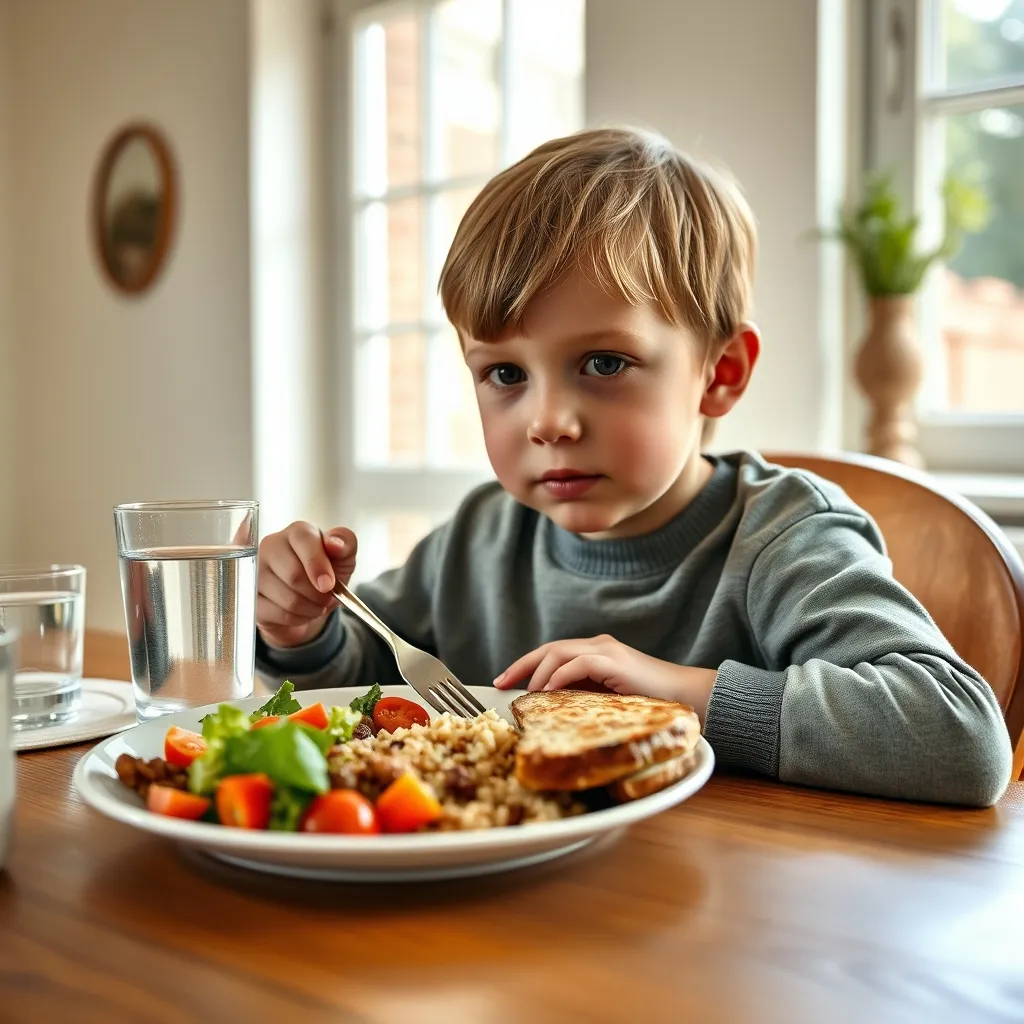
I teach families to use a simple plate model: half the plate filled with vegetables or salad, a quarter with starchy carbohydrates (preferably wholegrain), and a quarter with protein. This visual approach is far more practical than calorie counting and helps children develop an intuitive understanding of balanced eating. For inspiration on school meals and lunchboxes, see my guides on school meals in the UK and healthy packed lunch ideas.
Establish regular meal patterns
Children who eat at regular, predictable times are less likely to graze on high-calorie snacks throughout the day. I recommend three meals and two small snacks daily, eaten at the table wherever possible. Research shows that regular family mealtimes are protective against both obesity and disordered eating.

Physical Activity and Movement: Building Active Habits
According to the UK Chief Medical Officers’ physical activity guidelines, children and young people aged 5 to 18 should aim for an average of at least 60 minutes of moderate-to-vigorous physical activity per day. Yet only around 47% of children currently meet this target.
I find that the families who succeed in building active habits are those who integrate movement into daily life rather than relying solely on organised sport. Not every child enjoys team games, and that is perfectly fine. What matters is finding activities they genuinely enjoy.
Practical ways to increase daily movement
- Walking or cycling to school adds 20 to 40 minutes of activity to the day without requiring extra time
- Active play after school: Encourage outdoor play, den building, skipping, or simply running around the garden or park
- Family activities at weekends: Walks, bike rides, swimming, or trips to adventure playgrounds
- Reduce car journeys: Walk to local shops, the library, or friends’ houses when safe to do so
- Household tasks: Even tidying up, gardening, or carrying shopping counts as movement for younger children
For older children and teenagers who may be interested in more structured exercise, it is worth exploring what options are available locally. Many leisure centres offer junior memberships and age-appropriate classes. You can read more about age rules for children using gyms in the UK to understand what is suitable for your child’s age group.
Screen Time, Sleep and Daily Routine
The relationship between screen time and children’s health is well established. Excessive screen use contributes to childhood obesity through multiple pathways: it replaces active time, exposes children to food advertising, disrupts sleep patterns, and encourages mindless snacking.
I recommend the following screen time boundaries, which align with current paediatric guidance:
- Under 2 years: Avoid screen time other than video calls
- Ages 2 to 5: No more than one hour per day of high-quality content
- Ages 5 to 18: Consistent limits that ensure screens do not displace sleep, physical activity, or family interaction
The UK junk food advertising ban coming into effect is a positive step, but families still need to be vigilant about the marketing their children are exposed to online and through social media.
The critical role of sleep
Sleep is an underappreciated factor in childhood obesity prevention. When children do not get enough sleep, their bodies produce more ghrelin (the hunger hormone) and less leptin (the satiety hormone). This biological shift makes them genuinely hungrier and more drawn to high-sugar, high-fat foods.
The recommended sleep durations by age are:
- Ages 3 to 5: 10 to 13 hours (including naps)
- Ages 6 to 12: 9 to 12 hours
- Ages 13 to 18: 8 to 10 hours
A consistent bedtime routine, with screens switched off at least 30 minutes before bed, is one of the most protective habits a family can establish. I have seen improvements in children’s eating patterns within weeks of addressing poor sleep.
The Role of Schools and Communities
While families play a central role, childhood obesity prevention must also be supported by schools and the wider community. Children spend approximately 190 days per year at school, making it a crucial setting for establishing healthy habits.
Effective school-based strategies include:
- Quality school meals that meet nutritional standards and limit processed foods
- Daily physical activity beyond PE lessons, including active break times and the Daily Mile
- Food education that teaches children practical cooking skills and nutrition knowledge
- Restricting unhealthy food marketing within the school environment
- Water-only policies that eliminate sugary drinks from the school day
As a parent, you can support these efforts by engaging with your child’s school, attending parents’ evenings to discuss food provision, and reinforcing healthy messages at home. The NICE guidelines on preventing overweight and obesity recommend that schools adopt a whole-school approach that integrates nutrition and physical activity across the curriculum.
Community programmes also play a vital role. Many local authorities run free family weight management programmes that provide tailored support. Your GP or health visitor can signpost you to what is available in your area.

Talking to Children About Weight and Health
This is an area where I see many well-meaning parents struggle, and understandably so. The language we use around food, weight, and bodies has a profound impact on children’s self-esteem and their relationship with food. Getting it wrong can contribute to eating disorders, body image difficulties, and lasting psychological harm.
My key recommendations for talking to children about weight are:
- Focus on health behaviours, not weight numbers. Talk about “growing strong” and “having energy” rather than “losing weight” or “being fat”
- Never use food as a reward or punishment. This creates emotional associations that can persist into adulthood
- Model the behaviour you want to see. Children learn far more from watching their parents than from being told what to do
- Avoid labelling foods as “good” or “bad”. Instead, talk about “everyday foods” and “sometimes foods”
- Celebrate what bodies can do rather than how they look
I have written extensively about the connection between children’s mental health and nutrition, and this relationship runs in both directions. A child who feels good about themselves is more likely to make positive food choices, and good nutrition supports emotional resilience.
When to Seek Professional Help
While many families can make positive changes independently, there are times when professional support is needed. I recommend seeking help if:
- Your child’s BMI is consistently above the 91st centile on their growth chart
- You have noticed rapid weight gain over a short period
- Your child is showing signs of weight-related health problems, such as joint pain, breathlessness on mild exertion, or skin changes like acanthosis nigricans (dark, velvety patches on the neck or armpits)
- Your child is emotionally distressed about their weight or is being bullied
- You are concerned about disordered eating patterns, whether overeating or restrictive behaviour
Your first point of contact should be your GP or practice nurse, who can measure your child’s BMI, plot it on a growth chart, and refer to specialist services if needed. Many areas also have paediatric dietitians who can provide tailored nutritional guidance. The NHS BMI calculator for children is a helpful starting tool, though it should always be interpreted by a healthcare professional in the context of your child’s overall growth pattern.
Understanding how many calories a child needs by age can provide useful context, but I always caution against fixating on numbers. For children, growth, energy levels, and overall dietary quality are far more meaningful indicators than calorie counts.
UK Government Action and Policy
The UK Government’s Childhood Obesity Plan has introduced several measures aimed at tackling this issue at a population level. Key policies include the Soft Drinks Industry Levy (sugar tax), restrictions on the placement and promotion of less healthy foods in shops, and the forthcoming restrictions on junk food advertising.
According to the Government’s Childhood Obesity Plan for Action, the sugar tax alone has led to a 46% reduction in sugar content across the soft drinks industry. This is a clear example of how policy changes can shift the food environment in a positive direction.
However, policy alone is not sufficient. The most effective childhood obesity prevention combines population-level interventions (such as taxes, advertising restrictions, and school food standards) with family-level support (such as education, access to healthy food, and community programmes). As parents, understanding these wider policy changes helps you advocate for better environments for your children at school, in your community, and at a national level.
It is also worth noting that childhood obesity disproportionately affects children from lower-income families. The gap between obesity rates in the most and least deprived areas has widened considerably in recent years. Addressing poverty and deprivation is therefore a fundamental component of any serious childhood obesity prevention strategy.
Key Points
- Make water the default drink and limit sugary beverages to occasional treats
- Aim for at least 60 minutes of physical activity daily, integrated into everyday routines
- Establish consistent family mealtimes at the table without screens
- Focus on health behaviours and energy, not weight numbers, when talking to children
- Seek help from your GP or practice nurse if your child’s BMI is above the 91st centile or if you notice rapid weight gain
Frequently Asked Questions
What is the best age to start childhood obesity prevention?
Childhood obesity prevention should begin from birth and continue throughout childhood and adolescence. Establishing healthy feeding practices during infancy, introducing a wide variety of whole foods during weaning, and building active habits from the toddler years all contribute to long-term healthy weight. However, it is never too late to make positive changes, regardless of your child’s current age or weight.
No. I strongly advise against placing children on restrictive or calorie-controlled diets without professional guidance. For most children, the goal is not weight loss but rather maintaining their current weight while they grow taller, allowing them to “grow into” a healthier weight naturally. Focus on improving the quality of family meals, increasing physical activity, and reducing sugary drinks and ultra-processed snacks. If you are concerned, speak to your GP who can refer you to a paediatric dietitian.Should I put my overweight child on a diet?
The most reliable way to assess whether your child is a healthy weight is through the BMI centile chart, which takes into account their age and sex. Your GP or health visitor can measure this, or you can use the NHS BMI calculator as a starting point. A BMI above the 91st centile indicates overweight, and above the 98th centile indicates obesity. However, BMI should always be interpreted alongside other factors such as growth patterns, body composition, and overall health.How do I know if my child is a healthy weight?
Children and young people aged 5 to 18 should aim for an average of at least 60 minutes of moderate-to-vigorous physical activity every day. This does not need to happen all at once; it can be accumulated throughout the day through walking, cycling, active play, PE lessons, and sports. On three days per week, activities should include those that strengthen muscles and bones, such as climbing, jumping, or gymnastics.How much physical activity does my child need each day?
The evidence suggests it is a helpful measure. Since the introduction of the UK Soft Drinks Industry Levy in 2018, sugar content across the soft drinks industry has fallen by approximately 46%. Many manufacturers reformulated their products to avoid the levy, meaning children are consuming less sugar from these drinks even without changing their purchasing habits. While no single policy measure can solve childhood obesity alone, the sugar tax is one important part of a broader prevention strategy.Does the sugar tax actually help reduce childhood obesity?
Sleep plays a surprisingly important role in weight regulation. When children do not get adequate sleep, their bodies produce more ghrelin (a hormone that stimulates appetite) and less leptin (a hormone that signals fullness). This makes them genuinely hungrier and more likely to crave high-sugar, high-fat foods. Children aged 6 to 12 need 9 to 12 hours of sleep per night, and teenagers need 8 to 10 hours. A consistent bedtime routine and limiting screens before bed are two of the most effective strategies.What role does sleep play in childhood obesity prevention?