Key Takeaways
- The UK government published its first Childhood Obesity: A Plan for Action in 2016, followed by Chapter 2 in 2018 and Chapter 3 in 2019
- The Soft Drinks Industry Levy, introduced in April 2018, has removed an estimated 45,000 tonnes of sugar per year from drinks consumed in the UK
- Around one in three children leaving primary school in England are classified as overweight or living with obesity
- Advertising restrictions on foods high in fat, sugar and salt before the 9pm television watershed and online were legislated through the Health and Care Act 2022
- The government’s voluntary sugar reduction programme asked manufacturers to cut sugar in key product categories by 20% by 2020, but most sectors fell short
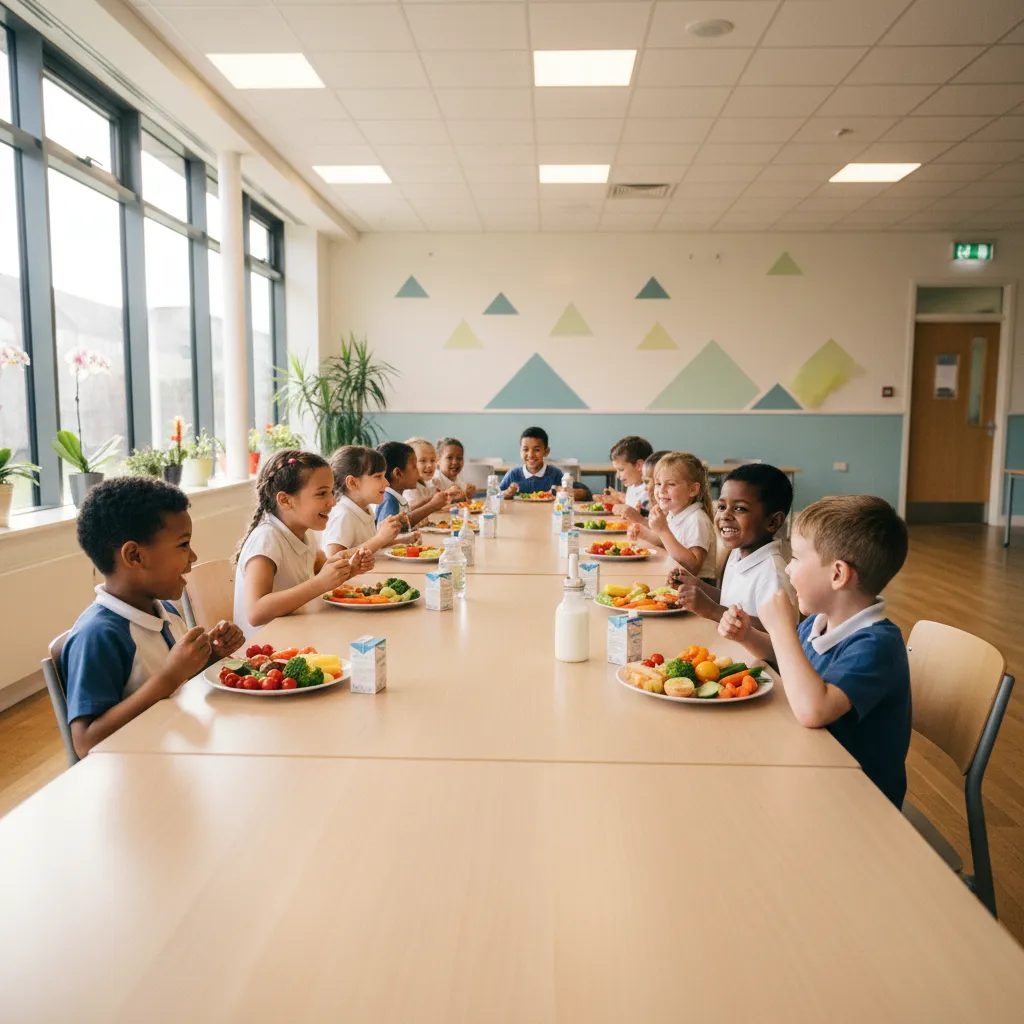
- School food standards require all maintained schools to provide meals that include one or more portions of vegetables or salad every day
In This Article
- Why the Government Needed a Plan
- Chapter One: The 2016 Childhood Obesity Plan
- Chapter Two: Expanding Ambitions in 2018
- Chapter Three and Beyond
- The Soft Drinks Industry Levy
- Advertising Restrictions and Promotions
- School Food Standards and the Daily Mile
- The National Child Measurement Programme
- What Has Actually Worked?
- What Parents Can Do Alongside Policy
Why the Government Needed a Plan
As a paediatric nutritionist, I have watched childhood obesity figures in the UK climb steadily for decades. When the government finally announced its Childhood Obesity: A Plan for Action in August 2016, many of us in clinical practice breathed a cautious sigh of relief. Something was being done at a national level, and that mattered enormously.
The statistics that drove the policy were stark. Data from the National Child Measurement Programme (NCMP) showed that roughly one in five children in Reception year (aged four to five) and one in three children in Year 6 (aged ten to eleven) were overweight or living with obesity. These figures placed England among the worst in western Europe for childhood weight problems. The economic cost to the NHS was estimated at over £6 billion per year when wider obesity-related conditions were included.
The reasons behind the plan were not simply medical. Children living with obesity face higher rates of type 2 diabetes, asthma, musculoskeletal problems and mental health difficulties. They are also more likely to remain overweight into adulthood. If you are interested in the full picture of contributing factors, I have written a detailed piece on what causes childhood obesity and the risk factors every parent should know.
Chapter One: The 2016 Childhood Obesity Plan
The first chapter of the UK childhood obesity plan government strategy, published in August 2016, focused on sugar reduction as the central lever for change. It was built around several pillars that I still refer families to when explaining how policy affects what ends up on their plates.
The headline policy was the announcement of the Soft Drinks Industry Levy (commonly known as the sugar tax), which I will discuss in detail below. Alongside this, the government tasked Public Health England with running a voluntary sugar reduction programme. This programme challenged the food industry to reduce sugar content by 5% in the first year and 20% overall by 2020 across nine categories of food that contribute most to children’s sugar intake, including breakfast cereals, yoghurts, biscuits, cakes, confectionery and ice cream.
Chapter 1 also committed to updating the School Food Standards, supporting physical activity in schools through programmes such as the Daily Mile, and using Healthy Start vouchers to improve nutrition among low-income families. The plan referenced the revised Eatwell Guide published by Public Health England as the basis for dietary recommendations across all government programmes.
Critics at the time, myself included, felt the plan relied too heavily on voluntary industry action rather than mandatory regulation. However, it was a meaningful starting point, and the sugar tax element showed genuine political will.
Chapter Two: Expanding Ambitions in 2018
In June 2018, the government published Chapter 2 of the childhood obesity plan. This significantly broadened the scope of the original strategy and introduced several new measures that had real teeth.
The most notable additions were:
- Calorie reduction programme: A new challenge to the food industry to cut calories by 20% in product categories that contribute most to children’s calorie intake by 2024
- Advertising restrictions: A consultation on introducing a 9pm watershed for television advertising of products high in fat, sugar and salt (HFSS), alongside restrictions on online advertising
- Promotions restrictions: Plans to end promotions such as buy-one-get-one-free offers and prominent placement of HFSS products at checkouts, end of aisles and store entrances
- Labelling: A commitment to consult on mandatory calorie labelling in the out-of-home sector (restaurants, cafes and takeaways)
Chapter 2 also promised to strengthen the Healthy Start scheme, increase funding for school sport through the PE and Sport Premium, and explore whether the sugar reduction programme should become mandatory if industry failed to meet targets voluntarily. For families navigating these changes in daily life, understanding how ultra-processed food affects children’s health can help make sense of why these interventions matter.
Chapter Three and Beyond
The third chapter, published in July 2019 under the title “Advancing our health: prevention in the 2020s”, took a slightly different approach. Rather than focusing exclusively on childhood obesity, it set out a broader prevention agenda that included commitments to personalised health information, a renewed push on physical activity, and proposals to introduce further mandatory measures where voluntary schemes had stalled.
Then the COVID-19 pandemic changed everything. In July 2020, the government published a further strategy document, “Tackling obesity: empowering adults and children to live healthier lives”. This was prompted in part by emerging evidence that people living with obesity faced worse outcomes from COVID-19. The 2020 strategy accelerated several commitments from Chapters 2 and 3, including the HFSS advertising watershed and promotional restrictions.
| Policy Document | Year | Key Measures | Status (2026) |
|---|---|---|---|
| Chapter 1: A Plan for Action | 2016 | Sugar tax, voluntary sugar reduction, school food standards | Sugar tax in effect; sugar reduction targets partially met |
| Chapter 2 | 2018 | Calorie reduction, ad restrictions, promotions ban | Ad watershed legislated; promotions restrictions delayed then implemented |
| Chapter 3 / Prevention Green Paper | 2019 | Personalised prevention, physical activity, mandatory powers | Partially superseded by 2020 strategy |
| Tackling Obesity (COVID response) | 2020 | Accelerated ad/promotion restrictions, calorie labelling, NHS weight management | Calorie labelling in force for large businesses; NHS programmes expanded |

The Soft Drinks Industry Levy
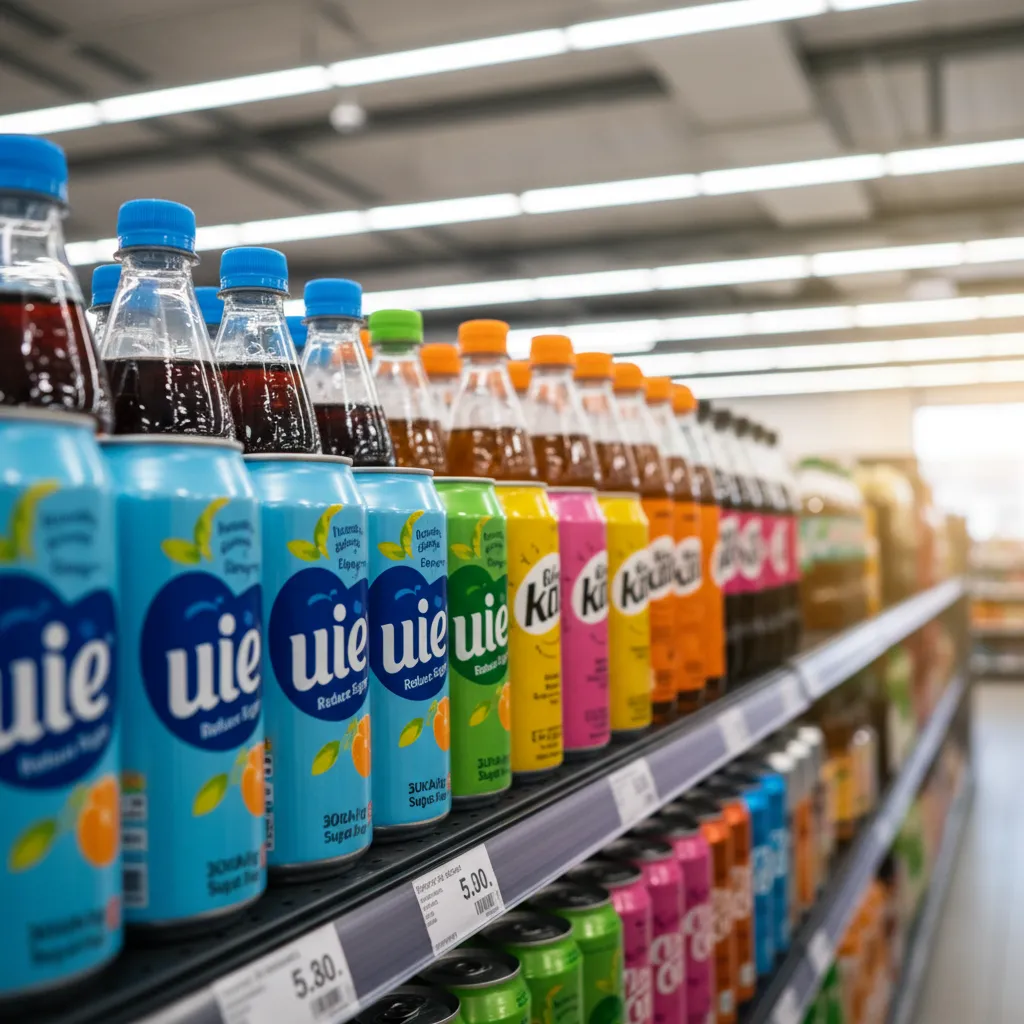
Of all the policies within the UK childhood obesity plan government strategy, the Soft Drinks Industry Levy (SDIL) is the one I consider the clearest success. Introduced in April 2018, the levy charges manufacturers and importers of soft drinks that contain 5g or more of sugar per 100ml. Drinks with 8g or more per 100ml face a higher rate.
What makes the levy remarkable is that it worked before it was even implemented. The announcement in the 2016 Budget gave manufacturers a two-year lead time, and many reformulated their products in advance. By the time the levy came into force, the sugar content of drinks subject to the levy had fallen by approximately 46%, according to Public Health England’s sugar reduction progress reports. An estimated 45,000 tonnes of sugar per year were removed from drinks sold in the UK.
I have written a full explanation of the policy in my article on the sugar tax and how the UK Soft Drinks Levy protects children. In my clinic, I regularly see families who have switched to lower-sugar alternatives without even realising it, simply because their usual brand quietly reduced its recipe. That is public health policy working as intended.
Revenue from the levy has been ring-fenced for programmes that benefit children, including school breakfast clubs, the PE and Sport Premium, and healthy pupils capital funding. In its first full year, the levy raised approximately £340 million.
Advertising Restrictions and Promotions
One of the most debated elements of the UK childhood obesity plan government strategy has been the approach to restricting advertising and in-store promotions of unhealthy food and drink. These measures have had a complicated journey through parliament and industry lobbying.
The Health and Care Act 2022 legislated for restrictions on the volume-based promotions (such as buy-one-get-one-free) and location-based promotions (end-of-aisle displays, checkout areas, store entrances) of HFSS products in medium and large retailers. The volume promotion restrictions were initially delayed due to cost-of-living pressures but remain a core part of the government’s strategy.
The same Act introduced a 9pm television watershed on HFSS product advertising and a total ban on paid-for HFSS advertising online. These restrictions recognise that children are exposed to enormous volumes of marketing for unhealthy food. Research cited in the government’s impact assessments estimated that children in the UK see an average of 15 billion HFSS advertisements per year online alone.
As a parent myself, I find the advertising restrictions particularly important. Children are not equipped to critically evaluate marketing messages in the way adults can. If your child struggles with the emotional aspects of eating and food marketing, you might find my article on emotional eating in children helpful.
School Food Standards and the Daily Mile
Schools sit at the heart of the UK childhood obesity plan government approach, and with good reason. Children consume up to 40% of their daily energy intake during school hours through meals, snacks and drinks. The School Food Standards, which apply to all maintained schools, academies and free schools that were set up or converted since 2010, set minimum nutritional requirements for school lunches and other food provided on school premises.
Key requirements of the current school food standards include:
- One or more portions of vegetables or salad must be provided every day
- One or more portions of fruit must be available every day
- No more than two portions of deep-fried, battered or breaded food per week
- Confectionery, chocolate, crisps and savoury snacks (other than nuts and seeds) are not permitted
- Only water, milk, fruit juice or vegetable juice may be provided as drinks
Alongside food standards, the government has promoted physical activity initiatives in schools. The Daily Mile, which asks children to walk, jog or run for 15 minutes during the school day, has been adopted by thousands of schools across the UK. The PE and Sport Premium provides primary schools with additional ring-fenced funding of around £320 million per year to improve PE and sport provision. For ideas on keeping children active beyond school, see my guide on fun ways to keep children active without it feeling like exercise.
The government has also expanded the National School Breakfast Programme, funded partly through sugar levy revenue, to provide free healthy breakfasts in schools in disadvantaged areas. This matters because children who skip breakfast are more likely to make poorer food choices later in the day.
The National Child Measurement Programme
The National Child Measurement Programme (NCMP) is not strictly part of the obesity plan, but it provides the data foundation upon which the entire strategy rests. Every year, children in Reception and Year 6 in England are weighed and measured at school. Parents receive a letter with results, and the data feeds into national surveillance of childhood weight trends.
In my experience, the NCMP letter can cause anxiety for parents. I have addressed this directly in my article on what to do when your child’s NCMP letter says overweight. The key thing to understand is that the programme exists to identify problems early and connect families with support, not to label or judge children.
The most recent NCMP data available shows that obesity prevalence in Year 6 rose sharply during the pandemic, reaching approximately 23.4% in 2020/21, before beginning to fall back towards pre-pandemic levels. In Reception, the rate rose to 14.4% during the same period. These figures reinforced the government’s decision to accelerate elements of the childhood obesity plan.
If you want to understand how your child’s measurements compare to national averages, I recommend reading my article on average weight and height for children by age in the UK, as well as understanding centiles and percentiles on the UK child weight chart.
What Has Actually Worked?
After a decade of policy development, the honest question is: what has the UK childhood obesity plan government strategy actually achieved? The answer is mixed, and I think it is important to be transparent about that.
Clear successes:
- The Soft Drinks Industry Levy demonstrably reduced sugar in drinks and has been cited internationally as a model fiscal intervention
- Mandatory calorie labelling in large restaurants and takeaways (250+ employees) came into force in April 2022, giving families better information when eating out
- The HFSS advertising and promotions restrictions, though delayed, represent a significant shift in the food environment
- The NCMP continues to provide vital data for tracking trends and targeting resources
Areas of disappointment:
- The voluntary sugar reduction programme achieved only an average 3.5% reduction against a 20% target across most food categories by 2020, according to the final progress report from the Office for Health Improvement and Disparities
- The voluntary calorie reduction programme has seen similarly modest engagement from industry
- Health inequalities have widened: obesity rates remain roughly twice as high among children in the most deprived areas compared to the least deprived
- Many policies have been subject to repeated delays, undermining momentum and public confidence
The lesson I draw from this, both as a clinician and a parent, is that mandatory measures work better than voluntary ones. The sugar levy succeeded because it imposed a financial cost on inaction. The voluntary sugar and calorie reduction programmes have largely failed because there is insufficient incentive for companies to reformulate when their competitors do not.
A comprehensive review published in the Journal of Public Health examining the childhood obesity plan chapters reached similar conclusions, noting that the strategy’s reliance on industry self-regulation was its most significant weakness.
What Parents Can Do Alongside Policy
Government policy matters enormously. It shapes the food environment, the information we receive, and the choices available to our children. But policy works best when families are also empowered to make positive changes at home. Here is what I recommend to families in my practice.
Stay informed about your child’s health. Use the NHS BMI calculator to check your child’s weight status annually, and engage positively with the NCMP process. Understanding your child’s growth trajectory is far more useful than worrying about a single measurement.
Focus on what you can control at home. The food environment at home still has the greatest influence on children’s eating habits. Offering healthy snacks, ensuring adequate water intake, and cooking together as a family are all practical steps that make a genuine difference.
Understand that sleep matters too. There is growing evidence linking insufficient sleep to weight gain in children. I have explored this in detail in my article on children’s sleep and weight. A consistent bedtime routine is one of the simplest and most overlooked interventions.
Do not underestimate vegetables. Getting children to eat their greens remains one of the biggest challenges I hear about in clinic. If this resonates, have a look at my practical strategies for how to get your child to eat vegetables.
Key Points
- The UK childhood obesity plan spans three chapters (2016, 2018, 2019) plus a 2020 COVID-era strategy, each building on the last
- The Soft Drinks Industry Levy is the standout success, removing approximately 45,000 tonnes of sugar per year from drinks
- Mandatory measures like the sugar levy consistently outperform voluntary industry schemes, which have largely missed their targets
- Check your child’s weight annually using the NHS BMI calculator and engage with NCMP results constructively
- Support policy changes at home by offering healthy snacks, cooking together, ensuring enough sleep, and keeping children physically active
Frequently Asked Questions
What is the UK Childhood Obesity Plan?
The UK Childhood Obesity Plan is a multi-chapter government strategy published between 2016 and 2019 (with a further update in 2020) that sets out policies to reduce childhood obesity in England. Key measures include the Soft Drinks Industry Levy, voluntary and mandatory sugar and calorie reduction programmes, restrictions on advertising and promotions of unhealthy food, improved school food standards, and expanded physical activity programmes in schools.
The Soft Drinks Industry Levy has successfully reduced the sugar content of soft drinks by approximately 46% and removed an estimated 45,000 tonnes of sugar per year from the UK diet. While it is difficult to attribute changes in obesity prevalence directly to a single policy, the levy is widely regarded as one of the most effective elements of the government’s obesity strategy. Childhood obesity rates remain high, suggesting that the levy alone is insufficient and must be part of a broader package of measures.Has the sugar tax actually reduced childhood obesity?
HFSS stands for foods that are high in fat, sugar and salt. The government legislated through the Health and Care Act 2022 to introduce a 9pm television watershed on HFSS advertising and a total ban on paid-for online HFSS advertising. These restrictions are designed to reduce children’s exposure to marketing of unhealthy food and drink. Location-based and volume-based promotional restrictions in shops are also being implemented for medium and large retailers.What are the HFSS advertising restrictions?
The School Food Standards are mandatory for all maintained schools, academies set up or converted since 2010, and free schools. Some older academies that converted before 2010 may not be bound by the same requirements, depending on the terms of their funding agreement. The standards cover school lunches and all other food and drink provided on school premises, setting minimum nutritional requirements including daily portions of fruit and vegetables and limits on fried and processed foods.Do school food standards apply to all schools in England?
Parents can support the strategy by creating a healthy food environment at home, checking their child’s weight status annually using the NHS BMI calculator, engaging positively with NCMP results, offering plenty of vegetables and fruit, limiting ultra-processed snacks, cooking together as a family, ensuring children get enough sleep, and encouraging at least 60 minutes of physical activity each day. Small, consistent changes at home complement the broader policy changes the government is making to the food environment.What can parents do to support the government’s obesity strategy at home?
Several elements of the plan have been delayed due to a combination of factors including the COVID-19 pandemic, cost-of-living pressures, and sustained lobbying from the food and advertising industries. The volume-based promotions restrictions on HFSS products, for example, were postponed multiple times. Critics argue that these delays have weakened the strategy’s effectiveness and allowed preventable harm to continue, while the government has cited the need to balance public health goals with economic pressures on businesses and consumers.Why have some parts of the childhood obesity plan been delayed?