Key Takeaways
- UK food labels use a traffic light system (red, amber, green) to help you spot high, medium and low levels of fat, sugar and salt at a glance
- Always check the per 100g column first when comparing products, as portion sizes vary between brands
- The 5/20 guideline is a quick rule: 5% or less of your Daily Reference Intake is low, 20% or more is high
- Children aged 4 to 6 should consume no more than 19g of free sugars per day, yet many popular snacks contain over half that in a single serving
- Ingredients are listed in descending order by weight, so the first three ingredients make up the bulk of what you are eating
- UK law requires 14 major allergens to be clearly highlighted on all pre-packed food labels
In This Article
- Why Food Labels Matter for Your Family’s Health
- Understanding the UK Traffic Light System
- Reading the Nutrition Information Panel Step by Step
- The Ingredients List Decoded
- Spotting Hidden Sugars and Fats
- Allergens, Health Claims and Dietary Labels
- Practical Tips for Your Next Supermarket Shop
- Teaching Children to Read Food Labels
As a paediatric nutritionist, one of the most common questions I hear from parents in my Bristol clinic is: “I want to feed my children well, but I find food labels genuinely confusing.” You are not alone. In my experience, learning how to read food labels UK style is one of the single most empowering skills a parent can develop. Once you understand what those numbers, colours and claims actually mean, choosing healthier options becomes faster, easier and far less stressful.
In this guide, I will walk you through every element of a UK food label, from the front-of-pack traffic lights to the back-of-pack nutrition panel, the ingredients list, allergen declarations and those tricky health claims. Whether you are trying to plan healthier family meals or simply want to make smarter choices at the supermarket, this article will give you the confidence to decode any label in seconds.
Why Food Labels Matter for Your Family’s Health
Food labels are your most powerful tool for understanding exactly what goes into the food you buy. According to NHS guidance on food labels, learning to read them properly can help you reduce your family’s intake of saturated fat, sugar and salt, three nutrients that many of us consume in excess.
In my clinical practice, I have seen families transform their eating habits simply by becoming more label-aware. One mother told me she had been buying a “healthy” cereal bar for her children’s packed lunches for years, only to discover it contained more sugar per 100g than a chocolate biscuit. That single revelation changed her entire approach to shopping.
The UK has one of the most comprehensive food labelling systems in the world. Since 2013, the voluntary front-of-pack traffic light scheme has been adopted by most major retailers and manufacturers, making it significantly easier for consumers to make informed choices. Understanding this system, along with the mandatory back-of-pack information, puts you in control of what your family eats.
Understanding the UK Traffic Light System
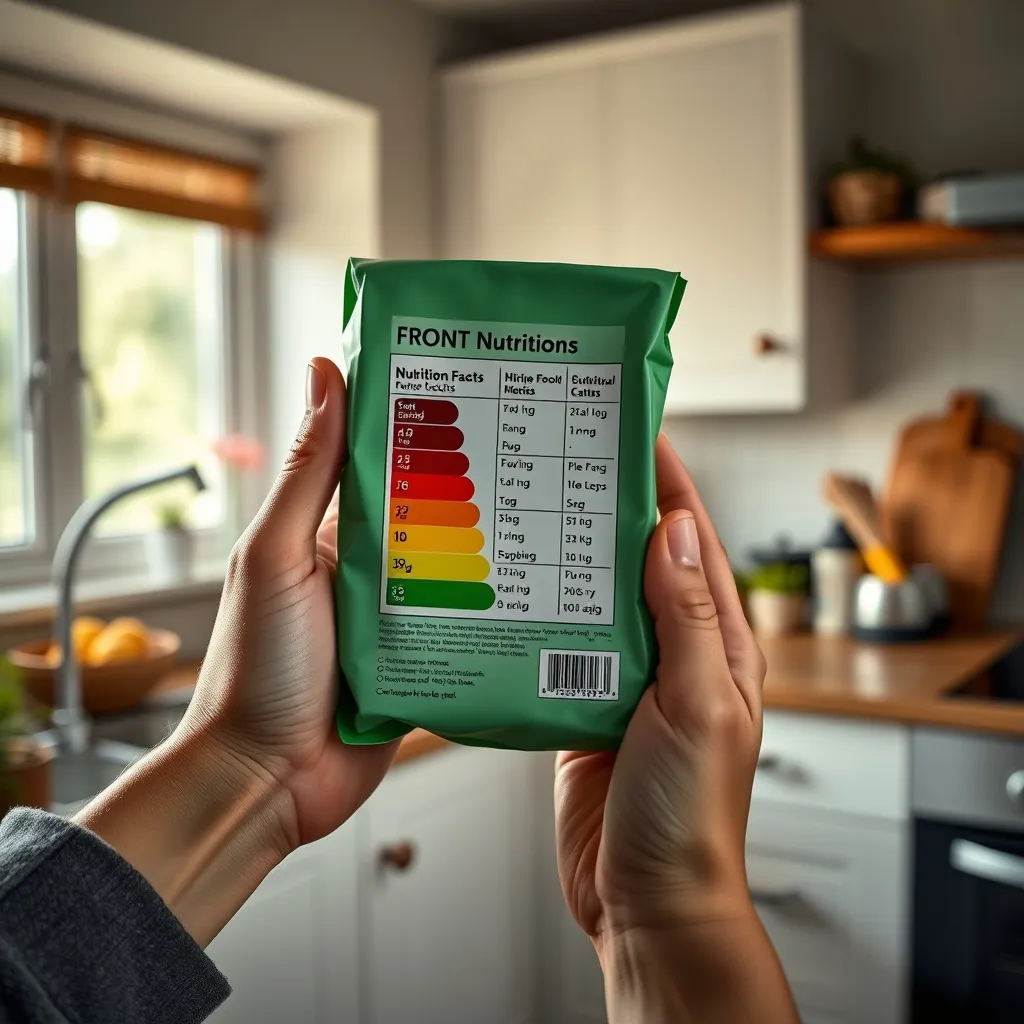
The front-of-pack traffic light label is unique to the UK and, in my opinion, one of the best nutrition tools available to families. It uses three colours to indicate whether the levels of fat, saturated fat, sugars and salt in a product are low (green), medium (amber) or high (red).
Here is how the system works in practice:
- Green means the nutrient is at a low level. You can eat these foods freely as part of a balanced diet.
- Amber means a medium level. These foods are fine most of the time, but try not to rely on them exclusively.
- Red means a high level. You do not need to avoid red labels entirely, but try to limit how often you choose them and watch your portion sizes.
I always tell parents: aim for mostly greens and ambers across your weekly shop. The occasional red is perfectly fine. It is the overall pattern that matters, not any single product. This approach takes the pressure off and stops food shopping from feeling like a test.
| Nutrient | Green (Low) | Amber (Medium) | Red (High) |
|---|---|---|---|
| Total fat (per 100g) | 3g or less | 3.1g to 17.5g | More than 17.5g |
| Saturated fat (per 100g) | 1.5g or less | 1.6g to 5g | More than 5g |
| Sugars (per 100g) | 5g or less | 5.1g to 22.5g | More than 22.5g |
| Salt (per 100g) | 0.3g or less | 0.31g to 1.5g | More than 1.5g |
These thresholds, established by the Food Standards Agency, apply to all food products. Keep in mind that drinks have slightly different cut-offs, as they tend to contain lower amounts of fat and salt but can still be surprisingly high in sugar.
If you are also interested in understanding calorie information specifically, I have written a detailed guide on how to read calories on food labels in the UK that complements the traffic light approach.
Reading the Nutrition Information Panel Step by Step
The back-of-pack nutrition information panel is where the real detail lives. By law, all pre-packed foods in the UK must display this panel, and understanding it is essential for making truly informed choices.
Every nutrition panel must include the following information per 100g (or 100ml):
- Energy in kilojoules (kJ) and kilocalories (kcal)
- Fat and of which saturates
- Carbohydrate and of which sugars
- Fibre
- Protein
- Salt
Many manufacturers also provide a per portion column. This is helpful, but I always recommend checking the per 100g column first, because it allows you to compare products fairly. A biscuit brand might list a “portion” as one biscuit, while another lists two. Comparing per 100g eliminates this inconsistency.
The 5/20 Guideline
One of the simplest tricks I teach families is the 5/20 rule. Look at the percentage of your Reference Intake (RI) shown on the label:
- 5% RI or less per serving means a nutrient is at a low level
- 20% RI or more per serving means a nutrient is at a high level
For nutrients you want to limit (saturated fat, sugar, salt), aim for products closer to 5%. For nutrients you want more of (fibre, protein, vitamins), look for those closer to 20% or above. This quick mental shortcut works brilliantly when you are in a hurry and cannot study every number in detail.
It is worth noting that the Reference Intake values printed on labels are based on an average adult consuming 2,000 kcal per day. Children need less, so the percentages will actually be higher for them in practice. For children aged 4 to 6, the recommended daily energy intake is approximately 1,300 to 1,500 kcal, so bear this in mind when evaluating portion sizes.
The Ingredients List Decoded
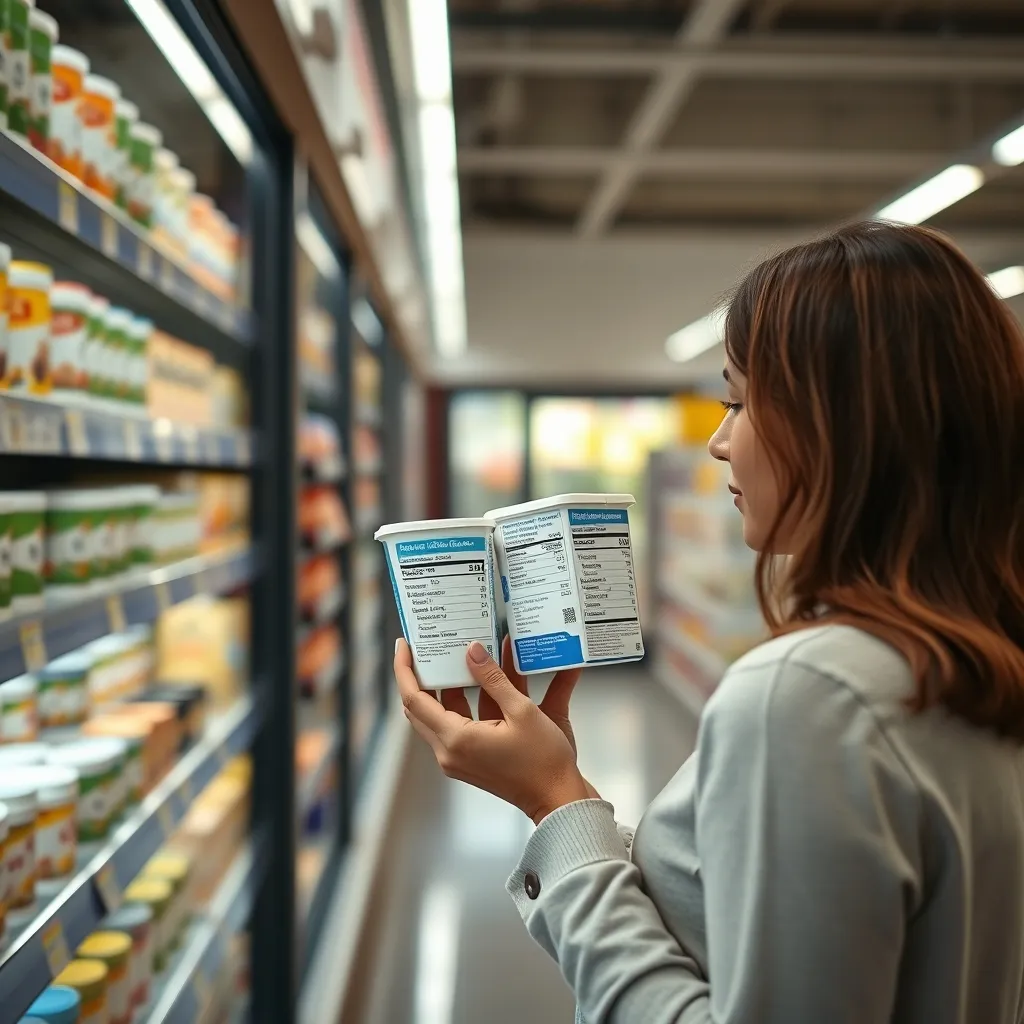
While the nutrition panel tells you the “how much”, the ingredients list tells you the “what”. By UK law, ingredients must be listed in descending order by weight. This means the first ingredient listed is the one the product contains the most of, and the last ingredient is present in the smallest quantity.
Here is why this matters practically. If you pick up a jar of tomato pasta sauce and the first ingredient is tomatoes, that is a good sign. But if the first ingredient is water, followed by sugar, then tomato paste, you know you are getting a very different product despite a similar label on the front.
I encourage parents to adopt a simple habit: read the first three ingredients of any product. If those three ingredients are things you recognise and would use in your own kitchen, the product is likely a reasonable choice. If they include refined sugars, hydrogenated fats or a string of additives, consider whether a better alternative exists.
Understanding E-numbers
E-numbers often cause unnecessary alarm. The “E” simply means the additive has been assessed and approved for use in the European Union (and these approvals still apply in the UK). Some E-numbers are entirely harmless, such as E300 (vitamin C) or E160a (beta-carotene). Others, like certain artificial colours, have been linked to hyperactivity in children and are best avoided.
The so-called Southampton Six food colours (E102, E104, E110, E122, E124 and E129) must carry a warning label in the UK stating they “may have an adverse effect on activity and attention in children.” If your child is sensitive to additives, checking for these specific E-numbers is worthwhile.
Spotting Hidden Sugars and Fats
This is where label reading becomes truly powerful. The food industry uses dozens of different names for sugar, and knowing them helps you see through marketing claims. Here are some of the most common names for added sugar you will find on UK labels:
- Glucose, fructose, sucrose, dextrose, maltose
- Corn syrup, high-fructose corn syrup
- Agave nectar, rice syrup, maple syrup
- Concentrated fruit juice, fruit puree
- Molasses, treacle, honey
- Invert sugar, maltodextrin
A product might claim “no added sugar” while still containing concentrated apple juice as a sweetener. Technically accurate, but nutritionally misleading. The NHS recommends that children aged 4 to 6 consume no more than 19g of free sugars per day, and children aged 7 to 10 no more than 24g. A single “healthy” fruit smoothie can contain 20g or more.
When it comes to fats, the key distinction is between unsaturated fats (generally beneficial) and saturated fats (best limited). Trans fats, which are the most harmful, have largely been removed from UK food products, but they can still appear as “partially hydrogenated” oils in some imported goods. Always check for this term and avoid products that contain it.
If you are preparing healthy packed lunches for your children, reading labels on common lunchbox items like cereal bars, yoghurts and crisps can reveal surprising differences between seemingly similar products.
Allergens, Health Claims and Dietary Labels
UK food law requires that 14 major allergens are clearly identified on food labels, typically highlighted in bold within the ingredients list. These allergens are: celery, cereals containing gluten, crustaceans, eggs, fish, lupin, milk, molluscs, mustard, nuts, peanuts, sesame, soya and sulphur dioxide.
For families managing allergies, this legal requirement is a genuine lifeline. However, I always remind parents that “may contain” warnings are voluntary, not mandatory. A product without a “may contain nuts” statement is not necessarily nut-free; it simply means the manufacturer has not chosen to include that warning. If your child has a severe allergy, contacting the manufacturer directly is always the safest course of action.
Decoding Health Claims
Health claims on food packaging are regulated by UK government food labelling legislation, but they can still be confusing. Here is what some common claims actually mean:
- “Low fat” means the product contains no more than 3g of fat per 100g. It does not mean it is low in sugar or salt.
- “Reduced sugar” means at least 30% less sugar than the standard version. The product may still contain a significant amount of sugar.
- “Light” or “lite” must mean the product is at least 30% lower in at least one typical value, such as calories or fat.
- “No added sugar” means no sugar or sweetener has been added, but the product may naturally contain high levels of sugar (as in fruit juice).
- “Source of fibre” means the product contains at least 3g of fibre per 100g.
- “High in fibre” means at least 6g of fibre per 100g.
I have seen too many parents reach for “reduced fat” crisps thinking they are making a healthy choice, only to find the sugar content has been increased to compensate for the flavour lost by removing fat. Always check the full nutrition panel, not just the front-of-pack claim.
For a broader look at making nutritious choices for children, my parent’s guide to understanding food labels covers additional strategies for navigating the supermarket aisles with confidence.

Practical Tips for Your Next Supermarket Shop
Knowing how to read food labels is one thing; putting that knowledge into practice during a busy midweek shop is another. Here are my tried-and-tested strategies that I share with families in my clinic:
1. Compare like with like. Always use the per 100g column when comparing two products. This is especially important for breakfast cereals, where portion sizes can vary dramatically between brands. A cereal claiming 95 kcal per portion might simply be using a smaller serving size than its competitor.
2. Focus on the nutrients that matter most. For most families, the three to watch are saturated fat, sugars and salt. You do not need to analyse every single number on the panel. Keeping these three in check will make the biggest difference to your family’s health.
3. Be sceptical of front-of-pack claims. “Natural”, “pure”, “wholesome” and “farm fresh” are marketing terms with no legal definition. Always flip the product over and check the actual nutrition information and ingredients list.
4. Use a simple traffic light tally. When choosing between similar products, count the reds, ambers and greens. The product with fewer reds and more greens is typically the better choice.
5. Watch out for portion size tricks. Some manufacturers use unrealistically small portions to make their nutrition figures look better. A pizza labelled as “serves 4” might realistically serve 2 hungry teenagers. Check whether the stated portion size matches how your family actually eats.
If you are shopping for simple healthy packed lunches, take an extra moment to compare the labels on sandwich fillings, snack bars and drinks. Small differences across daily items add up significantly over a school term.
The British Nutrition Foundation’s food labelling resource is also an excellent reference to bookmark on your phone for quick checks while shopping.
Teaching Children to Read Food Labels
One of the most rewarding things I do in my practice is helping parents teach their children to understand food labels. Children who learn these skills early tend to carry them into adulthood, making healthier choices instinctively.
For younger children (ages 5 to 7), I recommend starting with the traffic light colours. Turn it into a game: ask them to find the greenest product on the shelf. They love the challenge, and it teaches them the basics without overwhelming them with numbers.
For older children and teenagers, you can introduce the per 100g comparison. Challenge them to find the breakfast cereal with the least sugar per 100g, or the yoghurt with the most protein. This builds critical thinking skills and helps them understand that marketing does not always match reality. If you are looking for lunch box ideas that teenagers will enjoy, involving them in the label-reading process can also make them more enthusiastic about healthier choices.
I also encourage parents to discuss portion sizes with older children. Show them that a bottle of fizzy drink labelled as “2 servings” is something most people would drink in one sitting, effectively doubling the sugar intake shown per portion. These real-world observations are far more impactful than any lecture about nutrition.
For a comprehensive overview of children’s nutritional needs and how label reading fits into the bigger picture, have a look at my guide on healthy eating for children in the UK. And if you want to plan a full week of balanced meals using your new label-reading skills, my weekly healthy meal plan for children provides a practical framework to follow.
Key Points
- Use the per 100g column to compare products fairly, rather than relying on per-portion figures
- Apply the 5/20 rule: 5% RI or less is low, 20% RI or more is high for any nutrient
- Check the first three ingredients on any product to understand what you are truly buying
- Teach children to use traffic light colours as a simple first step in reading labels
- Always verify front-of-pack health claims by checking the full nutrition panel on the back
Frequently Asked Questions
How do you read food labels for beginners?
Start with the front-of-pack traffic light label. Look for products with more greens and ambers than reds. Then flip the product over and check the per 100g column on the nutrition panel. Focus on three key nutrients: saturated fat, sugars and salt. If these are in the green or amber range, you are making a solid choice. As you grow more confident, start reading the ingredients list, remembering that items are listed in order of quantity from highest to lowest.
The 5/20 rule is a quick way to judge whether a nutrient level is high or low based on the percentage of Reference Intake shown on the label. If a nutrient makes up 5% or less of your RI per serving, it is considered low. If it makes up 20% or more, it is considered high. For nutrients you want to limit (saturated fat, sugar, salt), aim for closer to 5%. For beneficial nutrients like fibre and protein, look for values closer to 20%.What is the 5/20 rule when reading a food package?
The UK traffic light system uses red, amber and green colour coding on front-of-pack labels to show whether levels of fat, saturated fat, sugars and salt are high, medium or low. Green means a low level and you can eat these foods freely. Amber indicates a medium level and is fine for most of the time. Red signals a high level and suggests you should consume that product less often or in smaller portions. The system was developed to help consumers make healthier choices quickly without needing to study detailed nutrition panels.What does the traffic light system on UK food labels mean?
Not necessarily. A “reduced fat” product must contain at least 30% less fat than the standard version, but manufacturers often add extra sugar or salt to compensate for the change in taste and texture. Similarly, “low sugar” products may be higher in fat. The only way to know for certain is to check the full nutrition panel on the back of the pack and compare the overall nutritional profile, not just the single nutrient highlighted on the front.Are “reduced fat” or “low sugar” products always healthier?
Sugar appears under many different names on UK food labels, including glucose, fructose, sucrose, dextrose, maltose, corn syrup, agave nectar, rice syrup, concentrated fruit juice and maltodextrin. Check the ingredients list for any of these terms. If several appear, the product likely contains a significant total amount of sugar even if no single type dominates the list. The “of which sugars” line on the nutrition panel gives you the total sugar content in grams, which is the most reliable figure to check.How can I identify hidden sugars on food labels?
Yes. UK law requires that 14 major allergens are clearly identified on all pre-packed food labels, typically by being highlighted in bold or underlined within the ingredients list. These include milk, eggs, peanuts, tree nuts, gluten-containing cereals, soya, fish, crustaceans, molluscs, celery, mustard, sesame, lupin and sulphur dioxide. However, “may contain” warnings for cross-contamination are voluntary, so if your child has a severe allergy, contacting the manufacturer directly is recommended for complete certainty.Do UK food labels show information about allergens?