
Key Takeaways
- A well-planned packed lunch can reduce daily calorie intake by 300 to 500 kcal compared to buying lunch on the high street
- The NHS Eatwell Guide recommends that over a third of your plate should come from vegetables and fruit, which is far easier to achieve with a home-prepared lunch box
- Protein-rich lunches containing 25 to 30 g of protein help maintain satiety and reduce afternoon snacking
- Batch-preparing lunch boxes on a Sunday evening can save an average of £25 per week per adult compared to shop-bought meals
- Swapping white bread for wholegrain alternatives adds up to 3 g more fibre per sandwich, supporting longer-lasting fullness
- Portion control is 50% easier when you pack your own food, according to nutrition research from the British Nutrition Foundation
In This Article
- Why Packed Lunches Genuinely Support Weight Loss
- Building a Balanced Lunch Box for Weight Management
- High-Protein, Low-Calorie Lunch Box Ideas
- Meal Prep Strategies That Make It Sustainable
- Common Lunch Box Mistakes That Stall Weight Loss
- Calorie Comparison: Packed Lunch vs Bought Lunch
- Adapting Healthy Packed Lunches for the Whole Family
- Putting It All Together
In my fifteen years working as a paediatric nutritionist across the NHS and in private practice here in Bristol, one question I hear almost every week from parents is this: can I actually lose weight just by changing what goes into my lunch box? The short answer is yes, absolutely. But the longer, more honest answer is that it depends entirely on what you pack, how much you pack, and how consistently you do it.
I have seen dozens of families transform their eating habits simply by taking control of their midday meal. The lunch box is, in many ways, the unsung hero of healthy packed lunch ideas for weight loss. It gives you total control over ingredients, portions and nutritional balance. Unlike grabbing a meal deal from the supermarket or ordering from a café, a packed lunch puts the power squarely in your hands.
Let me walk you through exactly how to make your lunch box work for you, with practical ideas, honest advice, and a few of the strategies I share with my own clients.
Why Packed Lunches Genuinely Support Weight Loss
There is a growing body of evidence suggesting that people who prepare their own meals tend to consume fewer calories overall. A study published in the International Journal of Behavioural Nutrition found that those who cooked at home more than five times per week consumed around 140 fewer calories per day than those who relied on ready-made or takeaway food. Scale that up across a week, and the numbers become significant.
The reason is straightforward. When you prepare your own lunch, you decide how much oil goes into the dressing, whether to include a sugary yoghurt or swap it for plain Greek yoghurt with fresh berries, and whether that wrap is stuffed with nutritious vegetables or mostly processed fillings. According to the NHS Eatwell Guide, a balanced meal should include starchy carbohydrates, protein, dairy or alternatives, and plenty of fruit and vegetables. A packed lunch allows you to engineer this balance precisely.
From my clinical experience, I also find that the act of planning and packing a lunch creates a form of mindful eating. You have already decided what you are going to eat before hunger or convenience dictates your choices. This removes the impulsive decision-making that often leads to higher-calorie options.
If you are new to the idea of packing your own lunch, I recommend starting with our guide to simple healthy packed lunch ideas, which covers the basics brilliantly.
Building a Balanced Lunch Box for Weight Management
I always tell my clients to think of their lunch box in terms of four compartments, even if the box itself does not have physical dividers. Each compartment represents a food group that contributes to satiety, nutrition, and ultimately, weight management.
Compartment one: protein. This is the cornerstone of any weight-loss lunch. Protein keeps you full, supports muscle maintenance during a calorie deficit, and has a higher thermic effect than carbohydrates or fat, meaning your body burns more energy digesting it. Good options include sliced chicken breast, hard-boiled eggs, tinned tuna (in spring water, not brine or oil), hummus, cottage cheese, or leftover grilled salmon.
Compartment two: complex carbohydrates. Despite what some diet plans suggest, carbohydrates are not the enemy. The key is choosing wholegrain or high-fibre options. Wholemeal pitta, brown rice, quinoa, or a slice of seeded bread will provide steady energy without the blood sugar spike that white bread or pastry can cause. Aim for a portion roughly the size of your fist.
Compartment three: vegetables and salad. This should be the largest component of your lunch box. Cherry tomatoes, cucumber sticks, shredded carrot, roasted peppers, spinach leaves, or a simple mixed salad. The more colour, the better. Vegetables are naturally low in calories and high in fibre, making them the perfect tool for adding volume without adding excess energy.
Compartment four: healthy fats and extras. A small handful of nuts, a drizzle of olive oil dressing, a few slices of avocado, or a portion of cheese. These add flavour and satisfaction, but they need to be portion-controlled because fats are calorie-dense. A tablespoon of olive oil, for example, contains around 120 kcal.
For more detailed guidance on building balanced adult lunch boxes, our article on lunch box ideas for adults in the UK covers this in greater depth.
High-Protein, Low-Calorie Lunch Box Ideas
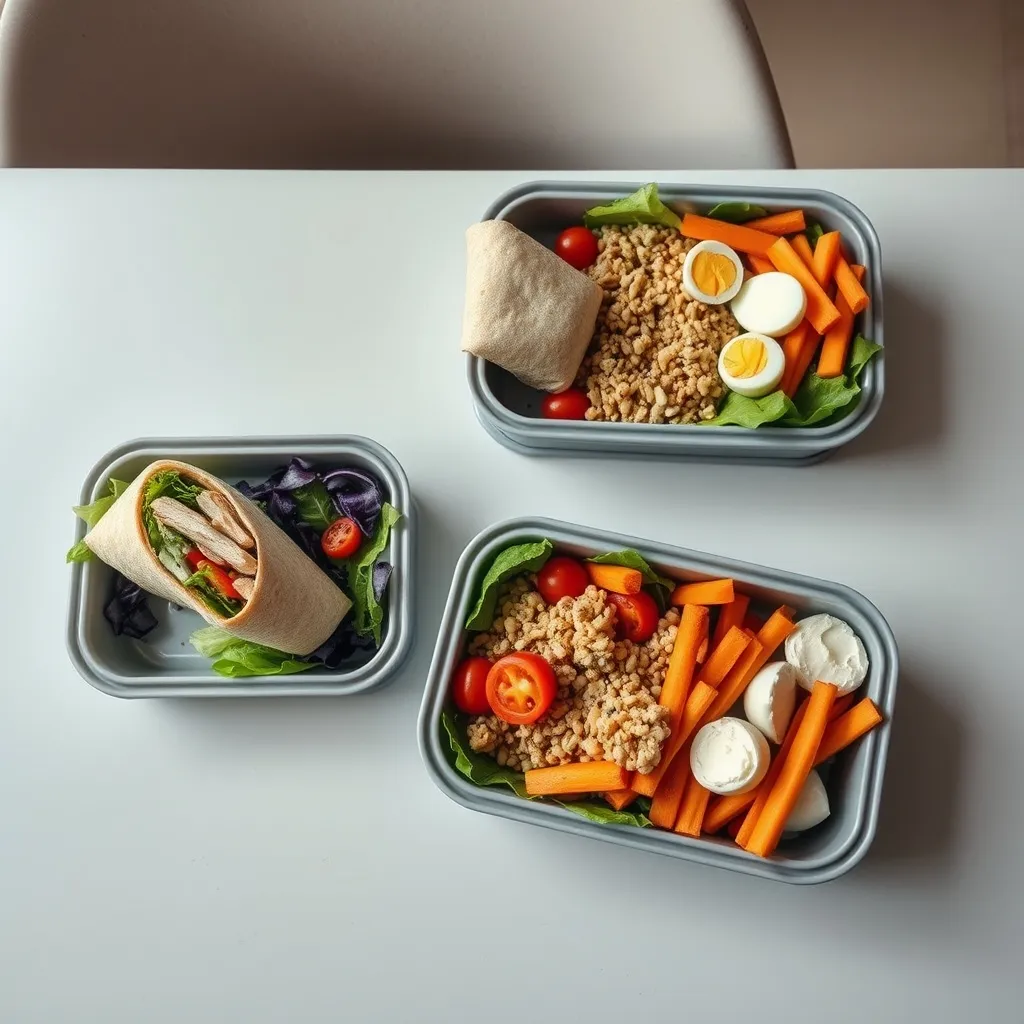
Here are some of my favourite healthy packed lunch ideas for weight loss that I recommend regularly. Each one comes in at under 500 kcal and provides at least 20 g of protein.
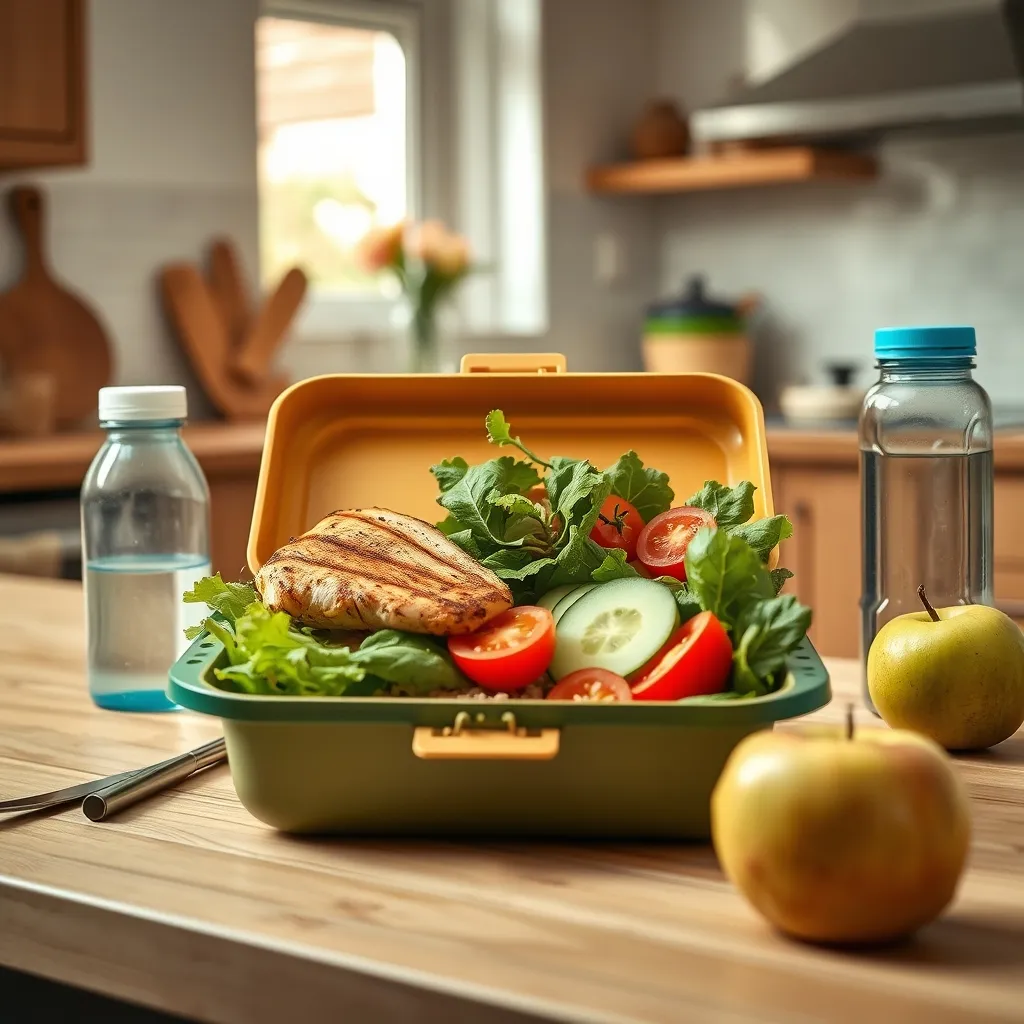
1. Greek chicken salad box. Dice leftover roast chicken (about 100 g), toss it with mixed leaves, cucumber, cherry tomatoes, a few olives, and a tablespoon of light feta. Dress with lemon juice and a teaspoon of olive oil. Approximately 380 kcal, 35 g protein.
2. Tuna and bean wrap. Mix tinned tuna with cannellini beans, diced red onion, and a squeeze of lemon. Wrap in a wholemeal tortilla with a handful of rocket. Around 420 kcal, 30 g protein.
3. Egg and vegetable rice bowl. Combine brown rice with two sliced hard-boiled eggs, steamed broccoli, edamame beans, and a splash of low-sodium soy sauce. Roughly 450 kcal, 25 g protein.
4. Cottage cheese and veggie box. A generous portion of cottage cheese served with carrot sticks, pepper strips, celery, and two oatcakes. Add a handful of cherry tomatoes. About 320 kcal, 22 g protein.
5. Lentil and roasted vegetable salad. Puy lentils mixed with roasted courgette, aubergine, and red pepper. Top with a crumbling of goat’s cheese and fresh mint. Approximately 400 kcal, 20 g protein.
6. Prawn and avocado lettuce cups. Use large iceberg lettuce leaves as cups, fill with cooked prawns, diced avocado, sweetcorn, and a light chilli-lime dressing. Only 280 kcal, 24 g protein.
The beauty of these ideas is that they are all easy to batch prepare. I often suggest to parents that they cook a larger evening meal and set aside a portion specifically for the next day’s lunch box. If you enjoy pasta-based lunches, have a look at our pasta packed lunch ideas for lighter variations that work well.
Meal Prep Strategies That Make It Sustainable
The biggest barrier to maintaining healthy packed lunch ideas for weight loss is not knowledge; it is time and consistency. I hear it constantly: “I know what I should eat, Dr. Mitchell, but I just don’t have time to prepare it every morning.” That is completely understandable, which is why I am a firm advocate of weekly meal preparation.
Here is the system I recommend to my clients:
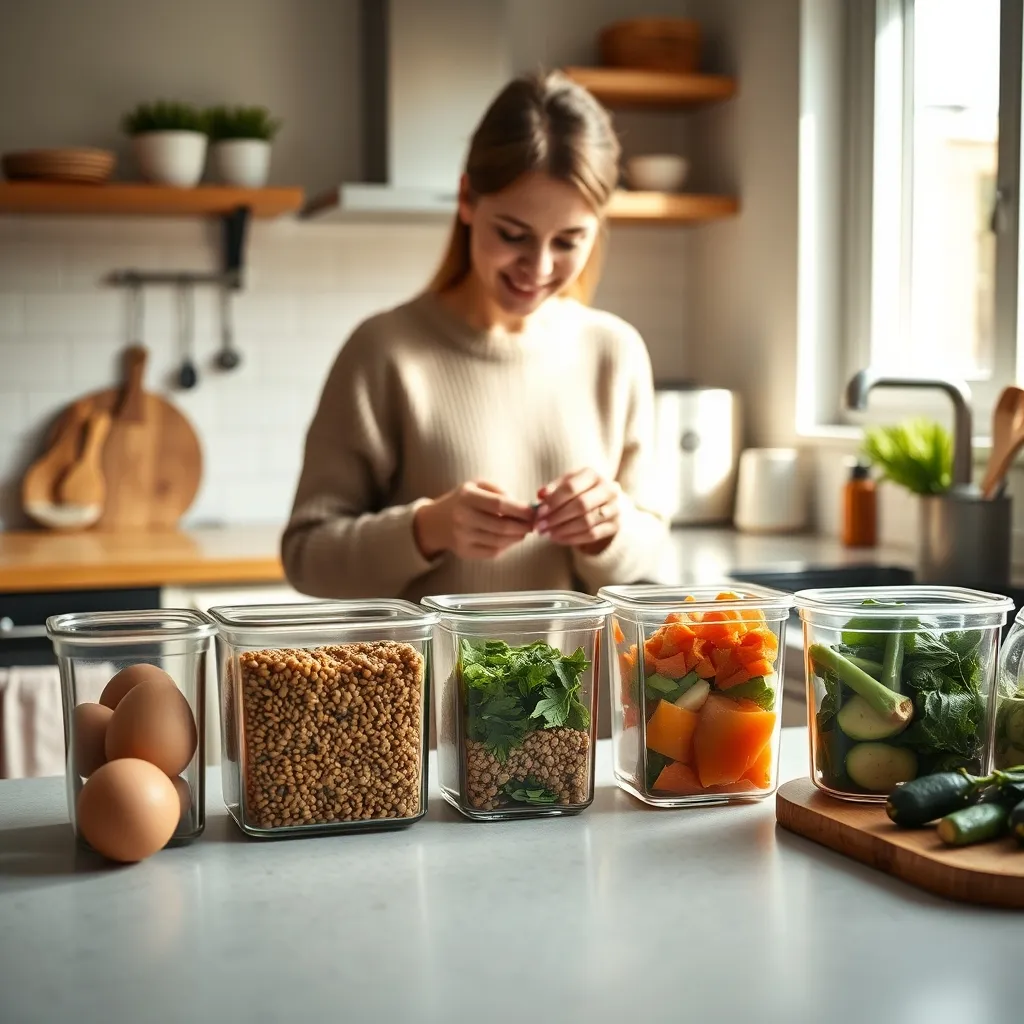
Sunday evening prep session (45 to 60 minutes). Cook a batch of protein (roast a chicken, boil eggs, prepare a batch of lentils), prepare a large container of mixed salad, wash and chop raw vegetables for snacking, and cook a base grain like brown rice or quinoa. Store everything separately in airtight containers in the fridge.
Morning assembly (5 to 10 minutes). Each morning, simply combine your pre-prepared components. This turns lunch-box packing from a chore into a quick, almost effortless task.
The freezer is your friend. Soups, stews, and grain-based salads freeze beautifully. Make a large batch of butternut squash soup or chicken and vegetable curry on a Sunday, portion it into individual containers, and freeze. Pull one out the night before and you have a ready-made, calorie-controlled lunch.
Our comprehensive guide to family meal planning on a budget offers excellent strategies for organising weekly meals, including lunch preparation, without breaking the bank.
If you are also preparing lunches for teenagers, our teenage packed lunch ideas page can help you adapt these strategies for younger family members who may have different preferences.
Common Lunch Box Mistakes That Stall Weight Loss

Over the years, I have identified several recurring mistakes that well-meaning people make when trying to use their lunch box as a weight-loss tool. Let me share the most common ones so you can avoid them.
Mistake 1: ignoring liquid calories. You might pack a beautifully balanced 400-kcal lunch, but then wash it down with a 250 ml bottle of fruit juice containing 25 g of sugar. Water, herbal tea, or sparkling water with a slice of lemon are far better choices. If you want flavour, try infusing water with cucumber and mint overnight.
Mistake 2: relying on “healthy” snack bars. Many cereal bars and protein bars marketed as healthy alternatives contain as much sugar as a chocolate bar. Always check the label. The NHS guidance on reading food labels uses a traffic-light system: aim for greens and ambers, and limit reds. Our detailed article on how to read food labels can help you become more confident at spotting hidden sugars.
Mistake 3: skipping lunch entirely. Some people think that cutting out lunch altogether will accelerate weight loss. In practice, skipping meals often leads to overeating at dinner or reaching for high-calorie snacks in the afternoon. A moderate, balanced lunch is almost always a better strategy.
Mistake 4: oversized portions of “healthy” food. Hummus is nutritious, but 100 g of it contains around 280 kcal. Nuts are excellent, but a large handful can easily reach 300 kcal. Even healthy foods contribute to weight gain when consumed in excess. I recommend using a kitchen scale for a few weeks until you develop an intuitive sense of appropriate portion sizes.
Mistake 5: monotony. Eating the same lunch every single day is a fast track to boredom and eventual abandonment. Variety is crucial for sustainability. Rotate your proteins, change your salad components, experiment with different dressings and spices. If you enjoy cold lunches, our cold packed lunch ideas page offers plenty of inspiration.
Calorie Comparison: Packed Lunch vs Bought Lunch
One of the most powerful motivators I use with clients is a simple comparison. When you see the numbers side by side, the case for packing your own lunch becomes very compelling indeed.
| Lunch option | Typical calories (kcal) | Protein (g) | Approximate cost |
|---|---|---|---|
| Supermarket meal deal (sandwich, crisps, drink) | 750 to 900 | 18 to 22 | £3.50 to £4.50 |
| Café panini with a latte | 800 to 1,000 | 20 to 25 | £7.00 to £9.00 |
| Fast-food burger meal | 900 to 1,200 | 25 to 30 | £5.00 to £7.00 |
| Home-packed chicken salad box | 350 to 450 | 30 to 35 | £1.50 to £2.50 |
| Home-packed tuna wrap with veggies | 380 to 450 | 25 to 30 | £1.20 to £2.00 |
| Home-packed lentil and vegetable bowl | 350 to 420 | 18 to 22 | £1.00 to £1.80 |
As you can see, a home-packed lunch typically saves you 300 to 500 kcal and £3 to £6 per meal. Over a five-day working week, that could mean a saving of 1,500 to 2,500 kcal, which is roughly equivalent to half a pound of body fat. Over a month, these savings compound substantially.
The British Nutrition Foundation highlights that preparing food at home allows greater control over both the quality and quantity of ingredients, which is a key factor in achieving and maintaining a healthy weight.
For those following specific programmes, our guides to Slimming World packed lunch ideas for adults and Slimming World cold lunch boxes offer tailored suggestions that align with those particular frameworks.
Adapting Healthy Packed Lunches for the Whole Family
One of the things I love most about the packed-lunch approach to weight management is that it benefits the whole family, not just the person trying to lose weight. The same principles of balance, variety, and portion control apply to children, teenagers, and adults alike; you simply adjust the quantities.
For younger children, the focus should never be on weight loss but rather on establishing healthy eating patterns. A child’s lunch box should still follow the four-compartment model, with slightly smaller portions and perhaps more emphasis on fun presentation to encourage eating. If your child is a fussy eater, our article on packed lunch ideas for fussy eaters has practical tips for increasing acceptance of new foods.
For teenagers, energy needs are higher due to growth and activity levels, so their lunch boxes should be more generous. However, the quality of food matters enormously. A teenager’s lunch box filled with crisps, chocolate, and white bread is not doing them any favours, even if the calorie count is appropriate. Our lunch box guide for teens addresses this balance thoughtfully.
For adults aiming to lose weight, the strategies outlined in this article are your foundation. Keep your lunch between 350 and 500 kcal, ensure at least 20 g of protein, fill half the box with vegetables, and choose wholegrain carbohydrates. For more adult-specific ideas, visit our easy packed lunch ideas for adults page.
When the whole family eats from the same batch of ingredients, just portioned differently, meal preparation becomes more efficient and far less wasteful. You cook once and feed everyone. Our healthy family meal planning guide covers this approach in detail.
Putting It All Together
The evidence is clear, and my clinical experience confirms it every day: a well-planned packed lunch is one of the most effective, sustainable, and affordable tools for weight loss. It is not a fad diet, not a restrictive regime, and not something that requires special ingredients or expensive equipment. It simply requires a little planning, a willingness to experiment, and the discipline to prepare food at home rather than buying it on the go.
Start small. Choose three days next week to pack your own lunch. Use the recipes and strategies in this article as your starting point. Track how you feel in the afternoon: more energised, less sluggish, fewer cravings. I am confident you will notice a difference within the first week.
Weight loss is not about perfection; it is about making better choices more often than not. Your lunch box is one small decision each day that can lead to meaningful, lasting change.
Key Points
- Pack your lunch box using the four-compartment model: protein, complex carbs, vegetables, and a small portion of healthy fats
- Aim for 350 to 500 kcal and at least 20 g of protein per lunch to stay full without overshooting your energy needs
- Dedicate 45 to 60 minutes on Sunday to batch-prepare proteins, grains, and vegetables for the entire week
- Replace sugary drinks and “healthy” snack bars with water, herbal tea, and whole-food snacks like carrot sticks or a small handful of nuts
- Use a kitchen scale for the first few weeks to learn appropriate portions for calorie-dense foods like hummus, nuts, and cheese
Frequently Asked Questions
What is the best packed lunch for weight loss?
The best packed lunch for weight loss combines a lean protein source (such as chicken, tuna, eggs, or lentils), a serving of complex carbohydrates (wholemeal bread, brown rice, or quinoa), plenty of vegetables, and a small amount of healthy fat. A chicken salad box with mixed leaves, cherry tomatoes, cucumber, and a light olive oil dressing is an excellent example, coming in at around 380 kcal with 35 g of protein. The key is balance, variety, and portion control rather than any single “magic” ingredient.
What should I eat for lunch when losing weight?
When losing weight, your lunch should be satisfying without being calorie-heavy. Focus on high-volume, low-calorie foods like leafy greens, raw vegetables, and lean proteins, which fill you up without excessive energy. Avoid processed sandwich fillings, creamy sauces, and sugary drinks. A good target is between 350 and 500 kcal, which leaves room for a balanced breakfast and dinner within a sensible daily calorie allowance.
What is a good lunch for belly fat loss?
There is no food that specifically targets belly fat; fat loss occurs across the whole body when you maintain a consistent calorie deficit. However, lunches that are high in protein and fibre tend to reduce overall calorie intake by keeping you full for longer. Foods rich in soluble fibre, such as lentils, beans, oats, and vegetables, may have a particularly beneficial effect on reducing visceral fat over time when combined with regular physical activity.
How many calories should a packed lunch be for weight loss?
For most adults aiming to lose weight, a packed lunch should contain between 350 and 500 kcal. This allows for a balanced breakfast and dinner whilst maintaining a calorie deficit. If you are particularly active or have a physically demanding job, you may need to aim for the higher end of this range. The important thing is that your total daily intake, not just your lunch, supports gradual, sustainable weight loss of around 0.5 to 1 kg per week.
Can I prepare packed lunches in advance without them going stale?
Absolutely. Most packed lunches keep perfectly well in the fridge for up to three days when stored in airtight containers. The trick is to store wet and dry components separately. Keep dressings in a small pot, store salad leaves away from cooked grains, and add any crunchy toppings like seeds or croutons just before eating. Soups, stews, and grain bowls can also be frozen for up to three months and defrosted overnight.
Are healthy lunches suitable for people with diabetes?
Yes, the same principles apply. In fact, the balanced packed lunch approach I recommend is very well aligned with diabetes management guidelines. By choosing complex carbohydrates with a lower glycaemic index, pairing them with protein, and avoiding refined sugars, you can help maintain steadier blood sugar levels throughout the afternoon. Always consult your GP or diabetes specialist nurse for personalised advice, particularly regarding carbohydrate counting and medication timing.