
Key Takeaways
- Ultra-processed foods now make up approximately 65% of calories in the average UK child’s diet
- Children who eat the most ultra-processed food have a 45% higher risk of obesity compared to those who eat the least
- The NOVA classification system groups foods into 4 categories based on the degree of industrial processing they undergo
- Replacing just 10% of ultra-processed calories with minimally processed alternatives can measurably improve a child’s nutritional intake
- Ultra-processed food consumption in UK children has been linked to higher rates of type 2 diabetes, dental decay and poor gut health
- Simple label-reading skills can help parents identify hidden ultra-processed ingredients in foods marketed as healthy for children
In This Article
- What Are Ultra-Processed Foods?
- How Much Ultra-Processed Food Are UK Children Eating?
- The Health Risks of Ultra-Processed Food for Children
- How Ultra-Processed Foods Affect Children’s Weight
- Reading Labels: Spotting Ultra-Processed Foods
- Practical Swaps: Reducing Ultra-Processed Food at Home
- What About School Meals and Snacks?
- Building Long-Term Healthy Eating Habits
As a paediatric nutritionist working with families across the UK for over 15 years, I have watched the conversation around ultra-processed food grow from a niche academic concern into one of the most important public health topics of our time. Parents regularly ask me whether the foods they are giving their children are truly as harmless as the packaging suggests. The answer, increasingly backed by robust research, is that many of these products are contributing to a range of health problems in our youngest generation.
In this article, I want to cut through the noise and give you a clear, practical guide to understanding ultra-processed food and its effects on children’s health. I will explain what these foods actually are, why they matter for your child, and most importantly, what realistic steps you can take to reduce them without turning mealtimes into a battleground.
What Are Ultra-Processed Foods?
The term “ultra-processed food” (often shortened to UPF) comes from the NOVA food classification system, developed by researchers at the University of São Paulo. This system divides all foods into four groups based on how much industrial processing they have undergone, rather than simply looking at their nutrient content.
Group 1 includes unprocessed or minimally processed foods: fresh fruit, vegetables, eggs, plain milk, raw meat and fish. Group 2 covers processed culinary ingredients such as olive oil, butter, sugar and salt. Group 3 refers to processed foods, which are Group 1 foods altered by methods like canning, bottling or fermenting, with the addition of Group 2 ingredients. Think tinned tomatoes, freshly baked bread or traditional cheese.
Group 4 is where ultra-processed foods sit. These are industrial formulations made mostly or entirely from substances derived from foods and additives. They typically contain five or more ingredients, many of which you would not find in a home kitchen: high-fructose corn syrup, hydrogenated oils, modified starches, emulsifiers, flavour enhancers and artificial colourings.
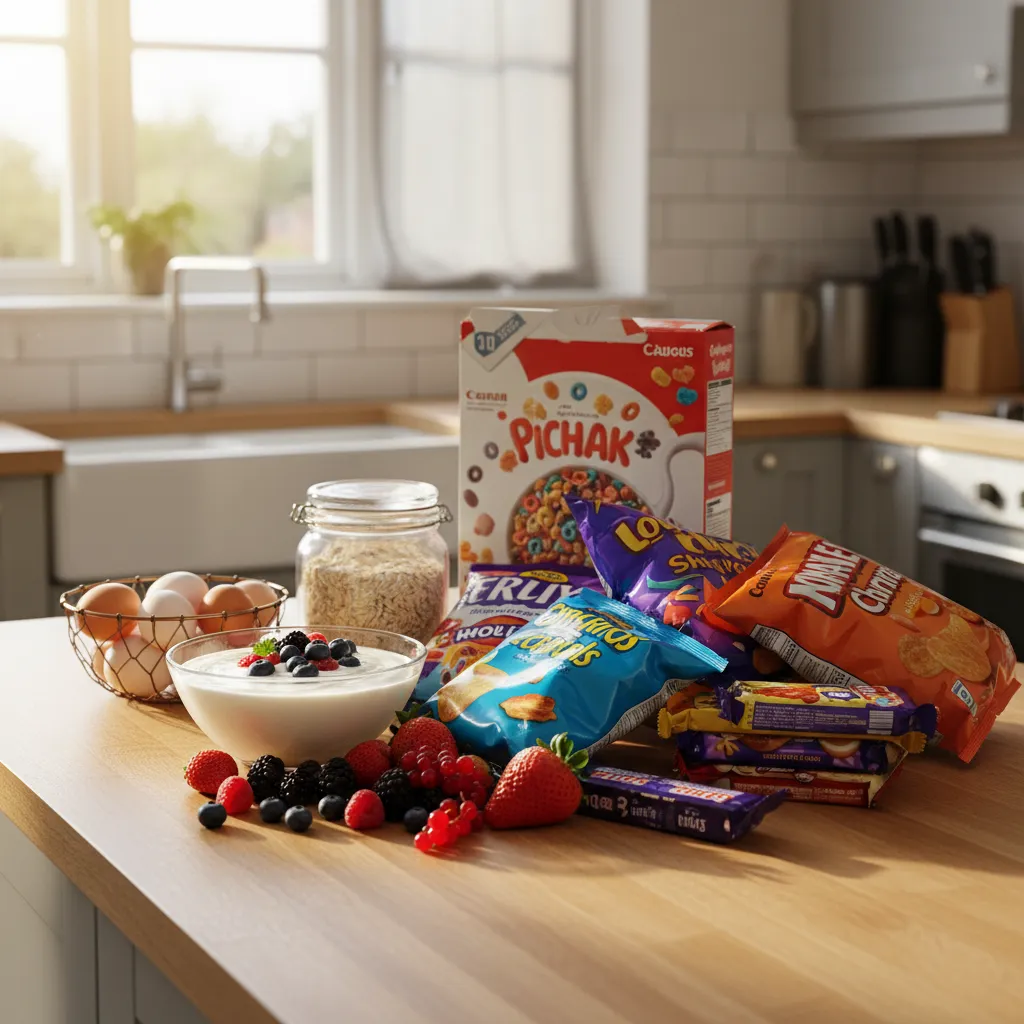
Common examples of ultra-processed foods that children in the UK regularly consume include:
- Breakfast cereals with added flavourings and colourings
- Flavoured yoghurts and yoghurt drinks
- Chicken nuggets, fish fingers and reconstituted meat products
- Crisps, biscuits and cereal bars
- Fizzy drinks, squash and fruit-flavoured juices from concentrate
- Instant noodles and packet soups
- Ice cream and confectionery
- Mass-produced sliced bread (many varieties)
What makes these foods problematic is not any single ingredient but the overall formulation. They are designed to be hyper-palatable, meaning they are engineered to taste so appealing that it becomes very difficult to stop eating them. This is particularly concerning for children, whose taste preferences and eating behaviours are still developing. If you are already thinking about how your child’s diet affects their overall health, you might find it helpful to read about the signs that a child may be overweight and when to seek help.
How Much Ultra-Processed Food Are UK Children Eating?
The figures for the UK are striking. Research published in the BMJ and data from the National Diet and Nutrition Survey show that ultra-processed foods now account for approximately 65% of total energy intake in UK children and adolescents. This places the UK among the highest consumers of ultra-processed food globally, alongside the United States and Canada.
To put this in perspective, that means roughly two out of every three calories your child eats may come from products that have been industrially manufactured rather than prepared from whole ingredients. For some children, particularly those from lower-income households, the proportion can be even higher.
| Age Group | Estimated % of Calories from UPF | Top UPF Sources |
|---|---|---|
| Toddlers (1 to 3 years) | 47 to 55% | Flavoured yoghurts, rusks, cereal snacks |
| Children (4 to 10 years) | 60 to 68% | Breakfast cereals, biscuits, processed meats |
| Adolescents (11 to 18 years) | 65 to 70% | Fizzy drinks, crisps, instant meals, fast food |
These numbers matter because research consistently shows a dose-response relationship: the more ultra-processed food a child eats, the greater the health risks. A study in JAMA Pediatrics found that each 10% increase in the proportion of ultra-processed food in a child’s diet was associated with measurable increases in body mass index and waist circumference.
If you are concerned about your child’s weight in relation to their age, the NHS BMI calculator for children can give you a useful starting point. Understanding where your child sits on the growth charts helps put dietary changes into context.
The Health Risks of Ultra-Processed Food for Children
The evidence linking ultra-processed food to poor health outcomes in children has grown substantially in recent years. As a clinician, I see the effects in my practice regularly, and the published research confirms what many of us have long suspected.
Obesity and Excess Weight Gain
The most well-documented risk is unhealthy weight gain. Ultra-processed foods are typically energy-dense, meaning they pack a lot of calories into relatively small portions. They are also designed to override the body’s natural satiety signals. A landmark controlled trial at the US National Institutes of Health showed that when adults were given unlimited access to ultra-processed meals versus unprocessed meals matched for calories, fat, sugar and salt, they consumed an average of 500 extra calories per day on the ultra-processed diet. While this study was in adults, similar patterns have been observed in paediatric research.
In the UK, where one in three children leave primary school above a healthy weight according to the National Child Measurement Programme, ultra-processed food is increasingly recognised as a significant contributing factor.
Gut Health and Digestive Problems
Ultra-processed foods tend to be low in fibre and high in additives such as emulsifiers, which research suggests can disrupt the gut microbiome. A healthy gut microbiome in childhood is essential for immune function, nutrient absorption and even mental health. Children who eat high amounts of ultra-processed food often present with digestive complaints, including constipation and bloating. I have written separately about how diet and fibre can help with constipation in children, which is closely related to this issue.
Dental Health
Many ultra-processed foods contain free sugars in quantities that far exceed NHS guidelines. Public Health England recommends that children aged 4 to 6 consume no more than 19 grams (roughly 5 teaspoons) of free sugar per day, yet a single serving of some popular children’s breakfast cereals or yoghurt drinks can contain this amount or more. The result is that tooth decay remains the leading cause of hospital admissions for children aged 5 to 9 in England.

Metabolic Health
Emerging evidence links high ultra-processed food consumption in childhood to early markers of metabolic syndrome, including elevated blood pressure, abnormal blood lipid levels and insulin resistance. Type 2 diabetes, once virtually unheard of in children, is now diagnosed in increasing numbers across the UK. While ultra-processed food is not the sole cause, its role in driving excess calorie intake, poor nutrient quality and metabolic disruption is well established.
Mental Health and Behaviour
A growing body of research links ultra-processed food consumption to poorer mental health outcomes in children and adolescents. Studies have found associations with higher rates of anxiety, depression and attention difficulties. The mechanisms are likely multifactorial, involving nutrient deficiencies (particularly omega-3 fatty acids, iron and B vitamins), gut-brain axis disruption and the effects of specific additives. For parents already navigating emotional challenges around food, my article on emotional eating in children provides further guidance.
How Ultra-Processed Foods Affect Children’s Weight
I want to spend a moment on the specific mechanisms through which ultra-processed foods contribute to unhealthy weight gain in children, because understanding the “why” helps parents make more informed choices.
Calorie density without satiety. Ultra-processed foods pack a large number of calories into small volumes, but they often lack the protein, fibre and water content that helps us feel full. A child can consume 400 calories from a packet of crisps in minutes and still feel hungry, whereas 400 calories of chicken, rice and vegetables would leave them satisfied for hours.
Speed of eating. Research shows that people eat ultra-processed foods significantly faster than whole foods. The softer textures and engineered mouthfeel mean less chewing is required. This matters because the hormonal signals that tell the brain “I am full” take approximately 20 minutes to activate. If a child eats quickly, they can overshoot their energy needs before those signals arrive.
Disrupted appetite regulation. Certain additives and formulations in ultra-processed foods appear to interfere with the hormones that regulate hunger and fullness, including leptin and ghrelin. Over time, regular consumption may effectively recalibrate a child’s appetite upwards, making them feel hungrier and less satisfied by normal portions of whole food.
Reward-driven eating. The combination of sugar, fat, salt and flavour enhancers in ultra-processed foods activates the brain’s reward pathways more intensely than whole foods. For children, whose prefrontal cortex (the part of the brain responsible for impulse control) is still developing, this can create powerful cravings and a preference for highly stimulating food over simpler flavours.
If you have received a letter about your child’s weight following a school measurement, the article on what to do when your child’s NCMP letter says overweight provides practical next steps that complement the dietary advice in this article.
Reading Labels: Spotting Ultra-Processed Foods
One of the most practical skills I teach parents in my clinic is how to read food labels with ultra-processing in mind. The traffic light labelling system used in the UK is helpful for assessing individual nutrients, but it does not tell you whether a product is ultra-processed. A product can have a “green” rating for fat and still be heavily processed.
Here is my approach to identifying ultra-processed foods on the shelf:
Check the ingredients list first, not the front-of-pack claims. If the list contains more than five ingredients and includes substances you would not use at home, it is very likely ultra-processed. Look out for these common markers:
- Emulsifiers (e.g. lecithin, mono- and diglycerides, polysorbate 80)
- Flavour enhancers (e.g. monosodium glutamate, yeast extract)
- Artificial sweeteners (e.g. aspartame, acesulfame K, sucralose)
- Modified starches and hydrolysed proteins
- Colourings (particularly those linked to hyperactivity in children)
- Preservatives (e.g. sodium benzoate, potassium sorbate)
Be cautious of health claims. Products labelled “high in fibre”, “source of calcium” or “no added sugar” may still be ultra-processed. In my experience, some of the most misleading products on supermarket shelves are those marketed specifically at children and parents. A cereal bar emblazoned with images of fruit and the word “wholesome” can still contain modified starch, palm oil, glucose syrup and multiple emulsifiers.
Consider the processing journey. Ask yourself: could I make something similar at home with basic ingredients? Porridge oats are minimally processed. A flavoured instant porridge sachet with sweeteners, flavourings and thickeners is ultra-processed. The base ingredient may be the same, but the final product is fundamentally different.
| Food Category | Minimally Processed Option | Ultra-Processed Version |
|---|---|---|
| Breakfast | Plain porridge oats with fresh berries | Flavoured instant porridge sachets |
| Yoghurt | Plain natural yoghurt with honey | Fruit-flavoured fromage frais tubes |
| Bread | Sourdough or bakery wholemeal loaf | Mass-produced white sliced bread |
| Snack | Apple slices with cheese | Cereal bars with chocolate coating |
| Protein | Roast chicken breast | Chicken nuggets or reformed turkey ham |
| Drink | Water or plain milk | Flavoured milk drinks or fruit squash |
Practical Swaps: Reducing Ultra-Processed Food at Home
I want to be very clear about something: the goal is not perfection. Telling a family to eliminate all ultra-processed food overnight is neither realistic nor helpful. What I recommend is a gradual, sustainable reduction that works within your budget, time constraints and your child’s preferences.
Here are the swaps I find most effective in clinical practice:
Breakfast
Breakfast is often the meal most dominated by ultra-processed products. Swap flavoured cereals for plain porridge, Weetabix or Shredded Wheat topped with fresh or frozen fruit. If your child insists on sweetness, a small drizzle of honey on porridge is far better than a bowl of chocolate-flavoured cereal containing multiple additives. Scrambled eggs on toast or plain yoghurt with banana are excellent alternatives that provide sustained energy.
Lunch Boxes
The school lunch box is another area where ultra-processed foods tend to accumulate. Replace processed meat slices (which often contain nitrates, phosphates and flavourings) with leftover roast chicken, tinned tuna or hard-boiled eggs. Swap crisps for vegetable sticks with hummus. Use a wholemeal pitta or wrap instead of mass-produced white bread. Include a piece of fruit rather than a cereal bar.

Snacks
Snacks represent the biggest opportunity for change, as this is where children tend to consume the most ultra-processed food. My top recommended snacks include:
- Fresh fruit (bananas, satsumas and apples travel well)
- Plain rice cakes with nut butter (where allergies are not a concern)
- Cheese cubes or cheese strings (check ingredients; some are minimally processed)
- Carrot and cucumber sticks with cream cheese
- Homemade flapjacks using oats, butter and a small amount of golden syrup
- Plain popcorn (made at home, not microwave varieties with added flavourings)
Evening Meals
Focus on building meals around whole ingredients: a protein source (meat, fish, beans or lentils), a starchy carbohydrate (potatoes, rice or pasta) and at least one or two portions of vegetables. Batch cooking at weekends can save time during the week. A large pot of bolognese made with real mince, tinned tomatoes and vegetables is quick, inexpensive and far superior to a ready meal.
For families with younger children who are just starting their food journey, the principles in my article on healthy weaning and introducing solid foods lay excellent foundations that can help reduce reliance on ultra-processed options from the very beginning.
What About School Meals and Snacks?
Parents often feel frustrated that they have limited control over what their children eat at school. It is worth knowing that school food standards in England, set by the Department for Education, do place restrictions on certain categories of food. For example, schools must provide vegetables and fruit daily, and there are limits on deep-fried foods and confectionery.
However, these standards do not specifically address ultra-processing. A school meal can technically meet the standards while still containing significant amounts of ultra-processed ingredients, particularly in items like reformed meat products, processed desserts and flavoured milk.
Here is what I suggest:
- Review your school’s menu. Most schools publish their menus online or in newsletters. Look at the ingredients rather than just the dish names.
- Talk to the school. If you have concerns, raise them with the head teacher or school governors. Parent pressure has been effective in improving school food in many areas.
- Consider packed lunches strategically. If the school menu is heavily reliant on processed options, a well-planned packed lunch gives you more control.
- Get involved. Some schools welcome parent volunteers to help with cooking programmes or food education initiatives.
The Government’s school food standards provide detailed information on what schools are required to serve, which can be a useful reference if you wish to raise specific concerns.
Monitoring your child’s overall health through tools like growth charts and centile tracking can help you assess whether dietary changes at home and school are having a positive effect over time.
Building Long-Term Healthy Eating Habits
Reducing ultra-processed food is not just about removing certain products from your trolley. It is about fostering a positive relationship with food that will serve your child well throughout their life. Here are the principles I return to again and again in my clinical work.
Involve children in food preparation. Research consistently shows that children who help prepare meals are more willing to try new foods and develop a better understanding of what goes into their diet. Even young children can wash vegetables, stir mixtures and help set the table. Older children can follow simple recipes. The act of making food from whole ingredients teaches them, implicitly, what real food looks like.
Avoid demonising specific foods. I never tell families that certain foods are “bad” or “forbidden”. This kind of language can create anxiety around food and, paradoxically, increase a child’s desire for the restricted item. Instead, I talk about “everyday foods” and “sometimes foods”. Ultra-processed treats at a birthday party or a packet of crisps on a family outing are part of normal childhood. The concern is when these foods dominate the daily diet.
Eat together as often as possible. Family mealtimes are one of the strongest predictors of healthy eating in children. When children eat with adults, they tend to consume more vegetables, eat more slowly and develop better social skills around food. Even three shared meals per week can make a meaningful difference.
Be patient with taste development. Children may need to be exposed to a new food 10 to 15 times before accepting it. If your child is accustomed to the intense flavours of ultra-processed food, simpler tastes may seem bland at first. This is normal. Their palate will adjust over time if you continue to offer a variety of whole foods without pressure.
Address the cost barrier honestly. I acknowledge that ultra-processed foods are often cheaper, calorie for calorie, than whole food alternatives. This is a systemic issue that requires policy-level solutions. However, there are strategies that can help: buying frozen vegetables (which are nutritionally equivalent to fresh), choosing cheaper protein sources like eggs, lentils and tinned fish, batch cooking and reducing food waste. The NHS Healthier Families website offers budget-friendly recipes that avoid ultra-processed ingredients.
For parents who want a broader picture of their child’s growth and development, the average weight and height data for UK children by age provides helpful context, though I always emphasise that every child grows at their own pace.
The BMJ’s umbrella review on ultra-processed food published in 2024 provides a comprehensive summary of the evidence linking ultra-processed food consumption to adverse health outcomes across all age groups. It is well worth reading for parents who want to understand the science in greater depth.
Similarly, the Royal College of Paediatrics and Child Health has called for stronger action on ultra-processed food in children’s diets, reflecting the growing clinical consensus that this is a priority area for child health in the UK.
Key Points
- Check ingredients lists for emulsifiers, flavour enhancers, modified starches and artificial sweeteners to identify ultra-processed products
- Start with breakfast swaps, replacing flavoured cereals with porridge, Weetabix or eggs on toast
- Replace processed snacks with fresh fruit, vegetable sticks, plain popcorn or cheese at least three days per week
- Involve your child in meal preparation to build familiarity with whole ingredients
- Use the NHS Healthier Families recipes for budget-friendly meals made from whole foods
Frequently Asked Questions
What exactly counts as an ultra-processed food?
Ultra-processed foods are industrial formulations that typically contain five or more ingredients, including substances not used in home cooking such as emulsifiers, flavour enhancers, modified starches and artificial colourings. Common examples include fizzy drinks, packaged biscuits, reconstituted meat products like chicken nuggets, flavoured yoghurts and most mass-produced breakfast cereals. The key distinction is the degree of industrial processing and the presence of cosmetic additives rather than simply whether a food is “healthy” or “unhealthy” by traditional measures.
How can I tell if a product is ultra-processed from the label?
Look at the ingredients list rather than front-of-pack claims. If you see ingredients you would not find in a home kitchen, such as high-fructose corn syrup, hydrogenated oils, mono- and diglycerides, yeast extract, modified starch or any numbered colourings (e.g. E110, E129), the product is almost certainly ultra-processed. A useful rule of thumb is: if the list contains more than five ingredients and includes unfamiliar chemical-sounding names, it is likely a Group 4 product under the NOVA classification system.
Is it realistic to cut out all ultra-processed food from my child’s diet?
Complete elimination is neither realistic nor necessary for most families. The goal should be a gradual reduction rather than an overnight overhaul. Research suggests that meaningful health benefits can be achieved by replacing even 10% of ultra-processed calories with minimally processed alternatives. Focus on the areas where ultra-processed foods are most concentrated in your child’s diet, typically breakfast, snacks and drinks, and make sustainable swaps over time. Occasional consumption at parties, social events or as treats is a normal part of childhood and should not cause anxiety.
Are ultra-processed foods worse for children than for adults?
Children may be particularly vulnerable to the effects of ultra-processed food for several reasons. Their bodies are still growing and developing, so nutrient quality matters more per calorie consumed. Their taste preferences and eating habits are being established during childhood, and regular exposure to hyper-palatable foods can shape long-term preferences. Additionally, children’s developing brains have less capacity for impulse control, making them more susceptible to the reward-driven eating that ultra-processed foods are designed to encourage. The gut microbiome, which is established in early childhood, may also be more sensitive to the disruptive effects of certain additives.
Do ultra-processed foods affect children’s behaviour or concentration?
There is growing evidence suggesting a link between ultra-processed food consumption and behavioural issues in children, though the research is still developing. Certain artificial colourings, particularly the “Southampton Six” (E102, E104, E110, E122, E124, E129), have been linked to hyperactivity in some children, which is why the UK requires warning labels on products containing them. Beyond specific additives, the overall poor nutritional quality of a diet high in ultra-processed food, including lower intakes of omega-3 fatty acids, iron, zinc and B vitamins, can affect mood, concentration and cognitive function. Many parents in my clinic report noticeable improvements in their child’s behaviour and focus after reducing ultra-processed food intake.
What are the cheapest ways to replace ultra-processed foods?
Frozen vegetables and fruit are nutritionally equivalent to fresh and cost significantly less. Eggs, tinned beans, lentils and tinned fish such as sardines or mackerel are affordable protein sources that are minimally processed. Plain porridge oats are one of the cheapest breakfast options available. Batch cooking meals like soups, stews and bolognese at the weekend saves both money and time during the week. Buying plain versions of products (plain yoghurt, plain rice cakes, unflavoured milk) rather than their flavoured counterparts is often cheaper and avoids unnecessary additives. The NHS Change4Life programme offers free recipe ideas designed for families on a budget.