Key Takeaways
- The NHS recommends starting healthy weaning to introduce solid foods at around 6 months of age, alongside continued breastfeeding or formula
- Babies need to show 3 key developmental signs of readiness before they can safely manage solid food
- Iron-rich foods such as meat, lentils and fortified cereals should be among the first foods offered because iron stores from birth begin to deplete around 6 months
- Both baby-led weaning and spoon-feeding are safe approaches; many families find a combination of both works best
- Potentially allergenic foods including peanuts, eggs and cow’s milk should be introduced one at a time from around 6 months, not delayed
- Babies should be offered a variety of tastes and textures across all food groups by the time they reach 12 months
In This Article
- When Should You Start Weaning Your Baby?
- Signs Your Baby Is Ready for Solid Foods
- First Foods: What to Offer and How
- A Week-by-Week Guide to Early Weaning
- Baby-Led Weaning vs Spoon-Feeding
- Foods to Avoid During Weaning
- Allergenic Foods and Allergy Prevention
- Common Weaning Concerns and How to Handle Them
- Building Healthy Eating Habits from the Start
As a paediatric nutritionist, I have guided hundreds of families through the weaning journey, and I know first-hand how exciting and nerve-wracking it can be. Healthy weaning to introduce solid foods is one of the most important milestones in your baby’s first year. It shapes not only their nutritional intake but also their long-term relationship with food. Getting it right from the beginning does not need to be complicated, but it does help to have clear, evidence-based guidance at your fingertips.
In this article, I will walk you through everything you need to know: when to start, what to offer, how to manage allergies, and how to build healthy eating habits that can benefit your child for years to come. Whether you are considering baby-led weaning, traditional spoon-feeding, or a mix of both, this guide will help you feel confident and prepared. Understanding your child’s nutritional needs from the start also supports a healthy weight and growth trajectory as they develop.
When Should You Start Weaning Your Baby?
The NHS recommends that babies start solid foods at around 6 months of age. Before this point, breast milk or infant formula provides all the nutrition your baby needs. The World Health Organization supports this guidance, advising exclusive breastfeeding for the first six months of life.
I often meet parents who feel pressure to start earlier, perhaps because their baby seems hungrier or is waking more at night. However, these behaviours are normal developmental changes and do not necessarily indicate readiness for solid food. Starting too early, before around 17 weeks at the very earliest, can increase the risk of choking, digestive problems and food allergies.
That said, it is equally important not to delay weaning much beyond 6 months. By this age, your baby’s iron stores from birth are running low, and breast milk alone may not meet their growing energy and nutrient demands. Delaying the introduction of textures beyond about 9 to 10 months has also been linked to feeding difficulties later on.

Signs Your Baby Is Ready for Solid Foods
Rather than focusing solely on age, I encourage parents to look for three clear developmental signs of readiness. All three should be present before you begin offering solid foods:
- They can sit up with support and hold their head steady. Good head and trunk control is essential for safe swallowing.
- They can coordinate their eyes, hands and mouth. You will notice them looking at food, reaching for it and bringing objects to their mouth.
- They can swallow food rather than push it back out. The tongue-thrust reflex, which causes babies to push food out of their mouth with their tongue, should have diminished.
Some signs are commonly mistaken for weaning readiness but are actually normal developmental behaviours. These include chewing fists, waking more frequently at night, and wanting extra milk feeds. On their own, these do not mean your baby is ready for solid food.
If you are unsure whether your baby is showing the right signs, your health visitor can help you assess readiness. They can also check your baby’s growth on their centile chart to ensure they are developing well.
First Foods: What to Offer and How
When you are ready to begin healthy weaning and introduce solid foods, there is no single “right” first food. However, I always recommend starting with nutrient-dense options that complement the nutrition your baby is already getting from milk. Iron-rich foods are particularly important because, as I mentioned, your baby’s iron stores begin to deplete around 6 months.
Excellent first foods include:
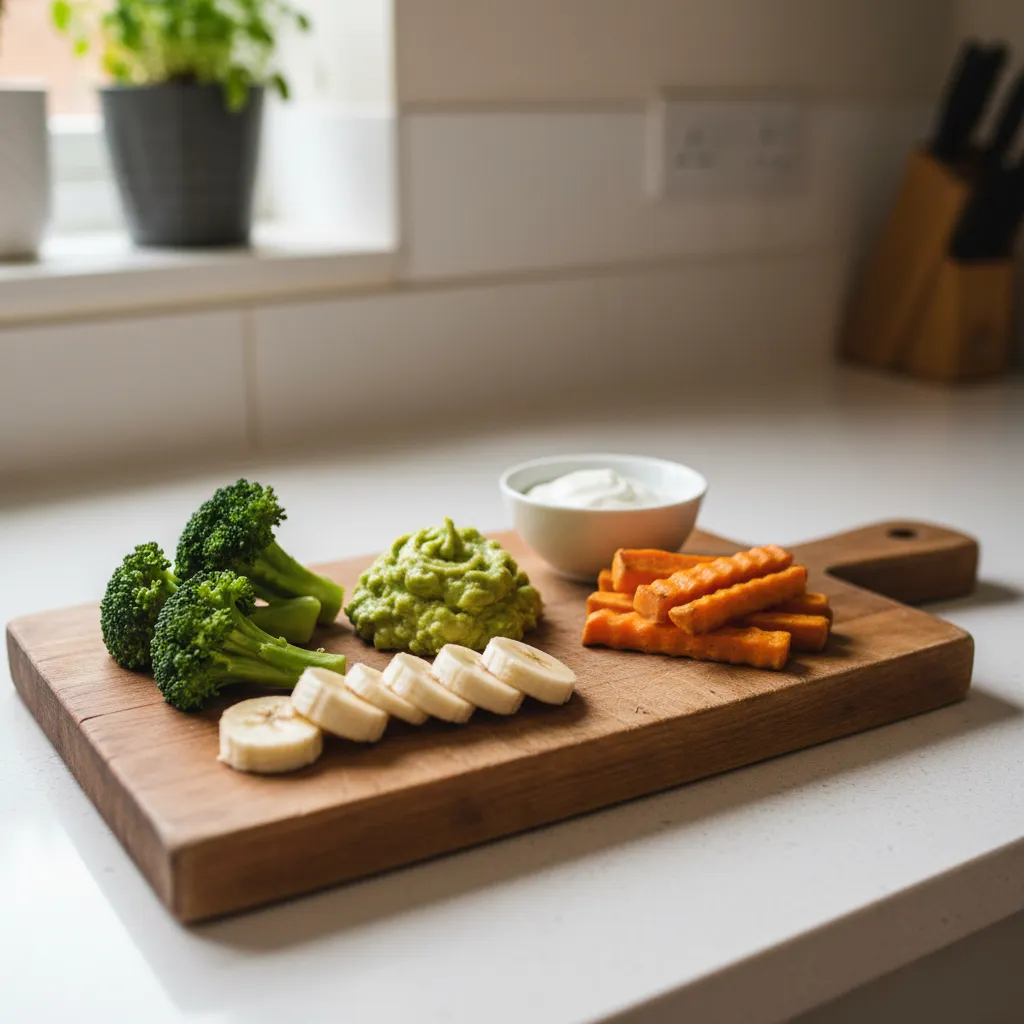
- Vegetables: broccoli, carrot, sweet potato, courgette, butternut squash, cauliflower, parsnip
- Fruits: banana, avocado, mango, cooked apple, pear, blueberries (halved)
- Iron-rich foods: pureed or soft-cooked meat, lentils, beans, fortified baby cereal
- Starchy foods: toast fingers, soft-cooked pasta, porridge, rice
I recommend introducing vegetables before fruit in those first few days. Research from University College London suggests that babies who are offered vegetables first may be more accepting of savoury flavours later. Offer a single vegetable for two or three days before moving on to a new one, so your baby can become familiar with individual tastes.
There is no need to add salt, sugar or honey to your baby’s food. Their taste buds are far more sensitive than ours, and plain, natural flavours are perfectly appealing to them. Keeping added sugar low from the very start helps protect their emerging teeth and supports a healthy weight as they grow.
A Week-by-Week Guide to Early Weaning
One of the questions I hear most often is, “How quickly should I introduce new foods?” Every baby is different, but here is a general guide for the first few weeks of weaning. Remember, milk (breast or formula) remains the primary source of nutrition throughout this early stage.
| Week | What to Offer | Texture | Frequency |
|---|---|---|---|
| Week 1 | Single vegetables (e.g. sweet potato, broccoli, carrot) | Smooth purée or soft finger foods | 1 meal per day, a few teaspoons |
| Week 2 | More vegetables, introduce fruit (e.g. pear, banana) | Smooth purée or soft finger foods | 1 meal per day, slightly larger portions |
| Week 3 | Add starchy foods (porridge, toast) and protein (lentils, chicken) | Thicker purée or soft lumps | 1 to 2 meals per day |
| Week 4 | Combine flavours, introduce dairy (yoghurt, cheese) | Mashed with soft lumps | 2 meals per day |
| Weeks 5 to 8 | Wide variety across all food groups; introduce allergenic foods | Progressing to chunkier textures | 2 to 3 meals per day |
| Months 3 to 6 of weaning | Family meals adapted for baby, finger foods alongside mashed food | Minced, chopped and finger foods | 3 meals and 1 to 2 snacks |
By the time your baby reaches 12 months, they should be eating a varied diet with three meals and two small snacks each day. Breast milk or formula still plays a role, but solid food gradually becomes the main source of energy and nutrients.
Baby-Led Weaning vs Spoon-Feeding
This is one of the most debated topics in weaning, and I want to reassure you: both approaches are perfectly valid. In my clinical experience, most families end up using a combination of the two, and that is absolutely fine.
Baby-led weaning (BLW) involves offering your baby soft finger foods from the start and allowing them to feed themselves. Advocates suggest it encourages independence, helps develop motor skills, and may promote better appetite regulation. Foods are typically offered as sticks or strips that your baby can grip in their fist.
Spoon-feeding involves offering purées and mashed foods on a spoon. This approach allows you to see more clearly how much your baby is eating and can feel reassuring in those early days. It is also the traditional method recommended by many health visitors.
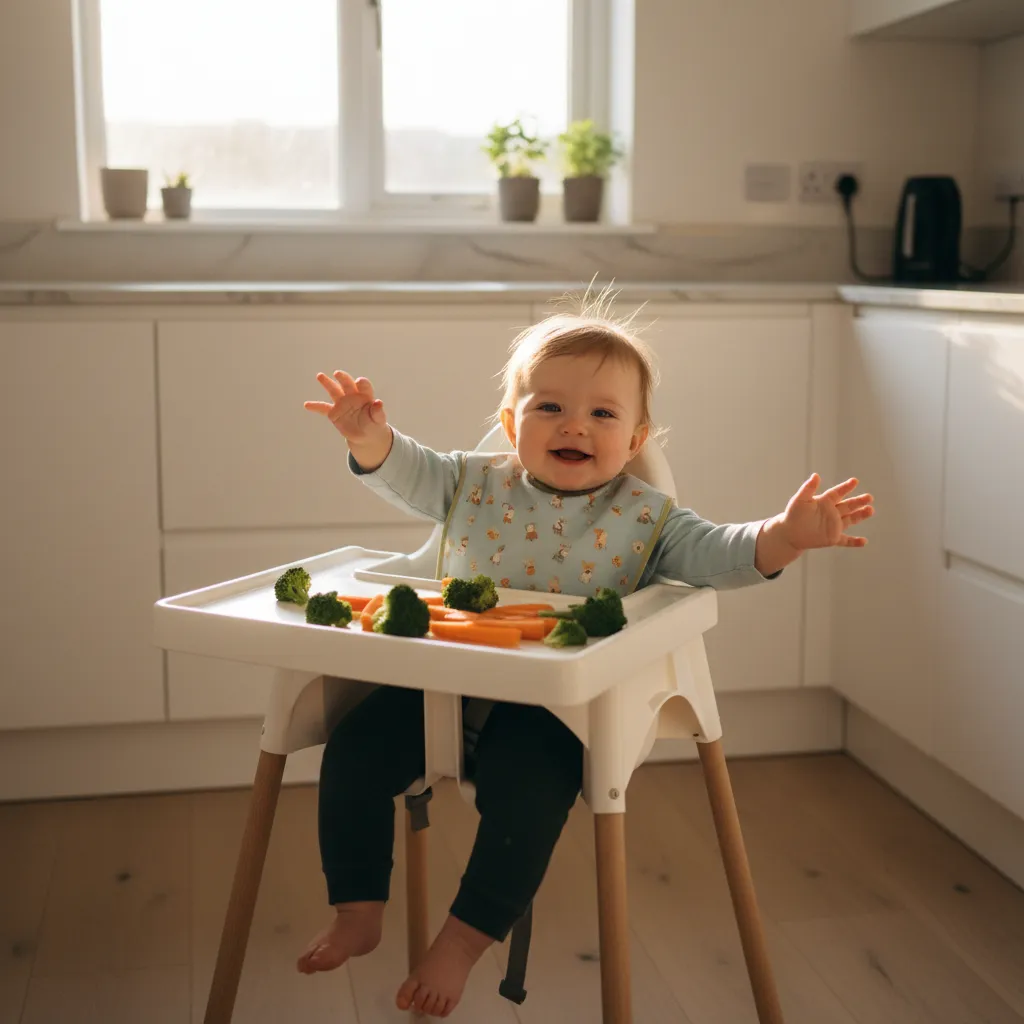
A combined approach might look like offering porridge or a purée on a loaded spoon alongside some soft finger foods such as steamed broccoli florets or strips of ripe mango. This gives your baby the chance to explore different textures while still getting good nutrition.
Whichever method you choose, the key principles remain the same: always supervise your baby during mealtimes, offer food when they are alert and upright, and never force food into their mouth. Let your baby set the pace. Some days they will eat more than others, and that is completely normal.
Foods to Avoid During Weaning
While I encourage variety, there are certain foods that are not safe for babies under 12 months. Some pose a choking risk, while others contain substances that can be harmful to young children.
Foods to avoid completely before 12 months:
- Honey: can contain botulism spores that a baby’s immature gut cannot handle
- Whole nuts and large seeds: serious choking hazard (nut butters thinned with milk are fine from 6 months)
- Whole grapes, cherry tomatoes and similar round foods: must be cut lengthways into quarters
- Added salt: babies under 1 should have less than 1g of salt per day; avoid processed foods high in sodium
- Added sugar: unnecessary and can contribute to tooth decay and excess weight gain
- Cow’s milk as a main drink: can be used in cooking from 6 months but should not replace breast milk or formula as the primary drink until after 12 months
- Raw or undercooked eggs: unless they carry the British Lion stamp, in which case they are safe from 6 months
- Certain fish: avoid shark, swordfish and marlin due to mercury content
- Rice drinks: contain arsenic levels that are too high for young children
I also advise limiting processed and packaged baby foods. While they can be convenient, many contain more sugar and fewer nutrients than home-prepared meals. The NHS weaning guidance provides further detail on foods to include and avoid.
Allergenic Foods and Allergy Prevention
For many years, parents were told to delay introducing common allergens. We now know that early introduction of allergenic foods may actually reduce the risk of allergy. Current NHS and British Society for Allergy and Clinical Immunology (BSACI) guidance recommends introducing these foods from around 6 months, one at a time.
The 14 major allergens include:
- Cow’s milk (in cooking or as yoghurt and cheese)
- Eggs (well-cooked; British Lion-stamped eggs can be soft-cooked)
- Peanuts (as smooth peanut butter, never whole)
- Tree nuts (as smooth nut butters)
- Wheat (in bread, pasta, cereals)
- Fish and shellfish
- Soya
- Sesame
When introducing an allergenic food for the first time, offer a small amount early in the day so you can observe your baby for any reaction over the following hours. Signs of an allergic reaction may include hives, swelling around the mouth or eyes, vomiting, or in rare cases, difficulty breathing. If you notice any of these symptoms, seek medical advice immediately.
If your baby has severe eczema or a known food allergy, speak to your GP or paediatric allergist before introducing new allergens. They may recommend a supervised introduction in a clinical setting. For most babies without these risk factors, home introduction is safe and straightforward.
Once an allergenic food has been introduced without reaction, continue to include it in your baby’s diet regularly, at least twice a week. Stopping and restarting can sometimes increase the risk of sensitisation.

Common Weaning Concerns and How to Handle Them
In my years of practice, certain worries come up again and again. Let me address the most common ones.
“My baby is gagging on food. Is that normal?”
Yes. Gagging is a normal protective reflex and is very different from choking. Gagging helps your baby learn to manage food in their mouth. It often involves retching, coughing and sometimes bringing food forward. It looks alarming but is usually nothing to worry about. Choking, by contrast, is silent; the baby may turn blue or be unable to cough. I strongly recommend that all parents complete a paediatric first-aid course before starting weaning so you know what to do in an emergency.
“My baby refuses everything I offer.”
Food refusal is incredibly common in the early weeks of weaning. Your baby may need to see, touch and taste a new food up to 15 times before they accept it. Stay patient, keep offering without pressure, and try not to show frustration. Eating together as a family helps, too; babies learn by watching others eat.
“My baby is not gaining enough weight.”
Weight gain can fluctuate during the weaning period as your baby adjusts to new foods. If you are concerned, ask your health visitor to plot your baby’s measurements on their growth chart. You can also learn more about centile charts and what they mean. In most cases, slight variations are perfectly normal, but persistent concerns should always be discussed with a healthcare professional.
“How much water should my baby drink?”
From 6 months, you can start offering your baby small sips of water in an open cup or free-flow beaker with meals. There is no set amount; it is mainly about getting them used to drinking water. Avoid fruit juice, squash and fizzy drinks entirely for babies under 12 months.
“Should I continue breastfeeding or giving formula?”
Absolutely. Milk remains an important part of your baby’s diet throughout the first year and beyond. The NHS advises continuing to breastfeed for as long as you and your baby wish. If you are formula-feeding, your baby will need around 500 to 600ml of formula per day alongside solid foods, gradually reducing as food intake increases. After 12 months, your baby can transition to whole cow’s milk as their main drink.
Building Healthy Eating Habits from the Start
Weaning is not just about nutrition; it is about laying the groundwork for a positive relationship with food that will last a lifetime. The habits you establish now can influence your child’s eating behaviours well into childhood and adolescence, and can play a significant role in maintaining a healthy BMI as they grow.
Here are my top recommendations for building healthy eating habits from the very beginning:
Eat together whenever possible. Family mealtimes are one of the most powerful tools for encouraging healthy eating. Even if your baby is only having a few spoonfuls of purée, sitting together at the table helps them learn social eating skills and exposes them to a wider range of foods.
Follow your baby’s lead. Responsive feeding means watching for your baby’s hunger and fullness cues rather than focusing on how much they have eaten. Turning their head away, clamping their mouth shut, or losing interest are all signs they have had enough. Encouraging them to eat beyond fullness can override their natural appetite regulation.
Offer variety early and often. Research consistently shows that babies who are exposed to a wide range of flavours and textures in the first year are more likely to accept diverse foods as toddlers. Include herbs and spices in your cooking (without salt); babies can enjoy mild curry, garlic, cinnamon and cumin from 6 months.
Avoid using food as a reward or comfort. It can be tempting to offer a biscuit to soothe a crying baby or promise pudding for finishing vegetables. However, these practices can create unhealthy associations between food and emotions. Instead, comfort your baby with cuddles and attention, and present all food as equally valuable.
Be a role model. Your baby watches everything you do, including what you eat. If they see you enjoying fruits, vegetables and balanced meals, they are far more likely to do the same. This is one area where actions truly speak louder than words.
As your child grows beyond the weaning stage, these early habits become the foundation for their ongoing nutritional health. Understanding tools like the National Child Measurement Programme can help you monitor their progress and address any concerns early. If you ever receive a letter about your child’s measurements and are unsure what it means, I have written a guide on what to do if your child’s NCMP letter says overweight.
The Eatwell Guide from Public Health England is another excellent resource for understanding balanced nutrition as your baby transitions to family meals.
Key Points
- Wait until your baby shows all three developmental signs of readiness at around 6 months before starting solids
- Begin with iron-rich vegetables and single-ingredient foods, progressing to varied textures within a few weeks
- Introduce allergenic foods one at a time from 6 months and continue offering them at least twice a week
- Always supervise mealtimes and complete a paediatric first-aid course before you begin weaning
- Follow your baby’s hunger and fullness cues; never force food, and aim for relaxed, pressure-free mealtimes
Frequently Asked Questions
At what age should I start weaning my baby onto solid foods?
The NHS recommends starting weaning at around 6 months of age. Before this, breast milk or formula provides all the nutrition your baby needs. Look for three developmental signs of readiness: being able to sit with support and hold their head steady, coordinating eyes, hands and mouth to reach for food, and being able to swallow food rather than pushing it out with their tongue. Never start weaning before 17 weeks.
I recommend starting with single vegetables such as sweet potato, broccoli, carrot and butternut squash. These can be offered as smooth purées or soft finger foods. After a few days of vegetables, introduce fruits like banana and pear. Within the first few weeks, add iron-rich foods such as lentils, well-cooked meat and fortified baby cereal, alongside starchy foods like porridge and toast fingers.What are the best first foods for weaning?
Yes, baby-led weaning is safe when done correctly. Your baby should always be seated upright, never left unsupervised, and offered appropriately sized soft finger foods. Gagging is a normal reflex and is different from choking. Many families successfully use a combined approach of finger foods and spoon-fed purées. I strongly recommend completing a paediatric first-aid course before starting any form of weaning.Is baby-led weaning safe?
Current NHS guidance recommends introducing allergenic foods from around 6 months, one at a time. This includes peanuts (as smooth peanut butter), well-cooked eggs, cow’s milk products, wheat, soya, sesame, fish and tree nuts. Offer a small amount early in the day and watch for any reaction. Once introduced without a reaction, continue to include the food regularly, at least twice a week. If your baby has severe eczema or a known allergy, consult your GP or allergist first.When should I introduce allergenic foods like peanuts and eggs?
In the early weeks, your baby may only take a few teaspoons at each meal. This is completely normal. Breast milk or formula remains the primary source of nutrition until around 12 months. Signs that weaning is going well include your baby showing interest in food, gradually accepting more variety and texture, and continuing to gain weight along their centile line. If you are concerned, ask your health visitor to review your baby’s growth chart.How do I know if my baby is eating enough during weaning?
You can use cow’s milk in cooking and with cereals from 6 months. However, it should not replace breast milk or formula as your baby’s main drink until after 12 months. This is because cow’s milk does not contain enough iron and other nutrients to meet a baby’s needs as a primary milk source. From 12 months, your child can have whole cow’s milk as their main drink.Can I give my baby cow’s milk during weaning?
Food refusal is very common and does not mean your baby dislikes a particular food permanently. Research shows babies may need to be offered a new food up to 15 times before they accept it. Keep offering without pressure, eat together as a family so your baby can watch you enjoy the same foods, and try presenting the food in different forms, such as raw, cooked, mashed or as a finger food.My baby keeps refusing new foods. What should I do?