Key Takeaways
- An NCMP letter saying your child is overweight is not a diagnosis; it is a screening result based on a single BMI measurement taken at school
- Around 1 in 3 children in England are above a healthy weight by the time they leave primary school (Year 6)
- BMI in children is interpreted using age- and sex-specific centile charts, not the same adult thresholds most parents are familiar with
- Your GP or school nurse can offer a free, confidential follow-up to discuss the result and rule out any medical factors
- Small, consistent changes to family eating habits and activity levels are far more effective than restrictive dieting for children
- Most local authorities run free healthy-weight programmes specifically designed for families who have received an NCMP result letter
In This Article
- What the NCMP Letter Actually Means
- Understanding Your Child’s BMI Result
- Why Parents Often Feel Shocked or Upset
- First Steps After Receiving the Letter
- Practical Changes That Make a Real Difference
- Getting Professional Support
- Talking to Your Child About Weight
- When to See Your GP
- NCMP Weight Categories Explained
What the NCMP Letter Actually Means
If you have opened a letter telling you that your child’s weight is in the overweight or very overweight category, I want you to take a breath first. As a paediatric nutritionist who has supported hundreds of families through this exact moment, I know how unsettling it can be. The letter can feel blunt, impersonal, and even alarming. But understanding what it is, and what it is not, is the most important first step you can take.
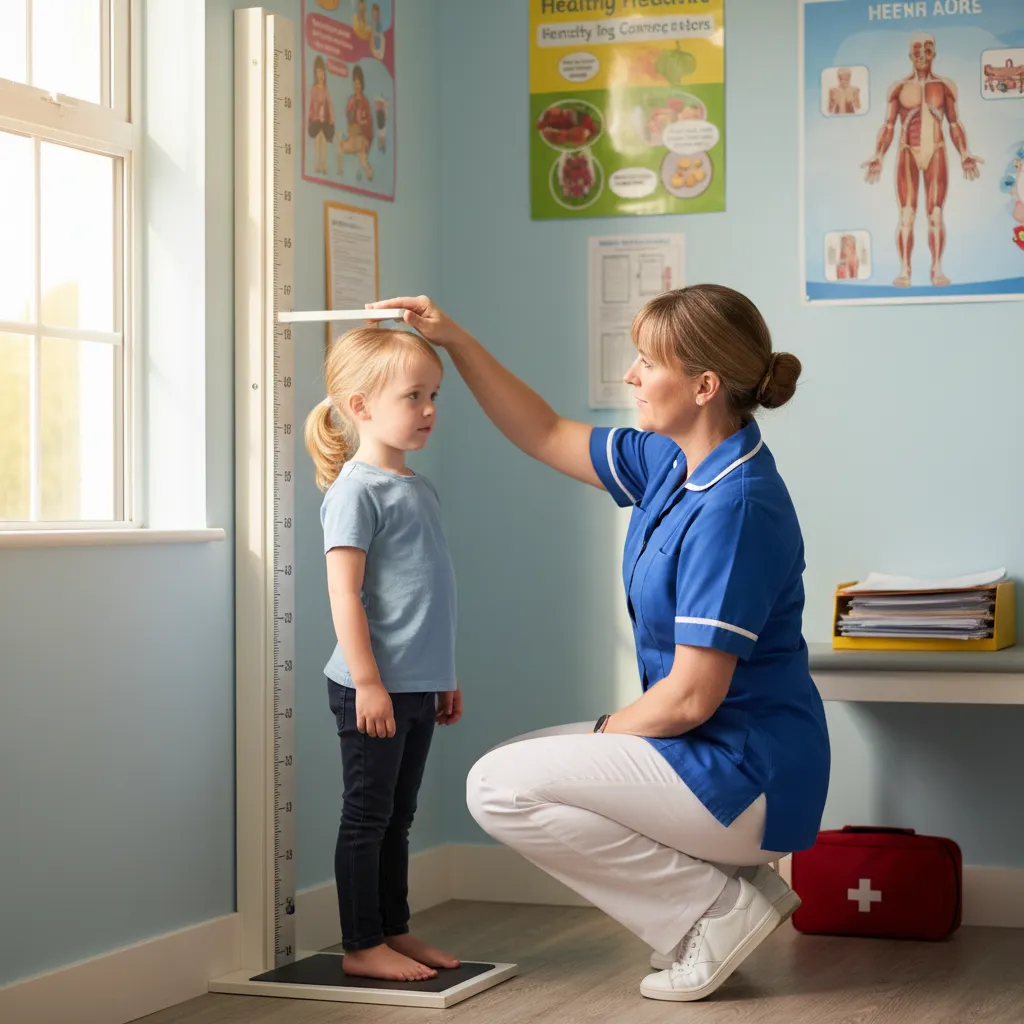
The National Child Measurement Programme (NCMP) measures the height and weight of children in Reception (ages 4 to 5) and Year 6 (ages 10 to 11) at state-funded schools across England. It is run by local authorities in partnership with the NHS, and around one million children are measured each year. The programme has been running since 2006 and is designed to track population-level trends in childhood obesity, while also giving individual families useful information about their child’s growth. You can read more about the programme itself in our detailed guide to What Is the National Child Measurement Programme (NCMP)?
The letter you have received is a screening result, not a clinical diagnosis. It tells you where your child’s Body Mass Index (BMI) falls on the UK population centile charts for their age and sex. It does not tell the whole story about your child’s health, fitness, muscle mass, or overall wellbeing. Think of it as a signpost that says “it may be worth looking at this more closely” rather than a verdict.
Understanding Your Child’s BMI Result
One of the most common questions I hear from parents is: “How can they judge my child from one measurement?” It is a fair question. BMI is calculated by dividing a person’s weight in kilograms by their height in metres squared. In adults, fixed thresholds are used (25 for overweight, 30 for obese). But in children, it works differently.
Children’s BMI changes naturally as they grow, so the result is plotted on age- and sex-specific centile charts. These charts show how your child’s BMI compares with other children of the same age and sex from a large reference population. For the NCMP, the UK uses the British 1990 growth reference (UK90) data set. If your child’s BMI is at the 91st centile, that means their BMI is higher than 91% of children of the same age and sex in the reference population.
To understand how centile charts work and how to read them, our guide on Child Weight Chart UK: Understanding Centiles and Percentiles goes into much more detail. You might also find it helpful to check your child’s current measurement using a BMI Calculator for Children.
| NCMP Weight Category | BMI Centile Range (UK90) | What It Means |
|---|---|---|
| Underweight | Below 2nd centile | BMI is lower than 98% of children of the same age and sex |
| Healthy weight | 2nd to 91st centile | BMI falls within the expected range for age and sex |
| Overweight | 91st to 98th centile | BMI is higher than most children of the same age and sex |
| Very overweight (obese) | Above 98th centile | BMI is higher than 98% of children of the same age and sex |
It is worth remembering that BMI does not distinguish between weight from muscle and weight from fat. A very athletic, muscular child could have a higher BMI without carrying excess body fat. Equally, a child with a high BMI who is not especially muscular is more likely to be carrying extra weight that could affect their long-term health. This is why the letter is a starting point for a conversation, not a final answer.
Why Parents Often Feel Shocked or Upset
In my experience, the emotional reaction to an NCMP letter is often stronger than parents expect. Research published in BMC Public Health found that many parents experience shock, disbelief, guilt, or even anger when they receive a letter saying their child is overweight. Some parents tell me they felt judged as a bad parent. Others say they simply did not see it, particularly when their child looks similar in build to their classmates.
These feelings are completely normal. I want to be very clear: receiving this letter does not mean you have done something wrong. Childhood weight is influenced by a complex mix of genetics, environment, food availability, activity levels, sleep, and many other factors. The purpose of the letter is not to blame anyone. It is to give you information so you can make informed choices about your family’s health.
It is also very common for parents to underestimate their child’s weight status. Studies consistently show that the majority of parents of overweight children describe their child as being a healthy weight. This is not a failure of parenting; it reflects how normalised higher body weights have become across society. When most of the children in a classroom or on a football pitch are above a healthy weight, it becomes genuinely difficult to spot. Our article on Is My Child Overweight? Signs, BMI and When to Seek Help explores this further.
First Steps After Receiving the Letter
Once you have processed the initial reaction, here is what I recommend as your practical next steps. These are based on what I advise families in my own clinic and align with NHS guidance on the NCMP.
1. Do not put your child on a diet. This is the single most important piece of advice I give. Restrictive dieting is not appropriate for growing children and can lead to nutritional deficiencies, disordered eating patterns, and a damaged relationship with food. Children are still growing in height, so the goal is usually to allow their weight to stabilise while their height catches up, rather than to lose weight.
2. Contact the number on your letter. Most NCMP result letters include a phone number for your local healthy-weight service or school nursing team. These teams are experienced, non-judgemental, and can offer a confidential conversation about what the result means for your specific child. Many parents find this call reassuring.
3. Request a follow-up measurement. If you are unsure about the accuracy of the school measurement, ask your GP practice nurse or health visitor to re-measure your child. Ensure they use calibrated equipment, measure height without shoes, and plot the result on an up-to-date centile chart. Sometimes a single measurement taken on one day does not reflect the full picture, especially if your child was wearing heavy clothing or had just eaten.
4. Look at the bigger picture. Consider your child’s overall lifestyle: how active they are, what they eat and drink, how much sleep they get, and how much screen time they have. The NCMP result is one piece of a much larger jigsaw. For reference values, our guide on Average Weight and Height for Children by Age in the UK provides helpful context.

Practical Changes That Make a Real Difference
In my 15 years of clinical practice, I have seen that the families who achieve lasting, positive change are those who make small, sustainable adjustments to the way the whole family eats and moves together. This is not about singling out the child whose name was on the letter. It is about creating a healthier home environment that benefits everyone.
Food and Drink
Swap sugary drinks for water, milk, or diluted fruit juice. Sugary drinks are the single largest contributor to excess sugar intake in UK children. A standard 330ml can of cola contains around 35g of sugar, which is more than the entire daily limit for a child aged 7 to 10. Even fruit juice should be limited to 150ml per day and ideally diluted.
Rethink portion sizes. Children do not need adult-sized portions. As a general guide, a child’s portion of carbohydrate (pasta, rice, potato) should be roughly the size of their own clenched fist. Use smaller plates if it helps, and encourage your child to eat slowly so their brain has time to register fullness.
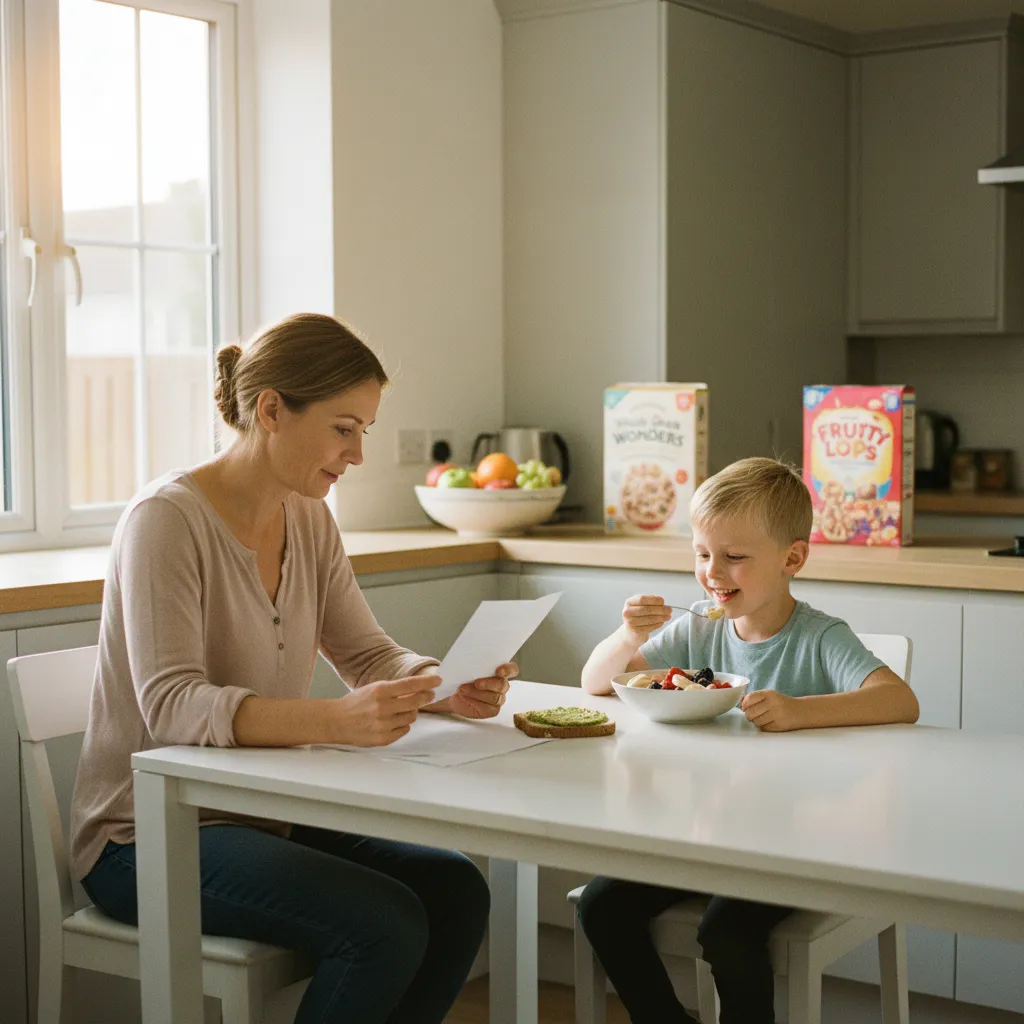
Make vegetables and fruit visible and accessible. Keep a fruit bowl on the kitchen counter. Chop raw vegetables and keep them in the fridge at child height. Children are far more likely to snack on fruit and vegetables if they can see them and reach them without asking. Aim for at least 5 portions of fruit and vegetables per day as a family.
Reduce ultra-processed snacks. Crisps, biscuits, chocolate bars, and processed cereal bars are often marketed as lunchbox staples, but they are high in calories, sugar, and salt while offering very little nutritional value. Try swapping one processed snack per day for a piece of fruit, a handful of nuts (if no allergy), or some cheese and crackers.
Cook together when you can. Children who are involved in preparing food are more likely to try new foods and develop a positive relationship with eating. Even young children can wash vegetables, stir ingredients, or help set the table.
Physical Activity
The UK Chief Medical Officers recommend that children aged 5 to 18 should be physically active for at least 60 minutes every day. This does not have to be structured sport. Walking to school, playing in the garden, cycling, dancing, or even vigorous play at the park all count.
Limit sedentary screen time. While there is no official UK guideline for a specific number of hours, the evidence is clear that excessive screen time displaces physical activity and is associated with higher calorie intake through mindless snacking. Try to build in active breaks during screen time and establish screen-free zones, such as at the dinner table and in bedrooms.
Make activity a family habit. Go for a walk after dinner. Visit the park at weekends. Try a new activity together, whether that is swimming, a nature trail, or a family bike ride. When physical activity is something the whole family does, it becomes normal rather than a chore.
Getting Professional Support
You do not have to manage this on your own. There is a range of free, evidence-based support available to families in England, and I strongly encourage you to make use of it.
Local healthy-weight programmes. Most local authorities offer free programmes for families who have received an NCMP result in the overweight or very overweight category. These programmes typically run for 10 to 12 weeks and cover practical topics such as reading food labels, cooking healthier meals, increasing physical activity, and building children’s self-esteem. Examples include HENRY (Health, Exercise, Nutrition for the Really Young), BeeZee Bodies, and MoreLife. Your NCMP letter should include details of local services, or you can ask your school nurse or GP.
School nursing service. Your school nurse can offer a confidential chat about your child’s result and signpost you to local resources. They can also check your child’s growth over time to see whether the measurement is part of a trend or a one-off.
Your GP. If you have concerns about an underlying medical condition that might be contributing to your child’s weight, your GP can carry out further assessments. While medical causes of childhood obesity (such as hypothyroidism or Cushing’s syndrome) are rare, they should be investigated if there are other symptoms such as extreme fatigue, constipation, or unusually rapid weight gain.
Registered dietitians and nutritionists. If you want personalised dietary advice, ask your GP for a referral to a registered dietitian, or look for a registered nutritionist through the British Nutrition Foundation. Be cautious of unqualified individuals offering weight-loss plans for children on social media; always check credentials.

Talking to Your Child About Weight
This is the area where I see parents struggle most, and understandably so. How you talk to your child about their body and their health during this period can have lasting effects on their self-esteem and their relationship with food.
Do not share the letter with your child or tell them they are overweight. The NCMP result is for parents and carers, not for the child. Young children in particular do not have the emotional maturity to process weight-related information in a healthy way. Labelling a child as overweight can trigger shame, anxiety, and disordered eating behaviours.
Focus on health and energy, not weight or appearance. Instead of talking about losing weight or being “too big”, frame changes around feeling strong, having more energy, trying new foods, and being able to run faster or play longer. Children respond well to positive, forward-looking language.
Avoid making food “good” or “bad”. All foods can fit into a balanced diet. Labelling certain foods as forbidden often makes them more desirable. Instead, talk about “everyday foods” and “sometimes foods”, and model a relaxed, balanced approach to eating yourself.
Be mindful of your own language about bodies. Children absorb everything. If you criticise your own body, talk about dieting, or make negative comments about other people’s weight, your child will internalise those messages. Try to model body acceptance and a focus on what bodies can do rather than how they look.
Praise effort and enjoyment in physical activity. Rather than saying “you need to exercise more to lose weight”, try “it was great seeing you enjoy that bike ride” or “you’re getting really fast on that scooter”. This builds a positive association with movement that will serve them well into adulthood.
When to See Your GP
While the NCMP result alone does not necessarily require a GP appointment, there are circumstances where I would recommend booking one:
- Your child’s BMI is in the very overweight (above the 98th centile) category
- Your child has gained weight rapidly over a short period without an obvious explanation
- There are other symptoms such as excessive tiredness, joint pain, breathlessness during normal activity, or skin changes (such as dark, velvety patches on the neck or armpits, known as acanthosis nigricans)
- Your child is experiencing bullying, low mood, or anxiety related to their weight
- You have a family history of type 2 diabetes, high cholesterol, or early heart disease
- Your child snores heavily or has disrupted sleep, which could indicate obstructive sleep apnoea
Your GP can assess whether a referral to a paediatrician, dietitian, or child and adolescent mental health service (CAMHS) is appropriate. According to NCMP operational guidance from the UK Government, local authorities should have clear referral pathways in place for children identified as very overweight.
NCMP Weight Categories Explained
To help you put your child’s result into context, here is a summary of the current data on childhood weight in England. These figures come from the most recent NHS Digital NCMP statistics.
| Measurement | Reception (Age 4-5) | Year 6 (Age 10-11) |
|---|---|---|
| Underweight | Approximately 1% | Approximately 1.4% |
| Healthy weight | Approximately 76% | Approximately 61% |
| Overweight | Approximately 12% | Approximately 15% |
| Very overweight (obese) | Approximately 10% | Approximately 22% |
| Total above healthy weight | Approximately 22% | Approximately 37% |
As you can see, your child is far from alone. By Year 6, over a third of children in England are above a healthy weight. This is a public health challenge, not a personal failing. The NCMP exists precisely because childhood obesity has become so common that it can be difficult to identify without objective measurement.
What these numbers also show is that the proportion of children above a healthy weight increases significantly between Reception and Year 6. This tells us that the primary school years are a critical window for establishing healthy habits. The good news is that children in this age group are generally very receptive to positive changes, especially when those changes are introduced as family activities rather than individual restrictions.
I always remind the families I work with that the goal is not perfection. It is not about cutting out every biscuit or running a 5k every weekend. It is about tipping the balance, gradually, consistently, in a direction that supports your child’s health and happiness. Small changes, maintained over months and years, add up to significant improvements. And they are changes that the whole family benefits from.
If you are reading this article because you have just received an NCMP letter, I hope it has helped you feel less alone and more equipped to take the next step. Whether that step is making a phone call to your local healthy-weight service, booking a GP appointment, or simply swapping one sugary drink for a glass of water today, you are already moving in the right direction.
Key Points
- Contact the healthy-weight service number on your child’s NCMP letter for free, confidential support
- Do not put your child on a restrictive diet; focus on gradual changes for the whole family instead
- Swap sugary drinks for water or milk and aim for at least 5 portions of fruit and vegetables daily
- Build up to 60 minutes of physical activity every day through active play, walking, cycling, or sport
- See your GP if your child is in the very overweight category, has rapid weight gain, or shows additional symptoms
Frequently Asked Questions
Does an NCMP letter mean my child is unhealthy?
Not necessarily. The NCMP letter is a screening result based on a single BMI measurement, which does not account for muscle mass, body composition, or overall fitness. It is a prompt to look more closely at your child’s lifestyle and growth pattern rather than a definitive statement about their health. I recommend using it as a starting point for a conversation with your school nurse or GP, who can assess the broader picture.
Yes, parents can withdraw their child from the NCMP at any time. You can do this by contacting your child’s school or the local authority before the measurements take place. However, I would encourage you to consider the benefits of having an objective check on your child’s growth. The measurement is quick, confidential, and carried out sensitively by trained staff. You can also opt out of receiving the result letter while still allowing the anonymous data to be collected for public health monitoring.Can I opt my child out of the NCMP measurements?
I would advise against sharing the specific content of the letter with your child, particularly in primary school. Young children are not equipped to process weight-related labels without it potentially affecting their self-esteem or relationship with food. Instead, make positive changes for the whole family, framing them around energy, strength, and trying new things rather than weight. If your child is older and asking questions about their body, keep conversations positive and focused on health rather than numbers on a scale.Should I tell my child about the letter?
Most local authorities in England offer free healthy-weight programmes for families who receive an NCMP result in the overweight or very overweight range. These programmes are typically 10 to 12 weeks long and cover cooking skills, physical activity, portion sizes, and building children’s confidence. Your NCMP letter should include contact details for your local service. You can also ask your school nurse, health visitor, or GP for a referral. The NHS website and your local council website are good places to search for what is available in your area.What free support is available after receiving an NCMP overweight result?
BMI is a useful population-level screening tool, but it has limitations for individuals. It does not distinguish between weight from muscle and weight from fat, so very active or muscular children may have a higher BMI without carrying excess body fat. For children, BMI is always interpreted using age- and sex-specific centile charts rather than the fixed adult thresholds, which makes it more meaningful. However, it should always be considered alongside other factors such as physical activity levels, diet quality, family history, and overall wellbeing. If you are unsure about your child’s result, ask your GP or school nurse to discuss it with you in context.Is BMI accurate for children?
Some children do naturally slim down as they go through growth spurts, particularly during puberty. However, research shows that children who are overweight at primary school age are significantly more likely to be overweight as teenagers and adults if no changes are made. The primary school years are actually an ideal time to make positive adjustments, because children are still growing in height and are generally very open to new habits when they are introduced as family activities. The earlier you act, the easier and more effective those changes tend to be.Will my child grow out of being overweight?